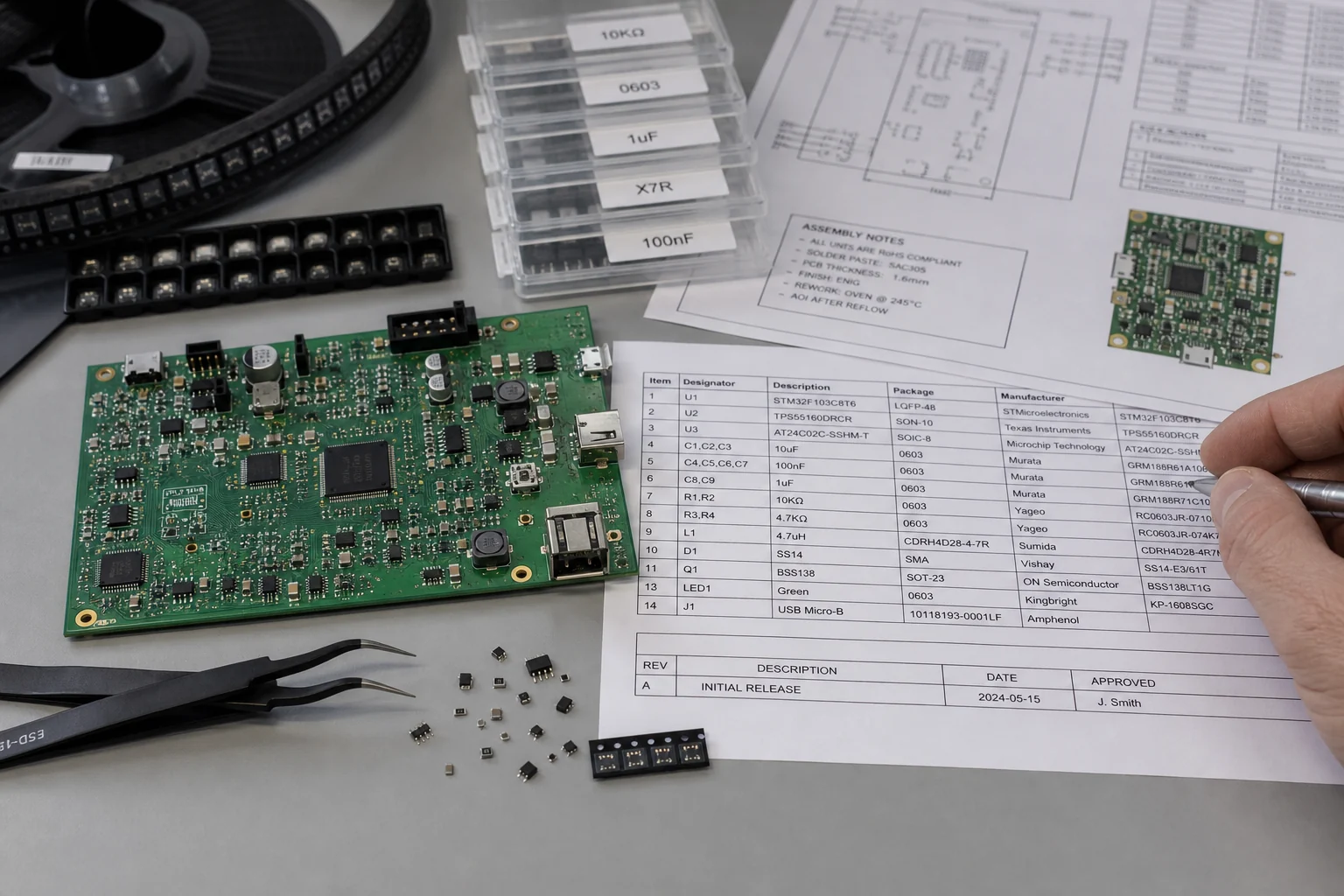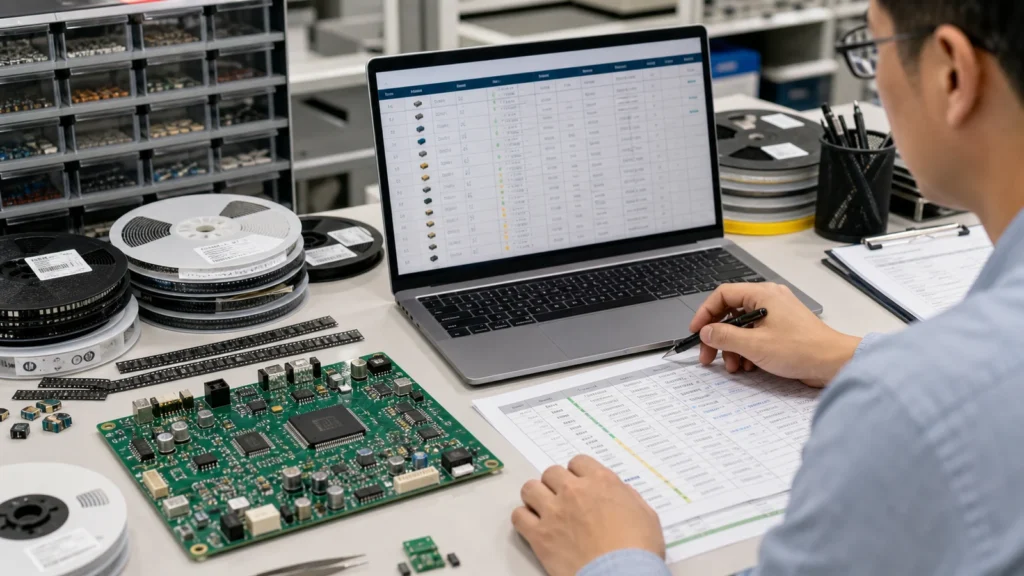
PCB BOM management becomes critical the moment a board leaves a design screen and enters sourcing, assembly, and revision control. A bill of materials is not only a parts list. It is the bridge between engineering intent and the real components that purchasing, kitting, and production will use. When that bridge is weak, teams see shortages, wrong alternates, mismatched package footprints, avoidable ECO confusion, and late-stage assembly delays.
For electronics companies building prototypes, pilot runs, or repeat production, BOM management is where technical accuracy and supply-chain discipline meet. A neat schematic does not protect a build if the approved manufacturer list is unclear, lifecycle status is outdated, or the assembly house receives a spreadsheet that conflicts with the latest PCB revision. Good BOM management reduces that friction before it reaches the production floor.
Why BOM Management Is More Than a Spreadsheet Task
Many new teams treat the BOM as a document to be exported once and emailed to purchasing. That approach fails as soon as parts become hard to source or the design changes after layout. A managed BOM needs controlled part numbers, package references, manufacturer names, approved alternates, quantity accuracy, and links back to the exact design revision. Without that structure, every new build risks drifting away from the design that engineering intended.
The problem gets worse when multiple groups maintain separate copies. Engineering updates one spreadsheet, purchasing edits another, and the assembler receives a third version. At that point, nobody can prove which BOM is authoritative. PCB BOM management should establish one controlled source, clear ownership, and a release process that keeps design, sourcing, and assembly synchronized.
The Data Fields That Matter Most
A strong BOM includes more than designators and quantities. It should identify the internal part number, approved manufacturer part number, component description, package or footprint, tolerance or rating, lifecycle status, and any approved alternate list. For production builds, it also helps to track sourcing notes, DNI parts, reference design revision, and whether specific components require customer approval before substitution.
Those details matter because assembly risk often hides in apparently small gaps. A regulator with the right voltage but the wrong enable-pin behavior can stop a board from booting. A connector with the wrong plating or latch style can pass receiving inspection but fail in final integration. A passive alternate with the wrong package height can break enclosure fit or automated placement setup. BOM discipline prevents these problems from entering the build quietly.
Where BOM Errors Usually Start
Most BOM problems begin long before the PO is placed. They start when engineers create ad hoc library parts, copy old descriptions forward, or defer alternate-part strategy until a shortage appears. They also start when CAD data and sourcing data are disconnected. A footprint may match the layout while the manufacturer part number points to a different package revision, temperature grade, or lifecycle state.
Another common failure is weak revision discipline. If the PCB revision changes but the BOM release note does not explain what moved, purchasing may keep ordering against the old component assumptions. Assemblers then face questions about missing references, new DNI flags, or changed placements that should have been resolved before the build package was released.
Alternates, AVL Control, and Shortage Planning
One of the most practical parts of PCB BOM management is defining alternates before the line is waiting on stock. A controlled approved vendor list or approved manufacturer list helps purchasing move faster without forcing engineering to review every shortage case from scratch. But alternates should be real engineering equivalents, not only parts that appear electrically similar in a distributor search.
Before approving an alternate, review electrical behavior, package fit, temperature rating, tolerance, derating margin, and any firmware or calibration impact. For connectors, displays, relays, crystals, sensors, and power devices, the mechanical or system behavior can be just as important as the headline electrical spec. A BOM that documents these constraints clearly keeps substitution decisions from becoming guesswork under schedule pressure.
How BOM Management Supports the Assembly House
An assembly partner can only build consistently when the BOM, placement data, and fabrication package agree with each other. If the assembler sees conflicting MPNs, unclear DNI status, or uncontrolled alternates, kitting slows down and engineering questions multiply. That is why BOM release quality directly affects the cost and timing of PCB assembly.
Good communication with the assembler includes a clear BOM revision, substitution rules, critical-part notes, and known supply risks. If one MCU or connector must not be substituted, say so directly. If passives can move within a defined tolerance and package family, document that too. Assembly teams work faster when they know where they have freedom and where they need approval.
Engineering Change Control and BOM Traceability
A BOM should change through a controlled ECO or release process, not through silent spreadsheet edits. When teams can trace who changed a component, why it changed, and which PCB revision it supports, troubleshooting becomes far easier. That traceability matters during prototype bring-up, repeat builds, field failure review, and supplier transitions.
Traceability also protects sourcing decisions. If a part is replaced because of end-of-life notice, cost pressure, or distributor shortage, the BOM record should explain whether the change was form-fit-function equivalent or required validation testing. This supports manufacturing teams and also strengthens broader DFM and release discipline across the project.
Useful Checks Before Releasing a PCB BOM
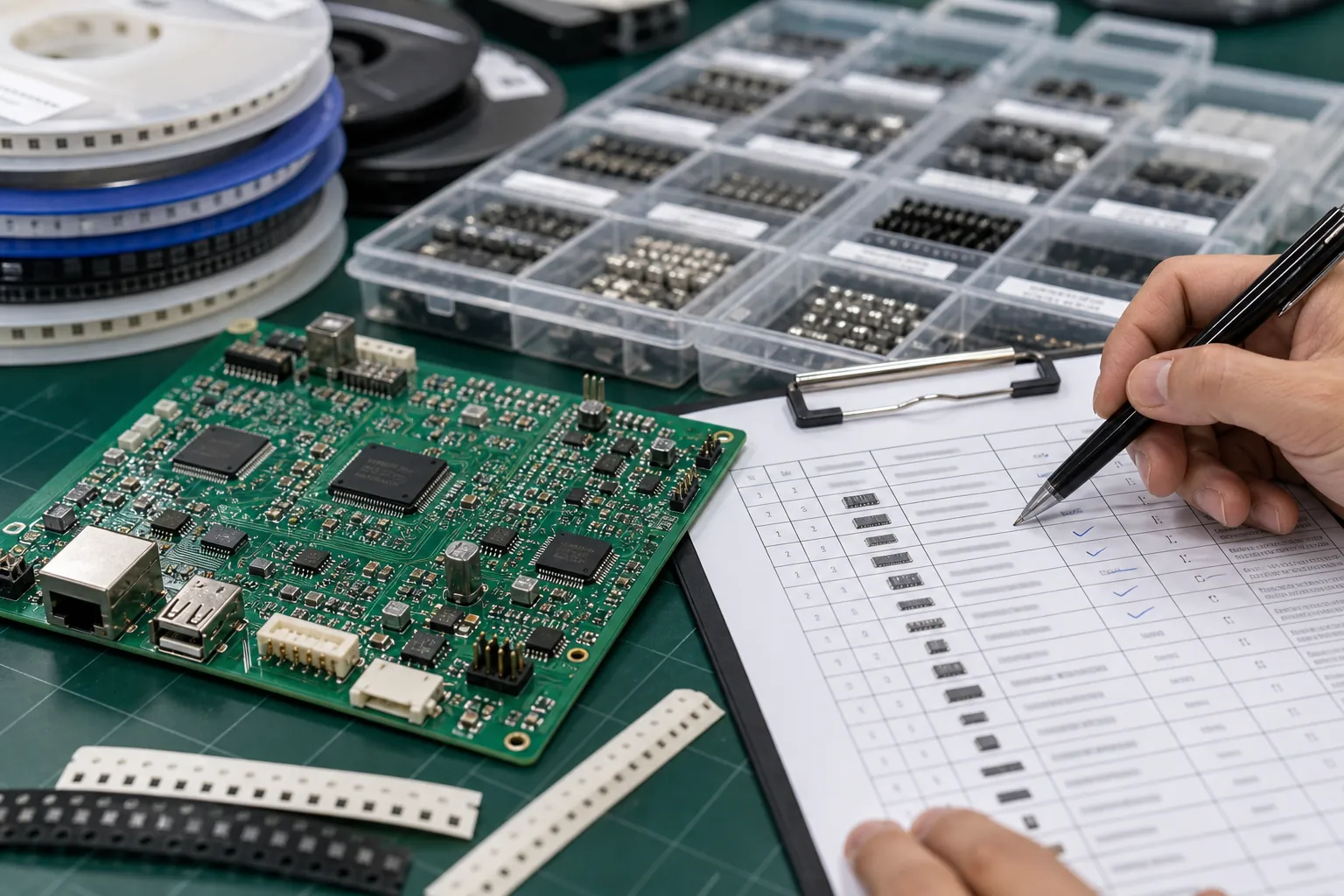
Before releasing a BOM, verify quantity per assembly, designator continuity, footprint-package match, lifecycle status, alternates, DNI flags, and whether long-lead parts need early buy planning. Confirm that the internal part number, MPN, and description are all aligned. Then make sure the BOM revision matches the exact PCB, schematic, and placement data being sent to manufacturing.
Many teams also benefit from a final cross-check against the source package used to create the PCB BOM in the first place. The goal is not to add bureaucracy. It is to stop preventable supply-chain and assembly issues before they consume engineer time and delay the build schedule.
What Good BOM Management Looks Like in Practice
In a mature workflow, engineering libraries are controlled, approved parts are reusable, alternates are validated ahead of shortages, and every manufacturing release points to one clear BOM revision. Purchasing sees exactly what can be substituted. Assembly knows which references are critical. Quality can trace what changed between builds. That is the practical outcome BOM management should create.
PCB BOM management is ultimately about reducing ambiguity. When the parts definition is clear, sourcing moves faster, assembly questions drop, and board revisions are easier to control. For real production work, that discipline is not overhead. It is one of the simplest ways to keep a build from failing before the first board is even assembled.
FAQ
What is PCB BOM management?
PCB BOM management is the control of component data, revisions, approved part numbers, alternates, and release status so engineering, sourcing, and assembly all work from the same accurate bill of materials.
Why do PCB BOM errors delay assembly?
BOM errors create sourcing confusion, wrong-package substitutions, missing components, unclear DNI status, and repeated questions between purchasing and the assembly house.
Should a PCB BOM include alternates?
Yes, when engineering has validated them. Documented alternates help purchasing respond to shortages without introducing uncontrolled substitutions into the build.
What should be checked before releasing a BOM?
Check revision match, quantities, designators, manufacturer part numbers, package alignment, lifecycle status, DNI flags, and any critical parts that require strict no-substitution control.