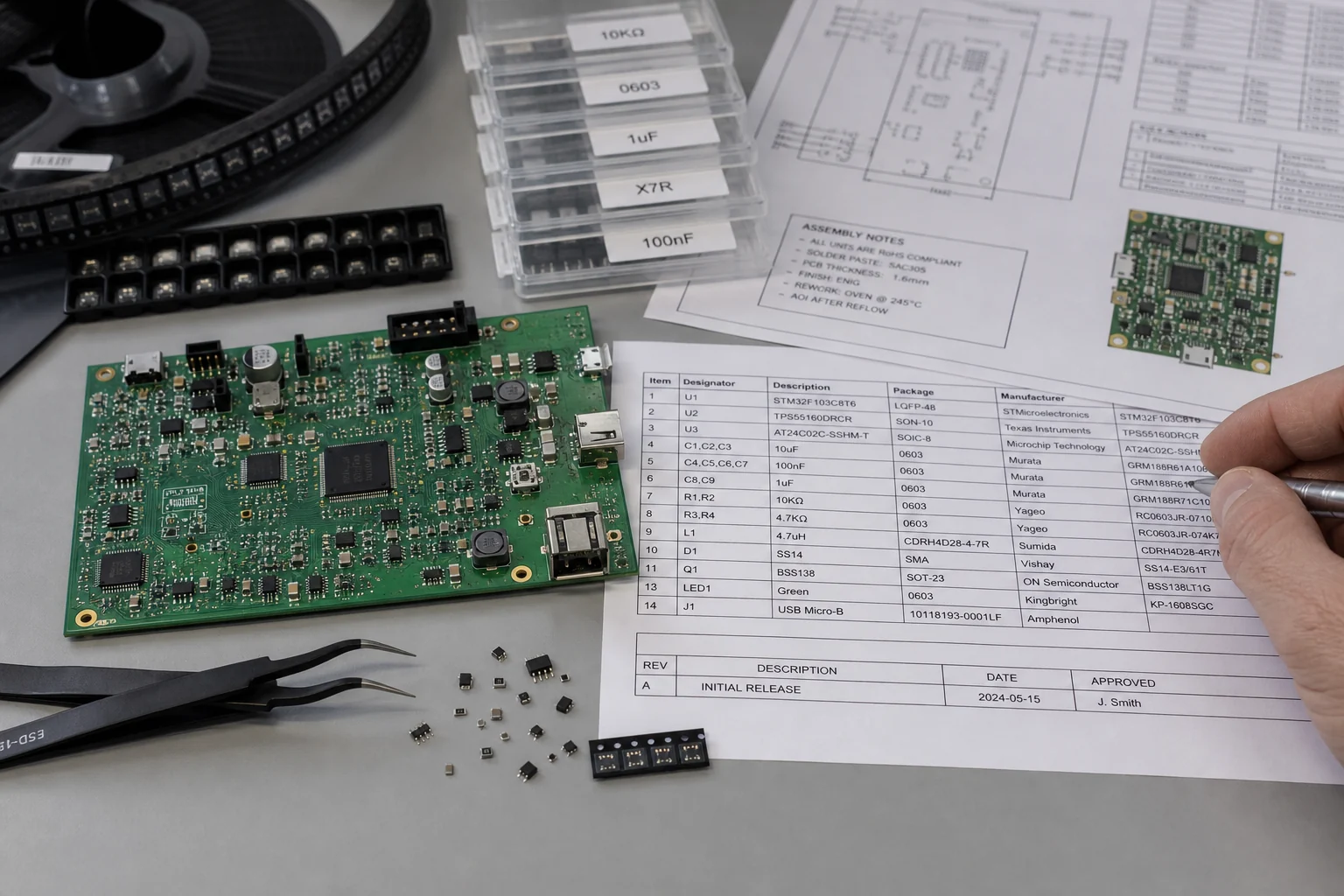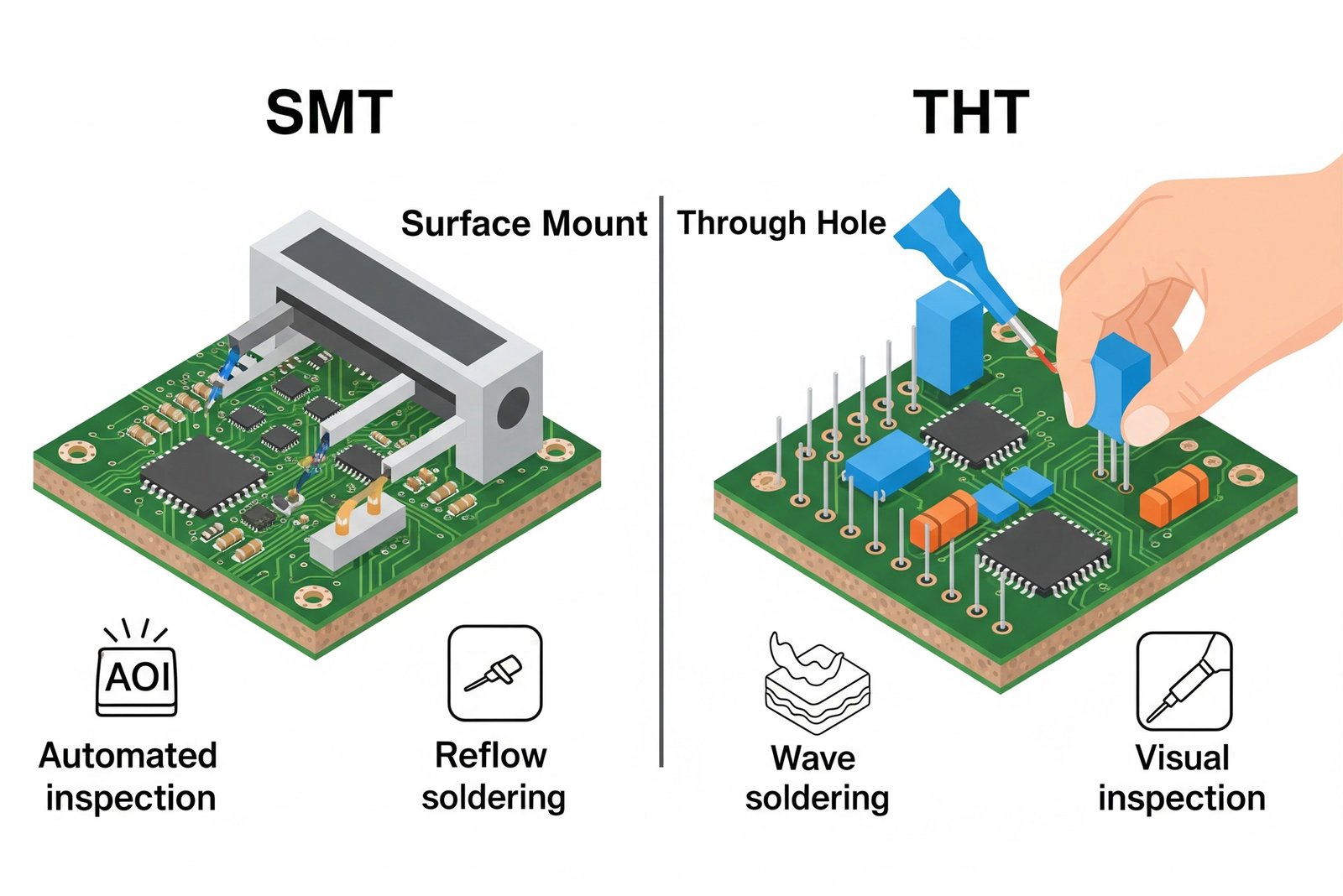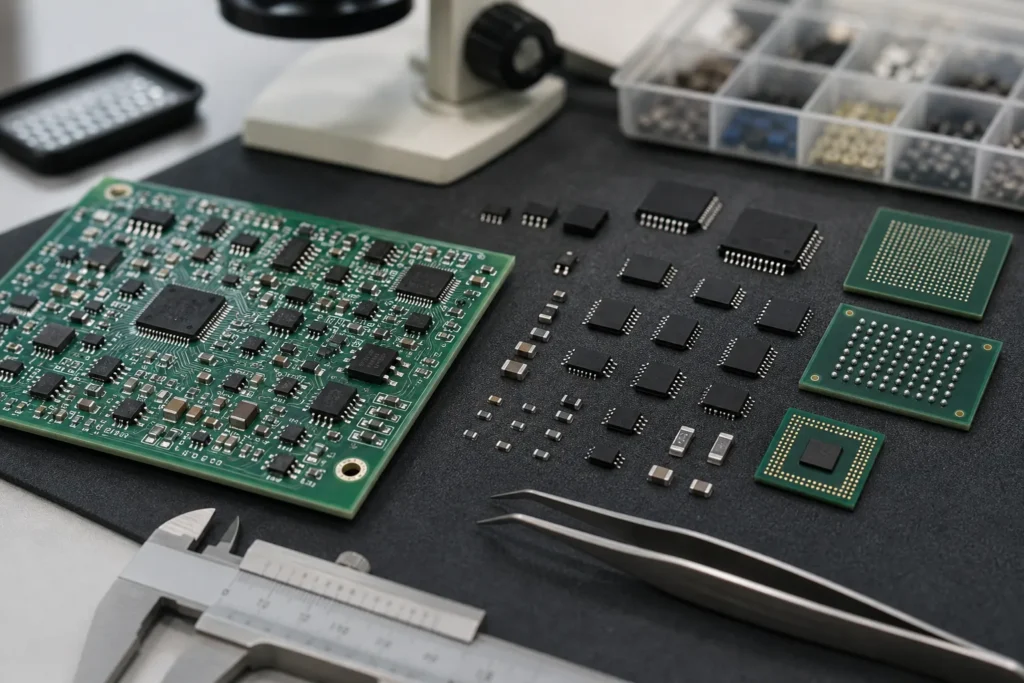
A surface mount device is not just an electronic part that happens to fit on the board. It is a manufacturing decision. Package style affects stencil release, placement tolerance, inspection access, rework difficulty, thermal behavior, and even whether a pilot build teaches you anything useful.
That is why choosing SMD packages by footprint size alone is rarely enough. Engineers often optimize for board area or unit cost and discover later that the real penalty shows up in feeder setup, hidden joints, or repair time. This guide focuses on how to choose surface mount packages that your assembly process can support reliably.
What a Surface Mount Device Actually Changes
The basic definition is straightforward: an SMD is a component designed for direct attachment to surface pads rather than plated through-holes. But the important engineering question is what that choice changes for the build.
Board density increases. Smaller parts and dual-side population make compact designs practical.
Automation becomes the default. Once package pitch gets fine enough, placement and reflow assumptions start driving the design.
Inspection changes. Gull-wing leads are easy to inspect visually. Leadless thermal pads and BGAs are not.
Rework becomes package-dependent. A 0603 resistor and a fine-pitch QFN are both SMDs, but they do not demand the same repair tools or operator skill.
ReversePCB’s SMT overview explains the process itself. The package-selection problem is narrower: which device style gives you the electrical result you want without making assembly harder than it needs to be?
Lead Shape Matters More Than Many BOMs Admit
Package choice often starts with the lead system, because the lead system controls wetting visibility, self-alignment behavior during reflow, and rework access.
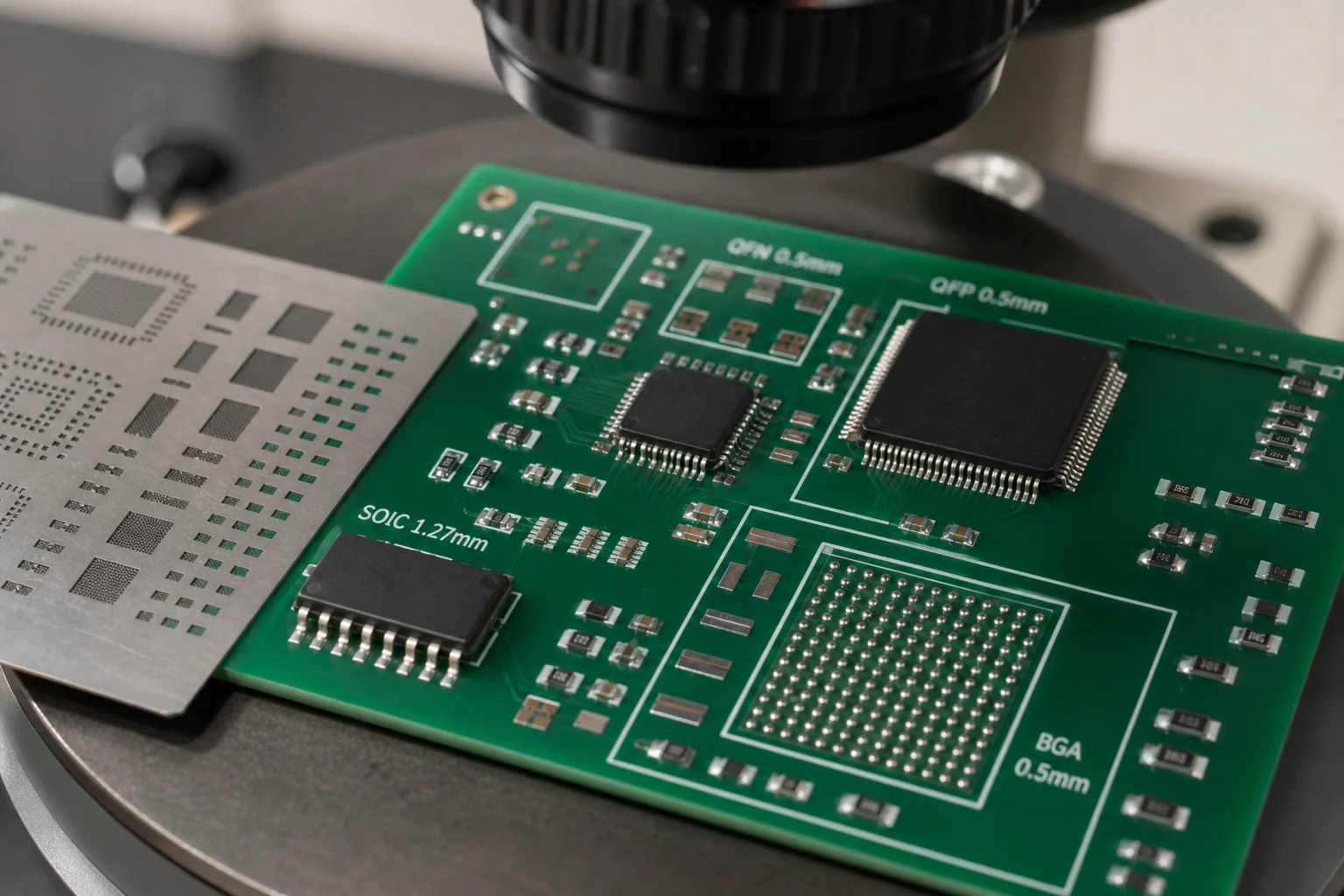
SOIC, TSSOP, and QFP packages have visible leads. They are forgiving in inspection and easier to probe or touch up than leadless packages.
QFN and DFN packages save space and often improve thermal performance, but their pads hide under the body. That raises the stakes for land-pattern discipline, paste strategy, and thermal-pad voiding control.
BGA packages maximize pin count and routing density, but they trade away direct visual inspection. If the product cannot justify X-ray access or careful rework planning, BGA may be the wrong convenience.
Chip passives seem simple until their size gets too aggressive. A move from 0603 to 0201 can change placement stability, stencil release, and field-service practicality more than it changes the electrical design.
Use This Selection Order Instead of Choosing by Size First
A practical package decision usually works better in this order:
Start with function and thermal load. Power devices and heat-sensitive ICs may need exposed pads or larger copper interfaces.
Check placement and inspection capability. If the build environment does not support very fine pitch, ultra-small passives, or X-ray validation, do not choose those packages casually.
Consider rework and service. A slightly larger package can save major time in prototype debug, field repair, and engineering change control.
Only then optimize area and cost. Board area matters, but not enough to justify a package that narrows the process window without product-level benefit.
Common SMD Package Mistakes That Hurt Yield
Specifying leadless parts without giving the thermal pad enough attention. The exposed pad is part of the assembly challenge, not an afterthought.
Using the smallest passive available for cosmetic reasons. Tiny packages impress a layout screenshot more than they improve many real products.
Ignoring inspection access. If the critical joint cannot be seen or tested, the process must compensate somewhere else.
Mixing wildly different package demands on one board without process planning. A board that combines large thermal slugs, ultra-fine pitch leads, and 0201 passives needs a deliberate stencil and profile strategy.
For teams that still need to decide whether a through-hole part is the better mechanical answer, through-hole versus surface-mount tradeoffs remain worth reviewing before committing the BOM.
Choose Packages the Factory Can Build, Inspect, and Repair
The best surface mount device choice is rarely the smallest, newest, or most compact package. It is the package that fits the electrical need while staying inside a sensible manufacturing window. When engineers make package decisions with assembly, inspection, and repair in mind, the board becomes easier to launch and easier to trust in production.
FAQ
What is a surface mount device?
A surface mount device, or SMD, is a component designed to be soldered directly onto PCB pads without leads passing through drilled holes.
What is the difference between SMT and SMD?
SMT is the assembly method, while SMD is the component built for that method. You choose an SMD package, then manufacture it with an SMT process.
Why does package choice affect manufacturability?
Package style affects stencil design, placement accuracy, inspection access, thermal performance, and rework difficulty. Two electrically equivalent parts can create very different assembly risk.
Are leadless packages always better than leaded packages?
No. Leadless packages can save space and improve thermal behavior, but they also reduce visual inspection access and often make rework harder. The best choice depends on the product and build environment.
When should an engineer avoid the smallest passive size available?
Avoid ultra-small passives when the board does not need them or when placement capability, rework access, or field-service reliability would improve with a slightly larger package such as 0603 instead of 0201.