Assigning the proper HTS tariff code to a PCBA requires looking beyond the physical board itself. Because a PCBA can act as anything from a simple power distribution circuit to a high-density processing unit, U.S. customs classification heavily relies on the board’s dedicated function within the parent machine. Identifying this operational context is the essential first step to accurate tariff filing and tariff exclusion eligibility.
For electronics buyers, sourcing teams, and engineering managers, the practical risk is not just duty rate. A weak classification can create customs delays, broker questions, documentation rework, and inconsistent treatment across repeated shipments. That is why the right approach is to classify the assembled board from what it does, how it is used, and whether it functions as a complete article, a part, or a subassembly of a larger system.
Why “PCBA” Is Not a Complete Classification Answer
A customs schedule classifies goods by legal headings and notes, not by the shorthand language a factory uses every day. “PCB” and “PCBA” are useful engineering terms, but they do not automatically resolve classification. A bare printed circuit may fall under a heading for printed circuits, while an assembled board may instead be classified as a part of a power supply, control apparatus, data-processing machine, telecommunications device, measuring instrument, or another finished function.
That distinction matters because an assembled board with components mounted on it can move out of the “printed circuits” concept and into a heading tied to what the board actually does in the end product. U.S. Customs rulings repeatedly classify PCBAs under the heading that matches the board’s role in the finished equipment rather than assigning one blanket code to every populated board.
The First Questions to Ask Before Choosing a Code
Start with function. Does the board regulate power, perform switching, process data, provide sensor measurement, or operate as part of a dedicated machine? Then ask whether the item is imported as a complete functional unit or only as a part to be installed into a larger device. Also ask whether the board has connectors, firmware, relays, displays, radios, or other features that push it toward a more specific heading.
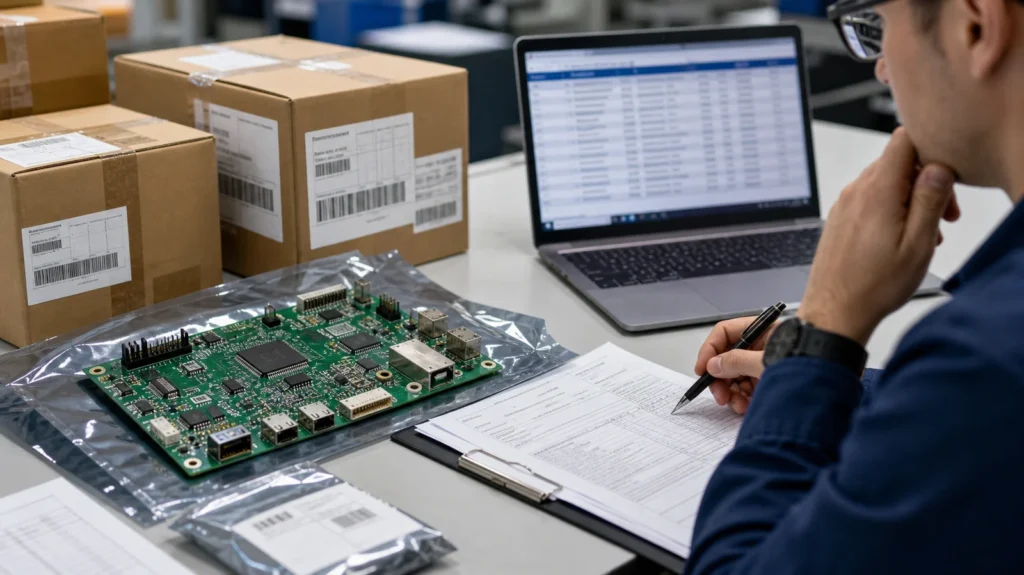
The supporting documents should include a short engineering description, schematic or block diagram context, bill of materials, target equipment, and a plain-English explanation of what the assembly does after installation. A broker or classifier can work faster when the technical package explains the board’s end use clearly instead of sending only a purchase order that says “assembled PCB.”
How U.S. HTS Treatment Usually Works for PCBAs
In practice, many PCBAs are classified under the heading of the apparatus they control or the machine they are solely or principally used with. A power-control board may be reviewed differently from a medical instrument board or a computer-related assembly. A populated board that only serves one device family may land in a parts heading for that equipment. A board that already performs a more defined electrical function may fall under a more specific apparatus heading.
The key point is that there is rarely one safe generic answer to “what is the HTS code for a PCBA board?” The answer depends on whether the shipment is a bare circuit, a printed circuit assembly, a control board, a replacement part, or a functional subassembly with a clearly defined use. If your documentation does not explain that use, the classification effort becomes slower and riskier.
Documents That Make Classification Easier
Good classification starts with clean technical paperwork. At minimum, keep the commercial invoice description, internal part number, BOM summary, and intended end use aligned. If the invoice says “PCBA board,” the packing list says “controller module,” and the engineering team calls it a “power management assembly,” customs reviewers may ask whether those descriptions refer to the same product or to different functions.
A strong package usually includes a concise product description, rated voltage or signal role, the host equipment name, whether the board is populated and programmed, and whether it is shipped as a replacement part or production input. ReversePCB customers already creating structured manufacturing data through a PCB BOM workflow have an advantage here because part lists and assembly definitions are easier to trace back into import descriptions.
Common Mistakes When Declaring a PCBA Shipment
One common mistake is declaring every populated board under a printed-circuit heading without checking whether the mounted components and end use move the assembly into a different legal heading. Another is using a finished-product code when the imported board is only a part and cannot perform the complete function by itself. A third is letting sales descriptions drive classification even when they are too vague to support the real technical function.
Engineering teams also create avoidable trouble when they release a new board revision without updating customs descriptions. If the revision adds radio hardware, measurement features, power conversion stages, or control relays, the product may need classification review again. Classification should be part of the release checklist for boards that are exported or imported regularly, not a task left to the logistics team after packaging is finished.
When to Escalate to a Broker or Binding Ruling
If a board serves a regulated product, uses a mixed function, or appears close to multiple headings, do not guess. Bring in a customs broker or request a formal ruling when the shipment value or recurrence justifies it. This is especially important for medical electronics, communications hardware, industrial control equipment, and assemblies that mix power conversion with logic or measurement functions. A classification that works for one shipment may not be defensible later if the product description was weak from the start.
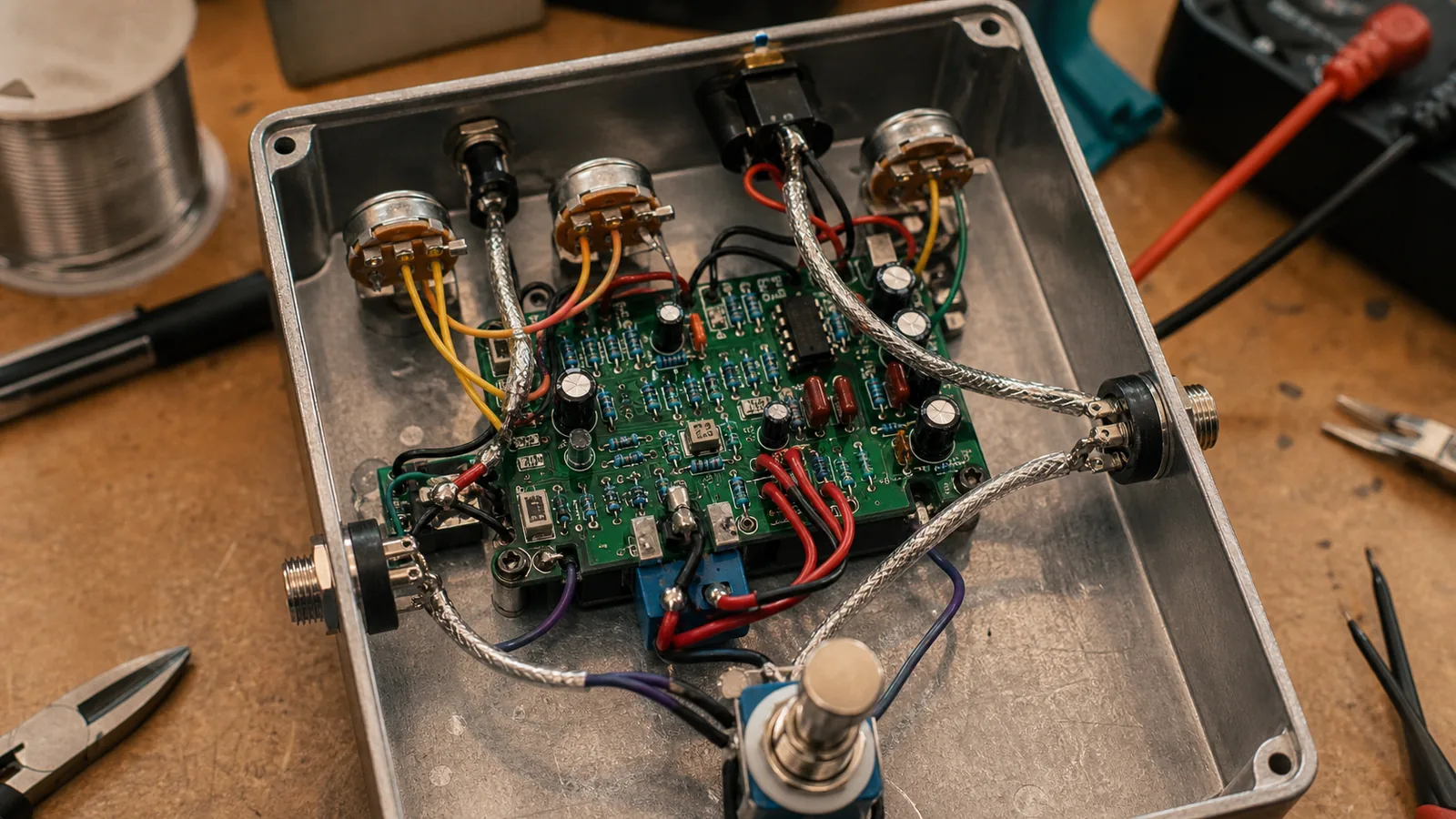
That review is easier when engineering supplies the right background early. A short block diagram, photos of the board installed in the host unit, and an explanation of how the assembly fits the finished equipment can save days of back-and-forth. The same preparation also helps if the company later needs to explain why a board was entered under one heading instead of another.
How PCB Design and Sourcing Choices Affect Classification Support
Classification is not purely a legal-office task. Engineers influence it through naming discipline, documentation quality, and how clearly the board’s intended function is defined. If the assembly package identifies connectors, interfaces, voltage domains, and host equipment cleanly, customs support becomes easier. If the board is described only as “main board” or “motherboard” without equipment context, classification risk rises.
This is another place where disciplined manufacturing data helps. A board that has already gone through a structured DFM and release process typically has clearer descriptions, controlled revisions, and fewer naming conflicts between purchasing, assembly, and logistics. That clarity improves sourcing, assembly planning, and import classification at the same time.
A Practical Checklist Before Shipping a PCBA
Before shipping, confirm the board’s functional description, host equipment, revision level, populated status, and invoice wording. Check whether the declared code matches the actual use of the board in the finished system. Make sure the broker sees the same product name and part number that appear on the commercial invoice, packing list, and internal engineering release. If the board is a replacement part, say so clearly. If it is a functional module, describe the function clearly.
The best result is not memorizing one HTS code for every PCBA. It is building a repeatable process that connects engineering function, BOM documentation, and shipping language so each assembled board can be classified on defensible facts. That approach reduces delays and gives sourcing teams more confidence when recurring PCBA imports or exports move through customs.
FAQ
Is there one HTS code for every PCBA board?
No. A PCBA is usually classified according to its specific function or the equipment it is used with, not by the generic term PCBA alone.
Why is a populated board not always classified as a printed circuit?
Once components are assembled and the board serves a defined function, customs classification may move to the heading that matches that function or the finished apparatus it belongs to.
What documents help classify a PCBA shipment?
A concise engineering description, host-equipment context, BOM summary, part number, invoice wording, and photos or diagrams of the assembly all help support accurate classification.
When should a company request broker help or a ruling?
Seek help when the board has mixed functions, high shipment value, recurring imports, regulated end use, or more than one plausible tariff heading.