PCB Oven: Reflow, Curing, and Baking Basics for Circuit Boards
A PCB oven is not just a hot box for circuit boards. In electronics manufacturing, the word can refer to a reflow oven for soldering surface-mount parts, a curing oven for coatings and adhesives, or a baking oven used to remove moisture from bare boards and components. Those jobs sound similar, but the temperature profile, airflow, timing, and failure risks are very different.
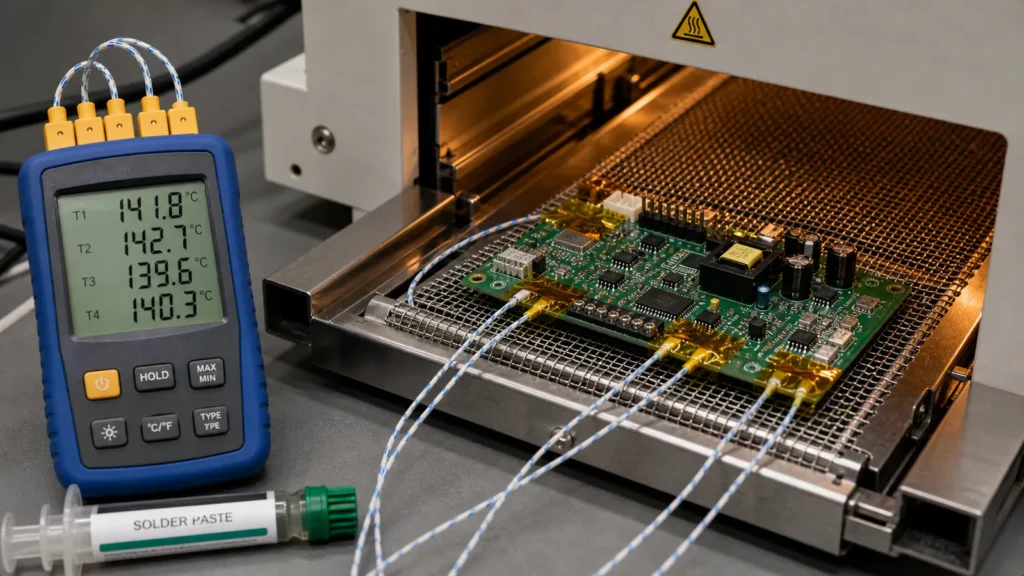
For buyers and engineers, the practical question is simple: what kind of heat process does the board actually need? A prototype with a few SMD parts may only need a controlled reflow profile. A conformally coated assembly may need low-temperature curing. A moisture-sensitive board or package may need baking before assembly. Confusing those processes can create weak solder joints, discolored laminate, tombstoned components, or hidden reliability problems that only show up after the product is in use.
What a PCB Oven Does
A PCB oven applies controlled heat to a printed circuit board or assembled PCB. The goal may be to melt solder paste, cure a coating, dry trapped moisture, or stabilize a material before another manufacturing step. The key word is controlled. Good results depend less on the maximum temperature and more on the shape of the thermal profile.
In a reflow process, the oven gradually brings the assembly through preheat, soak, reflow, and cooling zones. In a baking process, the oven may hold a lower temperature for hours. In a curing process, the oven follows the material supplier’s datasheet so the coating or adhesive crosslinks without damaging parts.
Reflow Oven vs Baking Oven
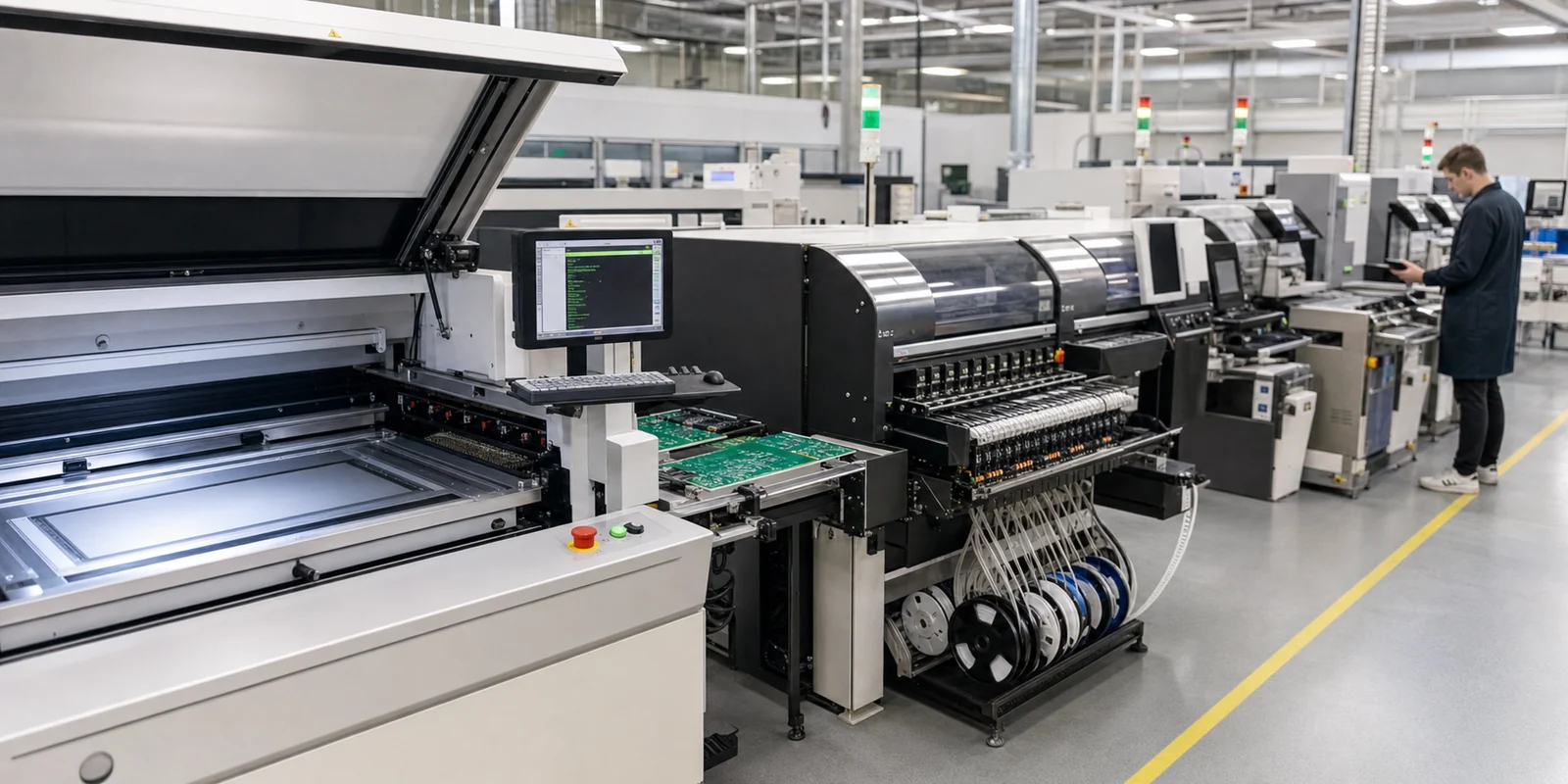
A reflow oven is designed for soldering. It needs repeatable zones, stable airflow, and a profile that matches the solder paste alloy. Lead-free solder usually needs a higher peak temperature than tin-lead solder, so the thermal margin can be narrower for plastic connectors, electrolytic capacitors, batteries, and displays.
A baking oven is used before or after assembly when moisture is a concern. FR-4 laminate, some components, and some packaging materials can absorb moisture. If moisture expands quickly during soldering, it may cause delamination, popcorning, or internal package damage. Baking is slower and lower temperature than reflow, and it should follow the component or material limits.
When PCB Baking Is Useful
Baking can help when boards have been stored in a humid environment, when moisture-sensitive devices were exposed outside their dry pack, or when a board has gone through cleaning and needs controlled drying. It is also used before some repair processes, especially if a board will see localized hot-air rework.
Baking is not a cure-all. It will not repair contaminated copper, bad solderability, weak plating, or poor laminate quality. It also can damage labels, plastics, batteries, adhesives, and some connectors if the temperature is too high or the dwell time is too long.
Reflow Profile Basics
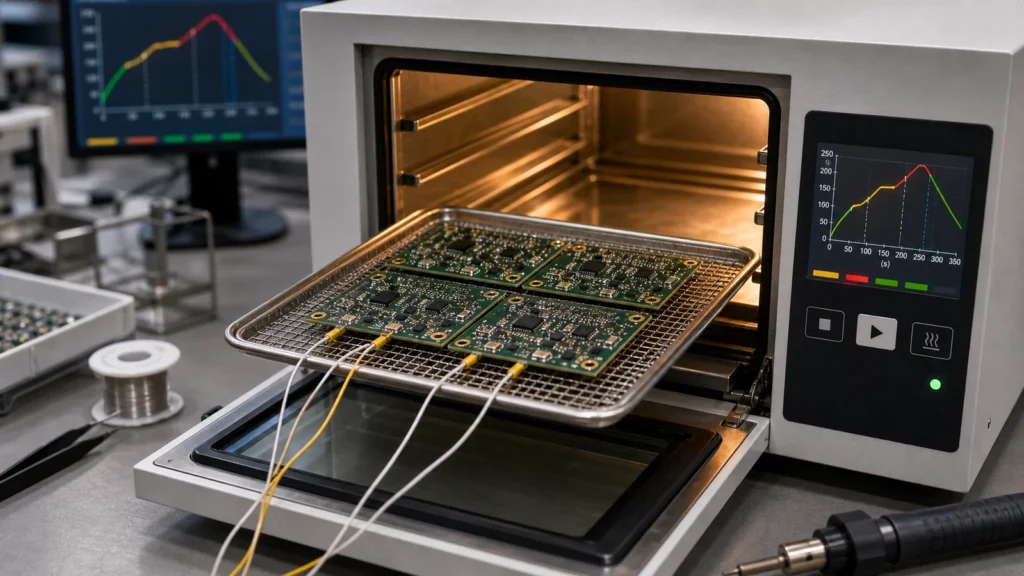
A typical reflow profile has four stages. Preheat raises the board temperature gradually so components do not experience thermal shock. Soak allows the assembly to become more even in temperature and activates flux chemistry. Reflow brings solder above liquidus long enough to wet pads and component terminals. Cooling solidifies the solder joint and affects grain structure.
The profile should be verified on the actual board, not guessed from the oven display. A dense power board, a small sensor board, and a large mixed-technology assembly can behave very differently. Thermal mass, copper area, board thickness, and component placement all change the real temperature seen at the solder joint.
Common PCB Oven Problems
Overheating is the obvious risk, but uneven heating is often more damaging. One area of the board may reach a safe reflow temperature while another stays too cool, causing dull joints, insufficient wetting, or opens. Too aggressive a ramp can crack ceramic capacitors or warp thin boards. Too slow a profile can exhaust flux before reflow, leaving poor wetting and residue.
For PCB assembly, oven setup should be treated as part of process engineering, not a background detail. A good assembly partner will check paste specifications, component limits, board construction, and inspection results before locking a profile.
Using an Oven for PCB Repair
Repair work sometimes uses preheaters or small ovens to bring the whole board to a safer baseline temperature before hot-air rework. This reduces thermal shock and can make rework more predictable. But full-board heating must be used carefully. Connectors, shields, electrolytic capacitors, and plastic housings may not tolerate the same heat as the solder joint being repaired.
If the board has high value or unknown materials, start with conservative temperatures and measure actual board temperature. For complex failures, a controlled PCB repair workflow is safer than repeated heating attempts.
What to Specify to a Manufacturer
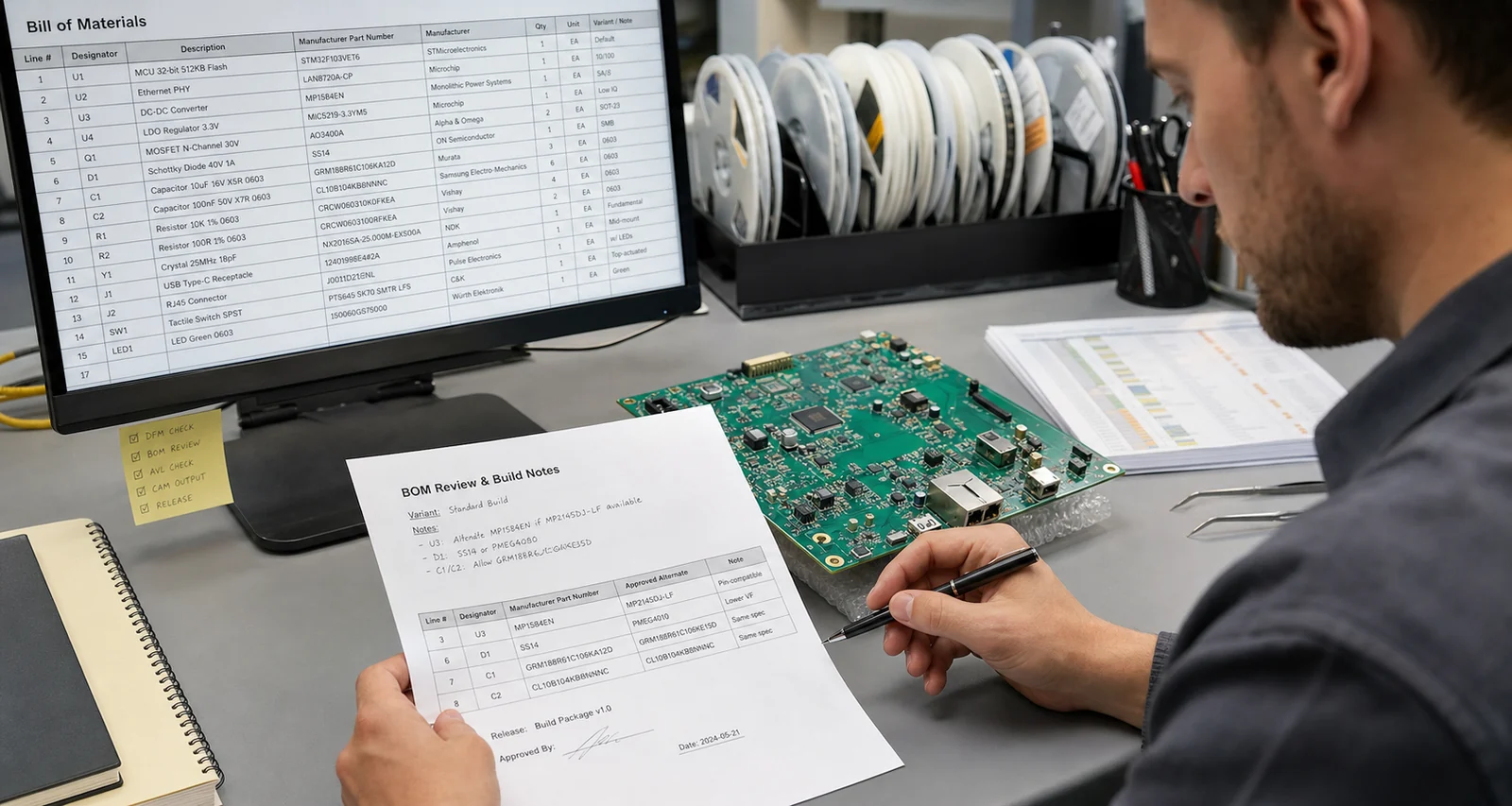
When asking a supplier about PCB oven processing, provide the solder paste type, component sensitivity, board thickness, copper weight, surface finish, and any coating or adhesive datasheets. For baking, mention storage conditions and whether moisture-sensitive components are already mounted.
Engineers should also ask how the oven profile is verified. Thermocouples on representative boards, inspection after reflow, and records of peak temperature are more useful than a generic statement that the oven is “set to 245 C.”
Bottom Line
A PCB oven can improve soldering, drying, curing, and repair quality when the process is controlled. The wrong oven profile can create defects that look random later. Treat the oven as part of the board’s manufacturing recipe: match it to the material, measure the real board temperature, and document the profile for repeat builds.
What is a PCB oven used for?
A PCB oven can be used for solder reflow, adhesive curing, conformal coating bake-out, or moisture removal. The required profile depends on the process and materials.
Why is a temperature profile important?
Components and solder paste respond to ramp rate, soak time, peak temperature, and cooling speed. A poor profile can cause tombstoning, voids, cold joints, or heat damage.
Can a household oven be used for PCB reflow?
It is not recommended for controlled production work. Reflow needs repeatable temperature control, safe ventilation, and separation from food-use equipment.