Surface mount PCB design is more than putting SMD parts on a board
Many teams treat a surface mount PCB as the default option until assembly yield drops, rework becomes expensive, or test coverage collapses. The board may still look fine in CAD, yet the first build exposes solder bridging around fine-pitch parts, tombstoning on small passives, hidden voids under thermal pads, or components that AOI can barely inspect.
For ReversePCB readers, the useful question is not whether SMT is modern or compact. The real question is whether the board was laid out so the surface mount process can print paste consistently, place parts repeatably, survive reflow without imbalance, and still leave room for inspection, debug, and repair. A surface mount PCB that only optimizes density can become the hardest board in the project to build reliably.
What a good surface mount PCB must do on the factory floor
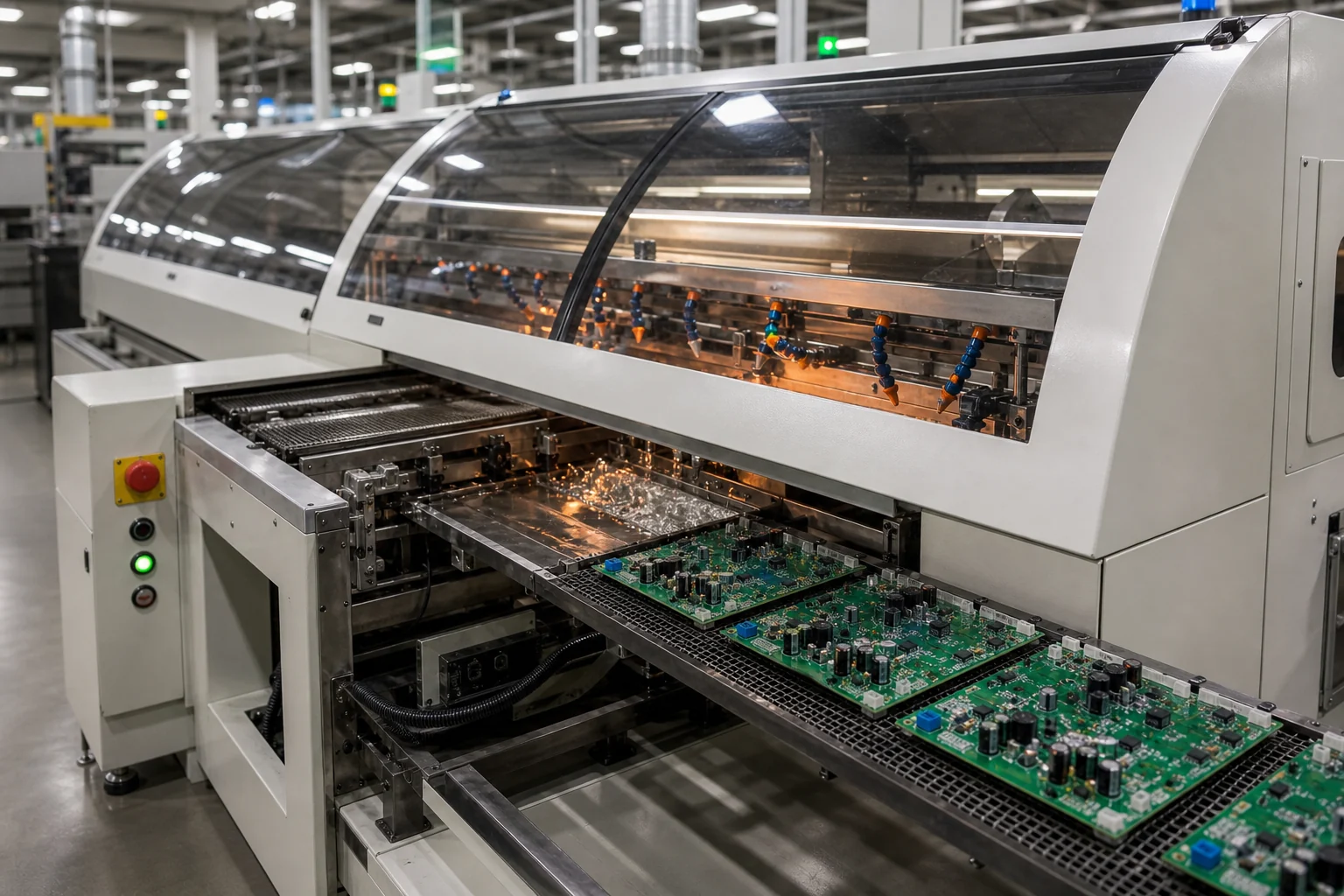
At board level, a surface mount PCB has to satisfy more than electrical connectivity. It has to move cleanly through stencil printing, pick-and-place, reflow, inspection, and functional test without forcing operators to compensate for layout decisions they cannot fix at the line.
The first pressure point is the package mix. A board that combines 0201 passives, large inductors, bottom-terminated QFNs, tall electrolytics, and a heat-spreading ground plane needs more than a generic SMT setup. Paste volume, placement accuracy, soak time, peak temperature, and cool-down rate all become harder to balance when the thermal mass is uneven across the assembly.
The second pressure point is access. If polarity marks are hidden, fiducials are weak, reference designators are buried, or test pads disappear under crowded routing, the line can still build the board, but verification becomes slower and more error-prone. That raises the cost of every escaped defect.
Layout decisions that make SMT assembly stable
Choose packages for assembly margin, not just footprint area
Shrinking every resistor and capacitor to the smallest package that fits the schematic often looks efficient in CAD but creates avoidable risk in production. A 0402 or 0201 part may be reasonable on a space-constrained RF board, but on a general control board it also tightens paste-volume tolerance, increases sensitivity to pad imbalance, and makes manual verification harder.
Package choice should reflect the board’s expected build volume, rework strategy, thermal load, and available inspection tools. Fine-pitch QFNs and BGAs can reduce routing pressure, but they also shift defects under the package where AOI cannot see them directly. If the assembler does not have reliable X-ray coverage or a validated rework path, the package decision can lower first-pass yield even when the electrical design is sound.
Keep pad geometry and copper balance under control
A surface mount PCB lives or dies on land pattern discipline. Oversized pads invite excess solder and skewed wetting forces. Undersized pads reduce joint robustness and can leave little heel or toe fillet for inspection. Thermal imbalance makes the problem worse. A passive part tied heavily into one copper region and lightly into the other can tombstone because one end wets and lifts before the opposite end catches up.
This is where library quality matters. IPC-based footprints are a starting point, not a guarantee. If the board uses nonstandard paste reductions, via-in-pad structures, or large exposed thermal pads, the footprint should be reviewed together with stencil strategy. For power devices and regulators, paste-window design on the thermal pad often decides whether the package floats, voids excessively, or sits flat enough for reliable heat transfer.
Give the line room to place, inspect, and depanel
Dense placement is not automatically efficient. Components placed too close to panel rails, tooling strips, board edges, or tall neighboring parts can create nozzle-clearance problems and awkward rework access. Rotating polarized parts randomly to chase routing convenience also slows visual checks and increases placement-program complexity.
A practical surface mount PCB groups similar passives in consistent orientations where possible, protects keep-out areas around connectors and shields, and leaves sensible access around components that are likely to be replaced in debug builds. If the board will be panelized, account early for break-off stress near ceramic capacitors, crystal packages, and edge-mounted parts. Panels that crack solder joints during depaneling usually expose a layout decision, not a line-operator mistake.
Inspection and test are where hidden weaknesses show up
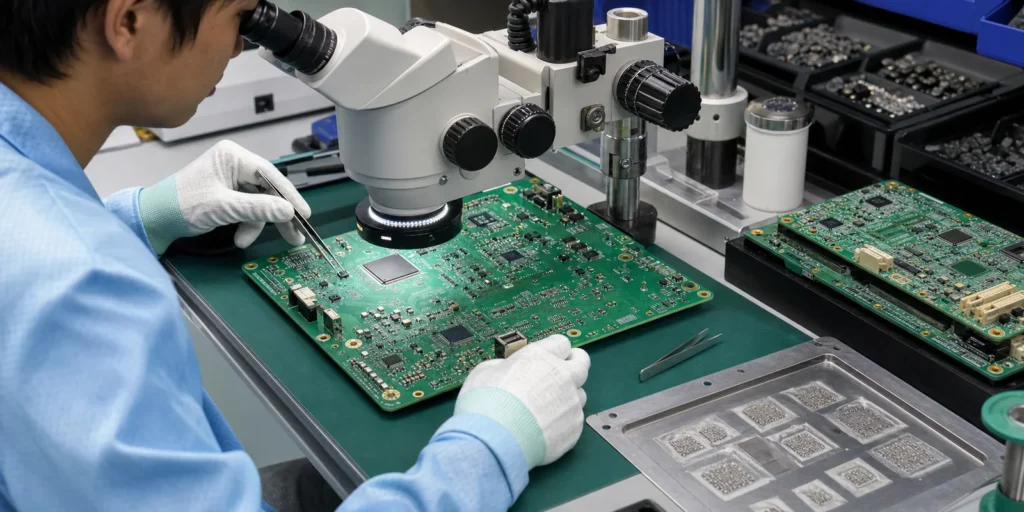
Many SMT problems are not discovered during placement. They appear when the board reaches AOI, in-circuit test, or first power-up. That is why a surface mount PCB should be laid out with DFT in mind instead of treating test access as a late ECO exercise.
Reference marks, pin-1 indicators, LED polarity, and connector orientation should remain visible after assembly, not disappear under the component body or silkscreen clutter. Fine-pitch ICs need enough escape strategy that solder shorts can be isolated during troubleshooting. Critical rails, reset lines, clocks, and communication buses should have reachable test points when firmware bring-up depends on fast diagnosis.
Inspection limits also matter. AOI is strong at polarity, absence, offset, and many visible solder-shape defects, but it cannot directly validate every hidden joint. Bottom-terminated parts, large thermal pads, and dense leadless packages may need X-ray or process validation samples. If the product cannot justify that inspection path, choosing a slightly larger or more inspectable package may be the better engineering trade.
Surface mount PCBs often become difficult to repair for predictable reasons
Repair difficulty is usually designed in early. Boards packed with tiny passives under daughtercards, connectors placed over hot QFNs, or glued-down shields near sensitive analog sections can turn a simple failed component into a high-risk rework job.
Heat concentration is one of the most common problems. When copper planes sink heat away from one region while nearby plastic connectors or batteries limit allowable rework temperature, the technician has almost no safe process window. Add underfilled packages, fragile pads, or thin laminate, and each rework cycle raises the chance of pad lifting or pad cratering.
For prototypes and lower-volume industrial products, a slightly larger package or cleaner service corridor can save far more time than the board area it consumes. If field repair matters, ask early whether the likely failed parts can actually be removed and replaced without damaging adjacent components or the board finish.
When mixed technology is still the smarter choice
Some teams force everything into SMT because it sounds more current, but a mixed-technology board is often the better answer. High-stress connectors, transformers, heavy relays, large electrolytics, and parts that face repeated mechanical loading may still belong in through-hole form. The decision is not old versus new. It is whether the package matches the assembly process, test plan, and mechanical environment.
That is especially true when comparing dense logic areas with power-entry or cable-interface zones. A board can use surface mount technology for control electronics while keeping mechanically vulnerable parts through-hole for strength and serviceability. If you are weighing that trade, the manufacturing question is broader than through-hole versus surface mount techniques. It includes fixture design, soldering method, inspection access, and what happens after the first field return.
A release checklist for any surface mount PCB
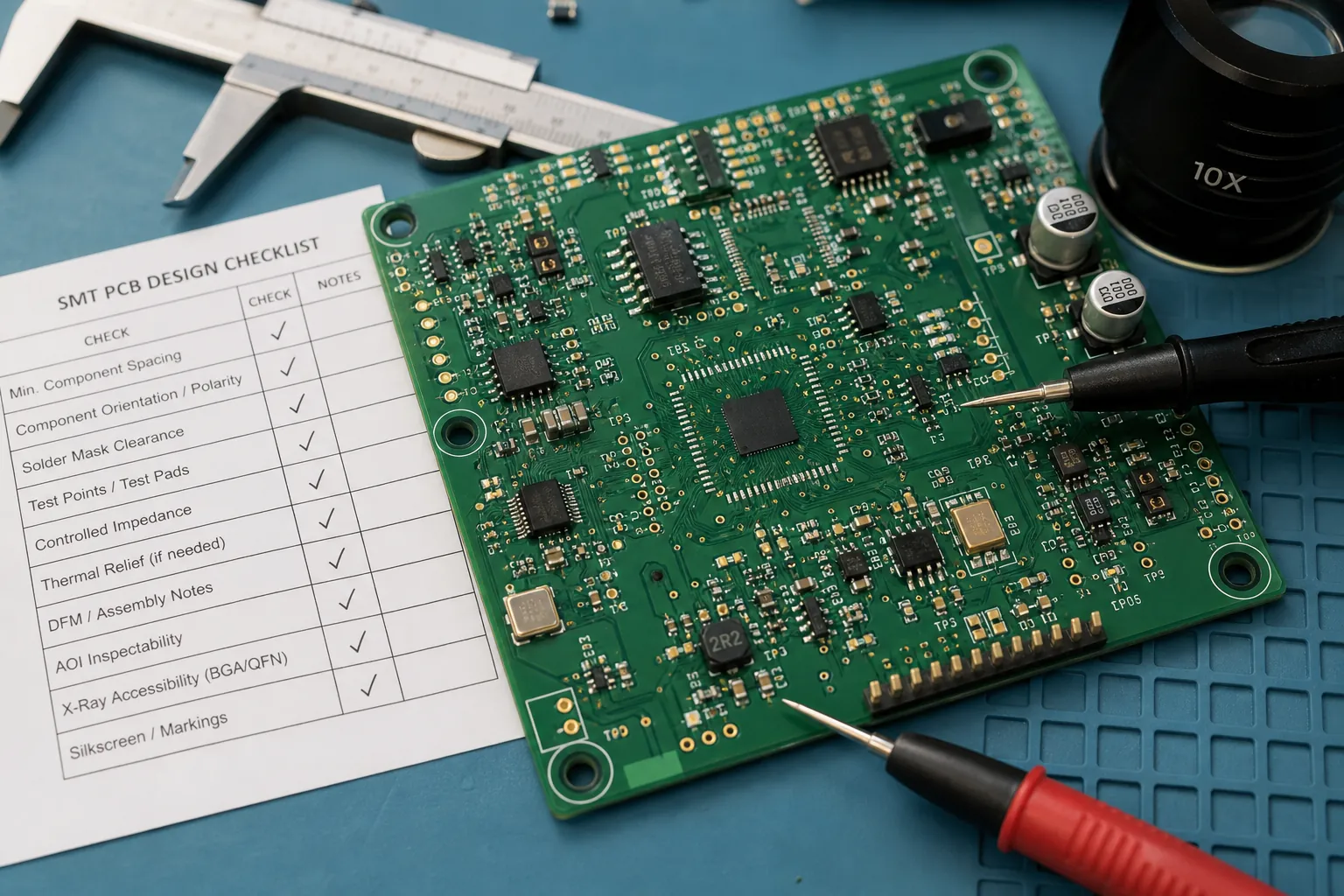
Before sending a surface mount PCB to prototype or volume assembly, it is worth checking a short list of issues that commonly escape schematic review:
- Are package sizes realistic for the assembler, production volume, and expected rework method?
- Do critical footprints need custom paste reduction, thermal-pad windowing, or via-fill rules?
- Are polarity marks, pin-1 marks, and key test points still visible after placement?
- Will AOI or X-ray actually be able to verify the joints that matter most?
- Are edge parts, tall parts, and fragile ceramics protected from panel-break stress?
- Can a technician probe, remove, and replace the parts most likely to fail?
If the answer is uncertain on any of those points, the board is not fully ready just because routing is complete. A robust surface mount PCB is one that still behaves well after stencil printing, reflow, inspection, debug, and repair all get their turn.
Final thought
A surface mount PCB should be judged as a manufactured assembly, not just a finished layout image. When package choice, footprint control, copper balance, inspection access, and rework realities are handled together, SMT gives real advantages in density and repeatability. When those decisions are made in isolation, the board may pass design review and still struggle on the line.
For teams already building around what SMT means in PCB assembly, the next improvement usually does not come from a faster machine. It comes from designing the board so the SMT process has more margin and fewer hidden traps. That is also what reduces avoidable defects such as cold solder joints once the board reaches build and repair.
FAQ
What is a surface mount PCB?
A surface mount PCB is a board designed so most or all components are soldered directly onto pads on the board surface rather than inserted through drilled holes. In practice, the term is most useful when it describes a board optimized for stencil printing, pick-and-place, reflow, inspection, and rework, not just a board that happens to use SMD parts.
Why do some surface mount PCBs have low assembly yield?
Yield usually drops because layout and package choices leave too little process margin. Common causes include unbalanced copper around small passives, poor thermal-pad paste design, weak polarity marking, crowded placement near tall parts, and package choices that exceed the assembler’s inspection or rework capability.
When is through-hole still better than a surface mount PCB approach?
Through-hole is often better for mechanically stressed connectors, heavy components, large transformers, and parts that need stronger anchoring or easier field replacement. Many practical boards use mixed technology so dense logic can stay SMT while mechanically exposed parts remain through-hole.
What should be checked before releasing a surface mount PCB for assembly?
Review package sizes, pad geometry, paste strategy, polarity visibility, test-point access, inspection coverage, and depanel stress risk. Also confirm that the parts most likely to fail can still be probed and reworked without damaging nearby components or lifting pads.