What is Reflow Soldering?
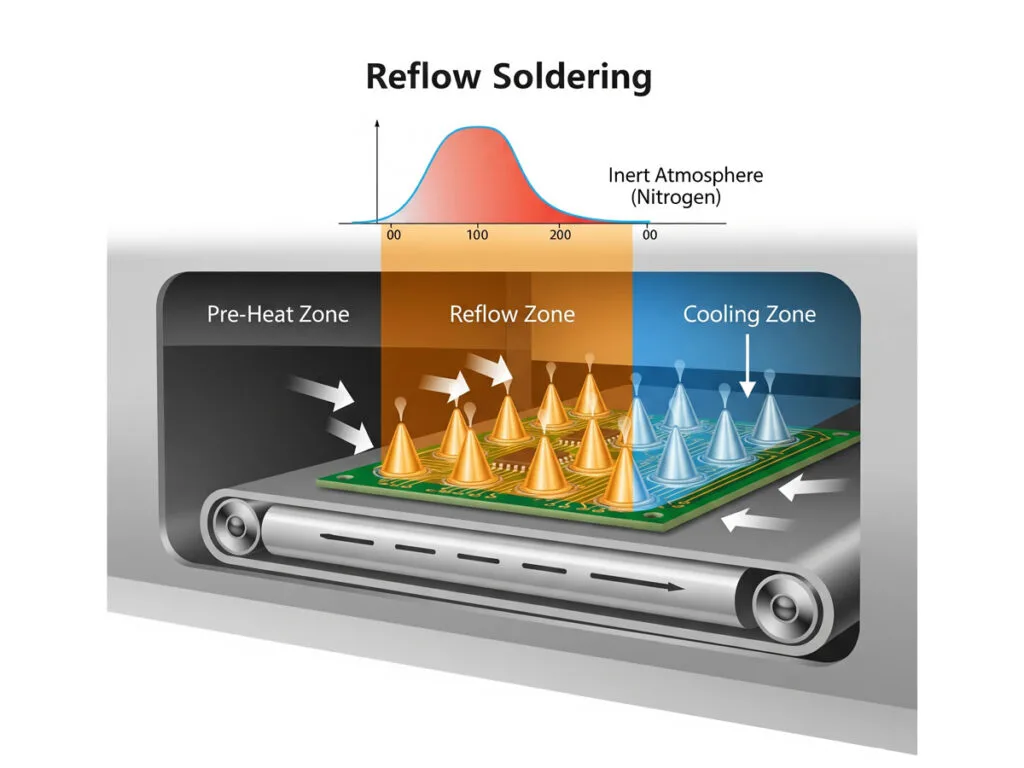
Reflow soldering is a fundamental technique that creates electrical and mechanical connections between electronic components and a printed circuit board (PCB) by heating a pre-applied solder paste to reflow (melt and re-solidify). This process is crucial for producing the high-density, miniaturized devices we use every day.
Why It's Important
It enables the mass production of devices like smartphones, laptops, and wearables. Its ability to create reliable solder joints is essential across a wide range of industries.
Key Industry Applications
Reflow soldering is vital in consumer electronics, automotive electronics, aerospace and defense, and medical devices.
The Future of Reflow
Future advancements include more intelligent equipment, new solder materials, and the integration of 3D printing and AI/ML to further enhance quality and efficiency, and flexibility of manufacturing.
The Process Flow: From Paste to Joint
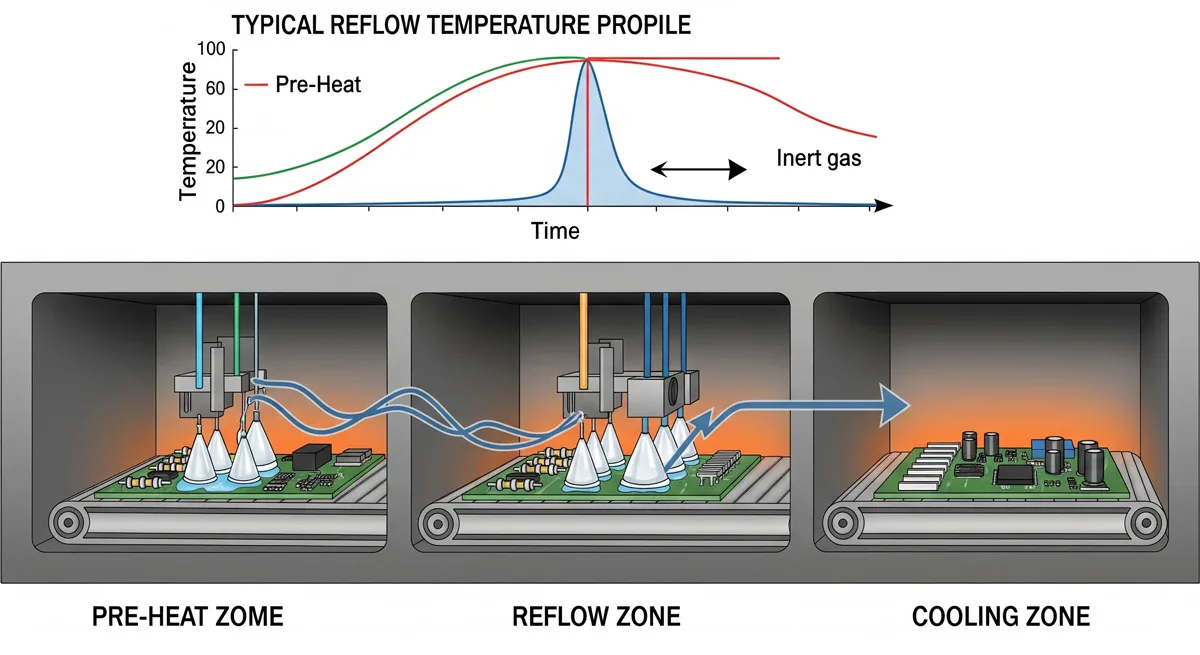
This section guides you through each step of the reflow soldering process. Use the interactive flowchart and temperature profile chart to understand the key parameters and goals of each stage.
Step 1: Printing
Step 2: Placement
Step 3: Reflow
Solder Paste Printing
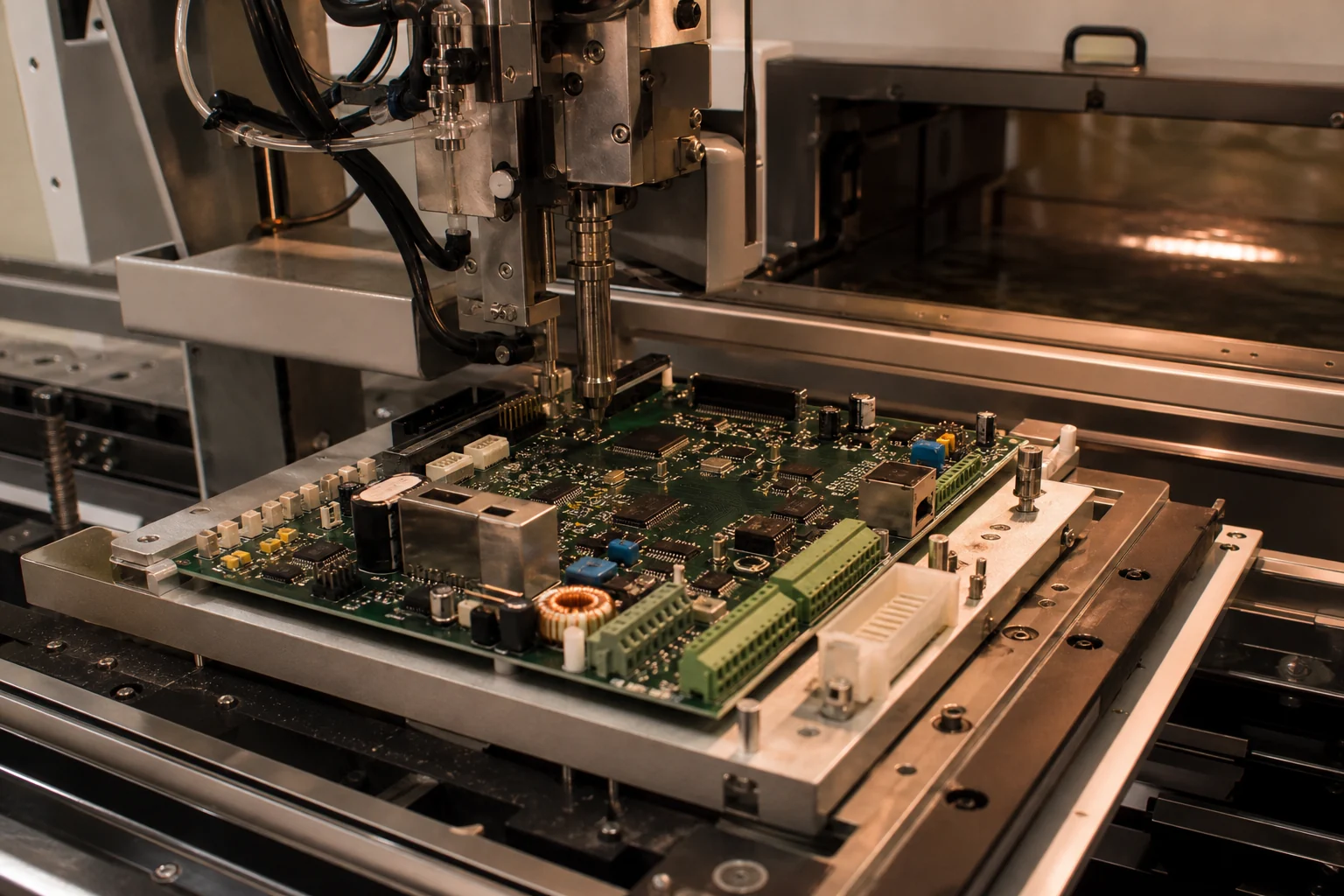
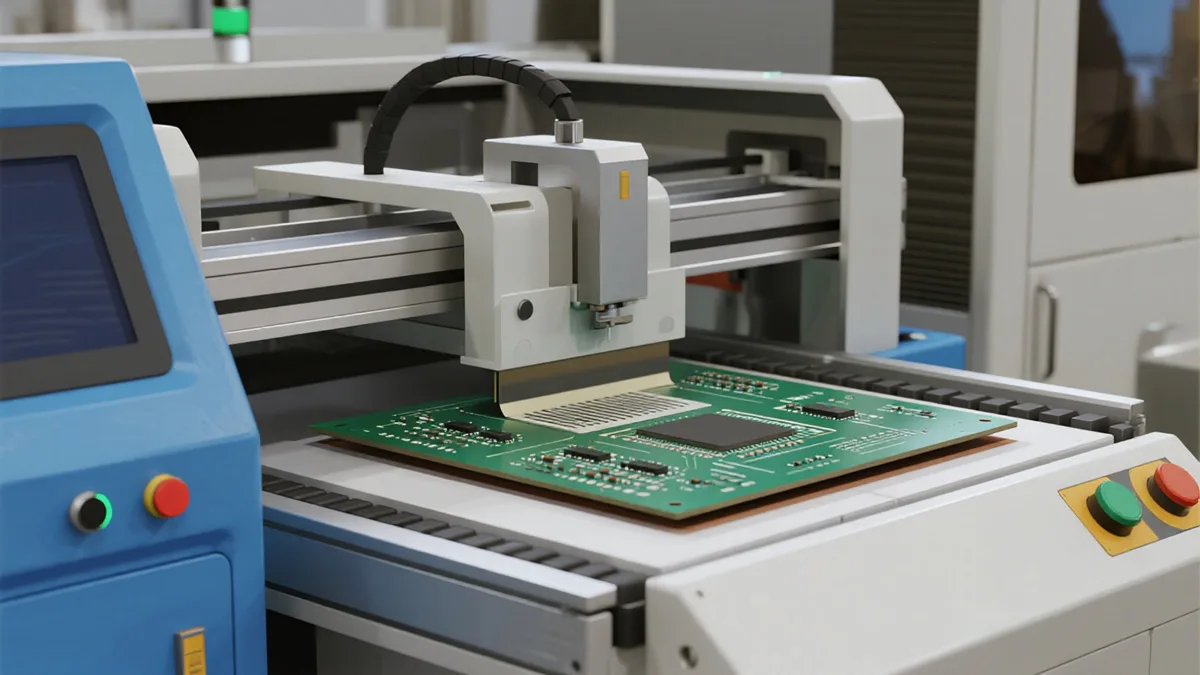
This is the critical first step for a high-quality solder joint. A thin sheet of metal, a stencil, with openings matching the PCB pads is used. Solder paste is then pushed through these openings onto the pads. The amount and position of the paste must be precisely controlled to prevent defects.
Interactive Temperature Profile
Click a button to see stage details
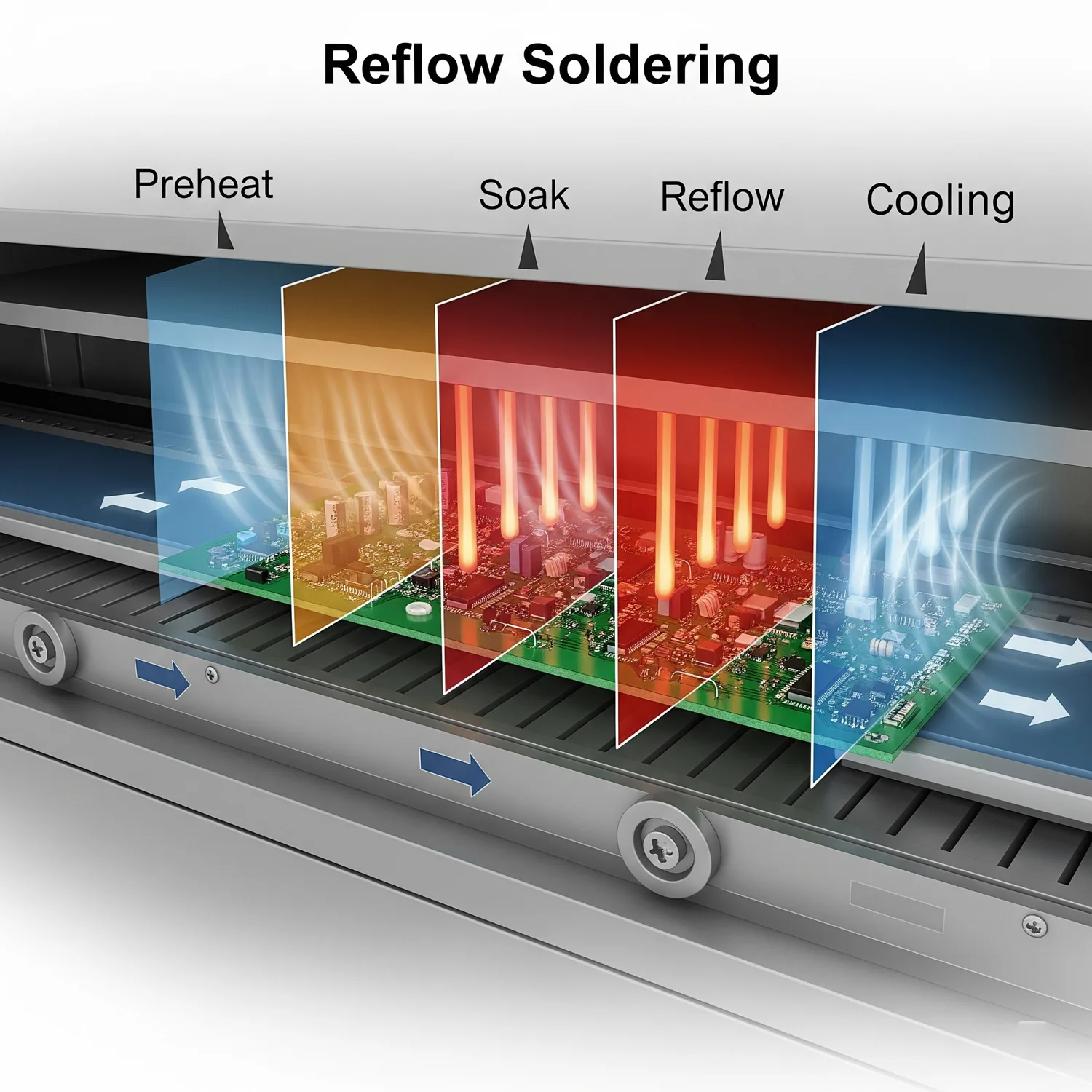
The profile controls chemical and physical changes during soldering.
Common Defects and Solutions
Even in highly automated processes, issues can arise. This section is a practical guide to help you quickly identify the root causes of common soldering defects and find effective solutions to improve product quality.
Reflow Soldering vs. Wave Soldering
Reflow is not the only technique. Comparing it to wave soldering helps you understand their fundamental principles, advantages, and applications, leading to more informed technical decisions.
| Feature | Reflow Soldering | Wave Soldering |
|---|---|---|
| Component Type | SMT Components | Through-Hole (THT) |
| Principle | Heating pre-applied paste | Passing over molten wave |
| Accuracy | Very high (High-density) | Lower Accuracy |
| Primary Use | Consumer Electronics | Power Supplies, Appliances |