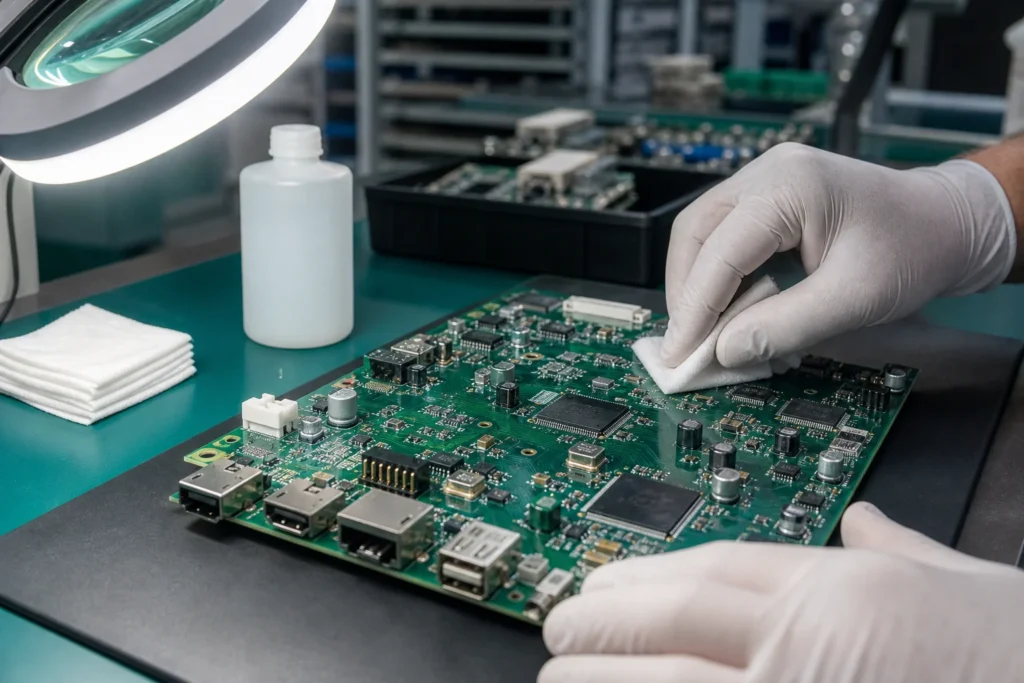
Many PCB assemblies do not need aggressive cleaning after soldering. Many others absolutely do. The mistake is treating cleaning as a cosmetic step instead of a contamination-control decision. Flux residues, handling oils, wash chemistry, trapped moisture, and coating requirements all change whether a board can ship safely as built or whether it needs a controlled wash and drying process first.
That is why the right question is not simply “how do I clean a PCB assembly?” The more useful question is what residue is still on the board, what that residue can do in the real product, and what damage the cleaning process itself might cause. On a low-voltage consumer board with true no-clean flux and no coating step, a light amber residue may be acceptable. On a high-impedance analog board, a dense LED driver, or a product that will be conformal coated, the same residue can become a leakage, corrosion, adhesion, or serviceability problem.
This guide is written for the assembly and engineering side of the decision. If you need a broader refresher on process chemistry first, ReversePCB already covers the basics of soldering flux. Here the focus is narrower: when should a PCB assembly be cleaned after soldering, what should be checked before deciding, and what failure modes show up when teams either skip cleaning blindly or wash boards with the wrong process?
Start with the residue, not with the solvent bottle
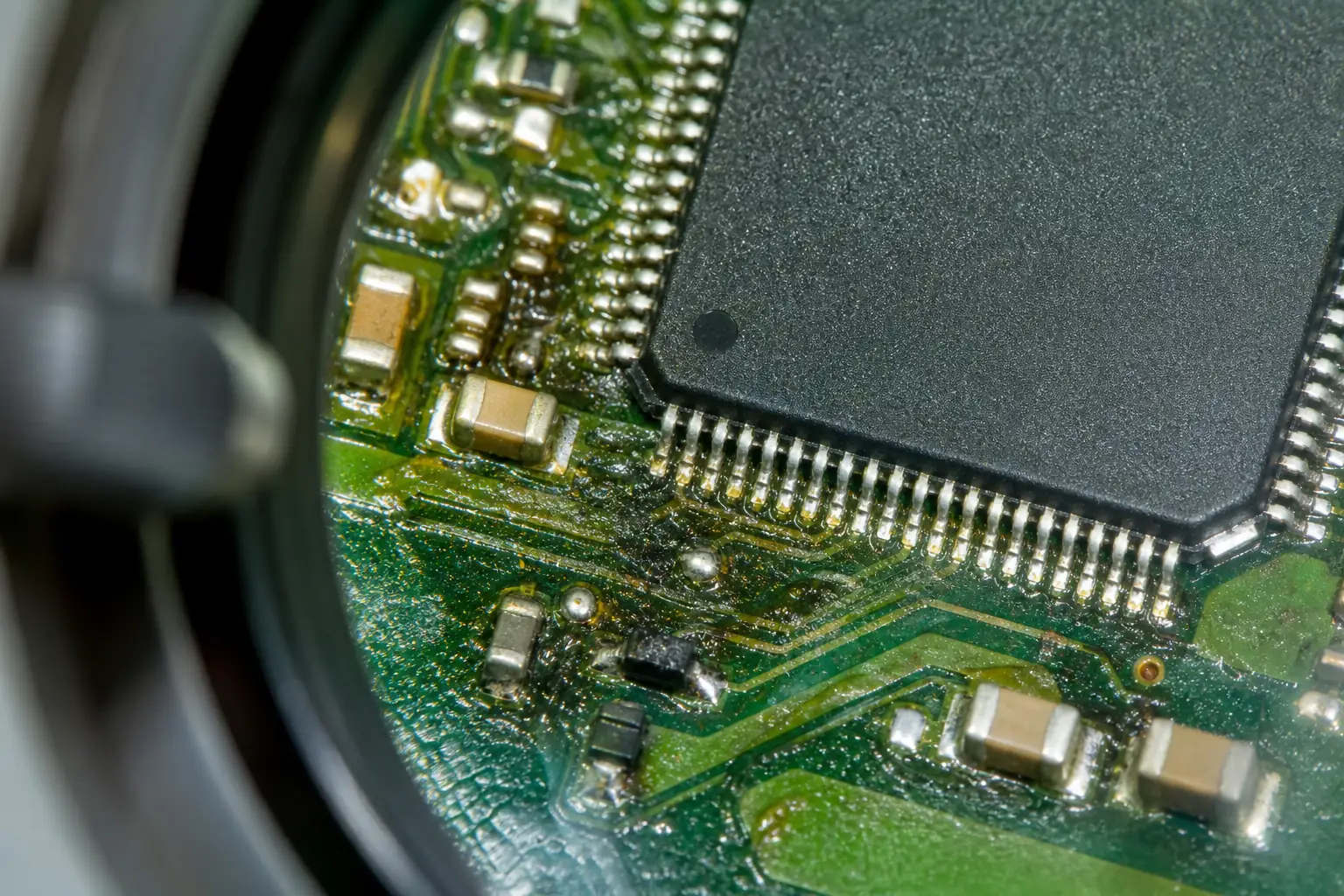
After reflow, wave, or hand soldering, the board surface can hold more than one contaminant at the same time. Flux residue is the obvious one, but not the only one. You may also have solder balls, fingerprints, stencil-release compound, adhesive residue, dust from depaneling, or coolant and fixture contamination picked up later in production. Cleaning decisions go wrong when all of those are treated as one generic “dirt” problem.
The first checkpoint is to identify what the residue actually is. Rosin-based flux, water-soluble flux, and no-clean flux behave differently in service and under wash chemistry. Water-soluble residues are usually more active and less tolerant of being left behind. No-clean residues are often safe when the process stayed inside its intended window, but they can still become a risk if the board saw overheating, under-reflow, poor wetting, or later coating and probing steps. A board can also look visually acceptable while still carrying ionic contamination that matters in humid service conditions.
That is why visual appearance alone is a weak release criterion. A glossy board is not automatically clean, and a small amount of visible residue is not automatically dangerous. The residue has to be judged against the electrical, environmental, and downstream process requirements of the product.
When cleaning is usually necessary?
Cleaning is commonly justified when the assembly uses water-soluble flux, when ionic cleanliness limits are contractually required, or when the board will receive conformal coating, potting, or adhesive bonding. Residues trapped under coating can reduce adhesion or create localized corrosion sites that are far harder to diagnose later. The same applies to boards used in humid, high-voltage, or high-impedance environments where leakage paths matter more than cosmetic appearance.
It is also worth cleaning when the assembly will enter sensitive test or calibration steps. Fine analog front ends, sensor boards, and high-resistance measurement paths can drift because of contamination that would never be noticed on a simple digital control board. If a product has repeated false failures at ICT, boundary checks, or functional test after otherwise normal soldering, surface contamination should be part of the fault tree rather than an afterthought.
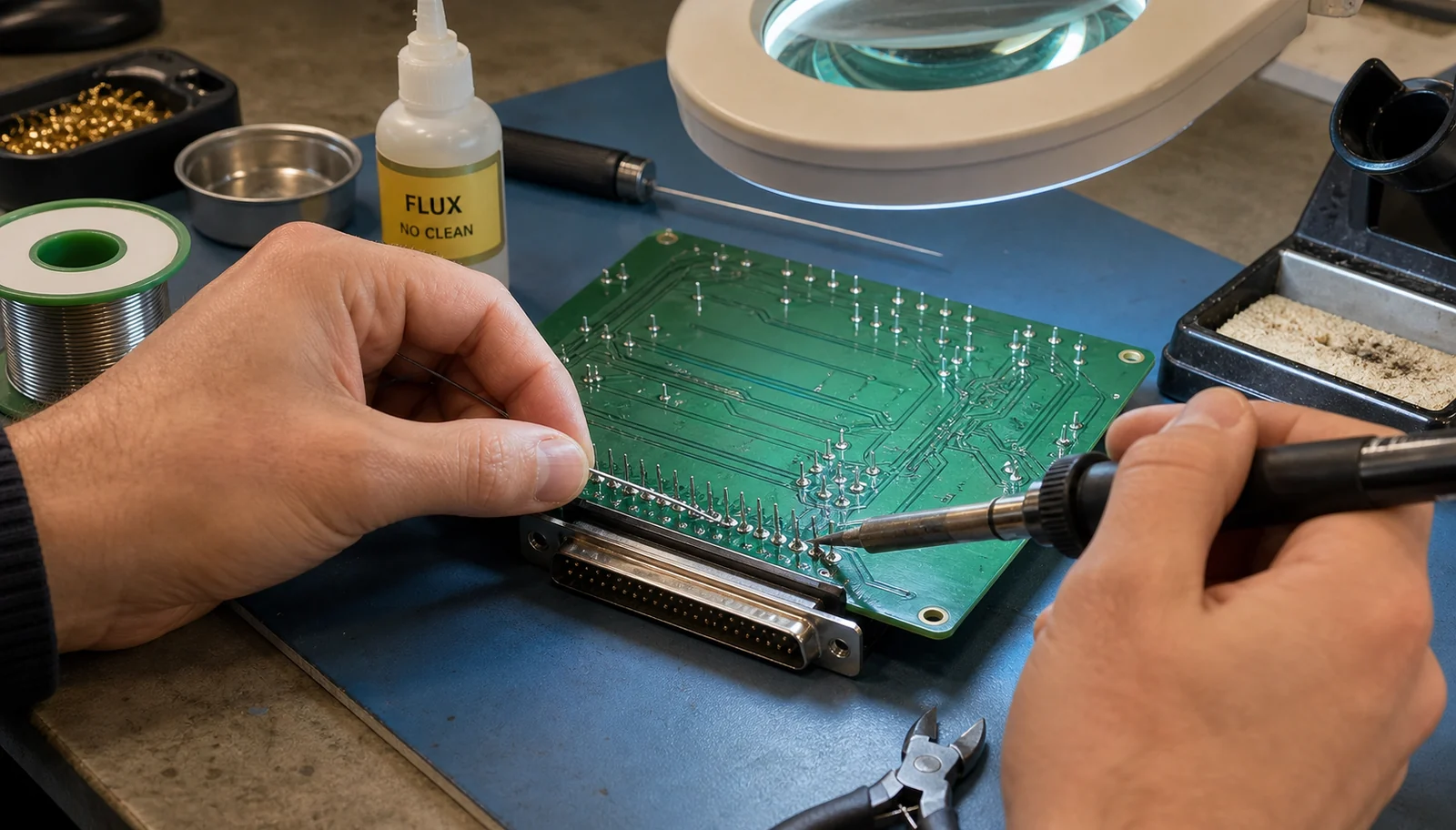
Rework is another trigger. Local hand soldering, jumper installation, connector replacement, and BGA touch-up often leave residues and handling contamination in patterns that were not part of the original line-qualified wash process. Boards repaired at the bench are especially vulnerable because the soldering step is controlled by a technician, but the cleaning and drying discipline is often informal.
When leaving residue in place can be acceptable?
Some assemblies are intentionally built around a no-clean process and should not be washed just because a board looks less pristine than a marketing photo. If the flux system is qualified, the reflow or wave profile stayed within window, and the end product has low contamination sensitivity, washing can add cost and risk without improving reliability. This is common in medium-density consumer or industrial control boards where the residue is benign, the board is not being coated, and field conditions are not especially harsh.
What matters is discipline around that choice. “No-clean” does not mean “never evaluate cleanliness.” It means the residue may remain if the actual process, product class, and service environment support that decision. If the board later fails coating adhesion, grows dendritic leakage in humidity, or shows unstable high-impedance readings, the earlier assumption should be revisited instead of defended by label alone.
Common failure modes caused by poor cleaning decisions
Leakage and intermittent measurement drift
Residues can form conductive or semi-conductive surface paths once moisture is added. That may not matter on a robust logic rail, but it can matter on op-amp inputs, high-value divider networks, sensor interfaces, and timing circuits. Engineers sometimes spend days replacing components before discovering the root cause was contamination bridging the wrong region of the board.
Conformal coating adhesion problems
Coating over flux residue can trap active material and weaken adhesion. The board may pass a simple visual inspection, then blister, delaminate, or corrode underneath the film during temperature and humidity exposure. If coating is part of the product plan, cleanliness has to be defined before the spray booth, not after field returns start appearing.
Corrosion under components and in low-ventilation pockets
Bottom-terminated packages, dense connector zones, and tall mechanical hardware can trap wash chemistry or leave residues in areas that are hard to inspect. Incomplete drying is just as dangerous as incomplete cleaning. A board washed with the wrong chemistry and dried poorly can be less reliable than a board that was never washed at all.
Repair damage from over-cleaning
Scrubbing too hard, soaking the wrong plastic parts, or pushing solvent under labels, relays, and switches can create new failures. Some technicians also use high-pressure air before the solvent is fully removed, which can spread residue deeper under fine-pitch packages instead of removing it. Cleaning is a process step, not a rescue ritual.
A practical decision flow for PCB assembly cleaning
Start by documenting the soldering materials. What flux family was used? Was the board built through reflow, wave, selective soldering, hand soldering, or a combination? Was there any bench rework after the main line? Those answers narrow the chemistry options immediately.
Next, review the product risk. Does the assembly operate at high impedance, elevated voltage, or in humid or outdoor conditions? Will it be conformal coated? Does the customer require ionic cleanliness verification? If the answer is yes to any of those, treat cleanliness as a controlled quality parameter rather than a visual preference.
Then inspect the board with intent. Look at residues around bottom-terminated packages, fine-pitch leads, connector bases, under tall electrolytics, and around hand-soldered wires or jumpers. If the board has already gone through print verification, results from solder paste inspection can help explain whether the residue pattern started with an unstable print or appeared later in the process.
Finally, validate the cleaning method itself. A wash process should specify chemistry, concentration, temperature, dwell time, rinse quality, and drying method. If those are undefined, the process is not really controlled. For batch cleaning or difficult under-component geometry, an ultrasonic PCB cleaner may help, but only if the component population and mechanical constraints can tolerate it.
Method selection matters as much as the decision to clean
Manual spot cleaning with swabs or brushes works for localized rework residue, but it scales poorly and can smear contamination if the wipe discipline is weak. Spray cleaning can be effective on accessible surfaces, yet it often struggles under low-standoff parts unless rinse and drying are tightly controlled. Batch or inline cleaning offers better repeatability, but only when the chemistry matches the flux and the boards are dried thoroughly before packing or coating.
Do not ignore component compatibility. Relays, microphones, certain labels, uncured adhesives, and some low-cost connectors can dislike aggressive solvents or trapped moisture. Assemblies that include RF shields, underfilled parts, or tightly shadowed mechanical pockets should be reviewed for wash access before the process is released. Cleaning is easy to specify on a traveler and much harder to execute uniformly on a crowded product.
Inspection checkpoints after cleaning
After cleaning, check more than appearance. Confirm there is no white residue bloom, no solvent pooling under components, no lifted labels, and no evidence that residue simply migrated from one area to another. If the product class justifies it, use ionic cleanliness or surface insulation resistance methods instead of visual judgment alone.
For coated products, verify that the board is fully dry before coating starts. For repaired boards, confirm that connectors, switches, and test pads still behave normally after wash and dry. Teams often validate the solder joint and forget to validate the side effects of the cleaning process itself.
Conclusion
PCB assembly cleaning should be driven by contamination risk, not by aesthetics. The real decision depends on flux chemistry, service environment, electrical sensitivity, coating plans, and whether the wash process is controlled enough to improve the board rather than harm it.
If you want fewer latent failures, decide cleanliness requirements during process planning, not after random field returns or unstable test data appear. A clean-looking board is not automatically safe, and a no-clean board is not automatically wrong. The reliable path is to match the residue, the product risk, and the cleaning method to one another with the same discipline used for soldering itself.
FAQ
Does every PCB assembly need to be cleaned after soldering?
No. Some no-clean processes are intentionally qualified to leave residue in place. Cleaning is usually driven by flux type, electrical sensitivity, environmental exposure, conformal coating requirements, and customer cleanliness limits rather than by appearance alone.
Why can no-clean flux still become a problem on a finished board?
No-clean residue can still cause issues when the soldering profile was poor, when the product has high-impedance or humid-service conditions, or when the board will be conformal coated. In those cases the residue may affect leakage, adhesion, corrosion risk, or test stability.
What is the biggest risk when a board is cleaned with the wrong process?
The biggest risk is often trapped chemistry or moisture under components, not just leftover visible residue. An uncontrolled wash can spread contamination, attack sensitive parts, or leave the assembly less reliable than before cleaning.
How should a repaired PCB be cleaned after bench soldering?
Treat repair cleaning as a controlled process, not an improvised wipe-down. Match the solvent to the flux, inspect under connectors and fine-pitch parts, and make sure the board is fully dry before power-up, coating, or packaging.