Turnkey PCB assembly sounds simple: you send the design files, the supplier buys the parts, assembles the boards, and delivers a finished build. In practice, turnkey only works well when the customer’s data package is ready for procurement. If the BOM is vague, lifecycle status is unknown, alternates are missing, or packaging constraints were never discussed, the service model does not remove risk. It simply moves the risk into sourcing, schedule, and quote surprises.
That is why the best turnkey PCBA conversations do not begin with price alone. They begin with material clarity. A supplier can only buy intelligently when the part data, revision discipline, and acceptable substitutions are defined well enough to support real procurement decision.
For engineering teams, this makes turnkey less of a buzzword and more of an operating model. The question is not whether the supplier can place parts, but whether your release package is clean enough to source, build, and test without costly guesswork.
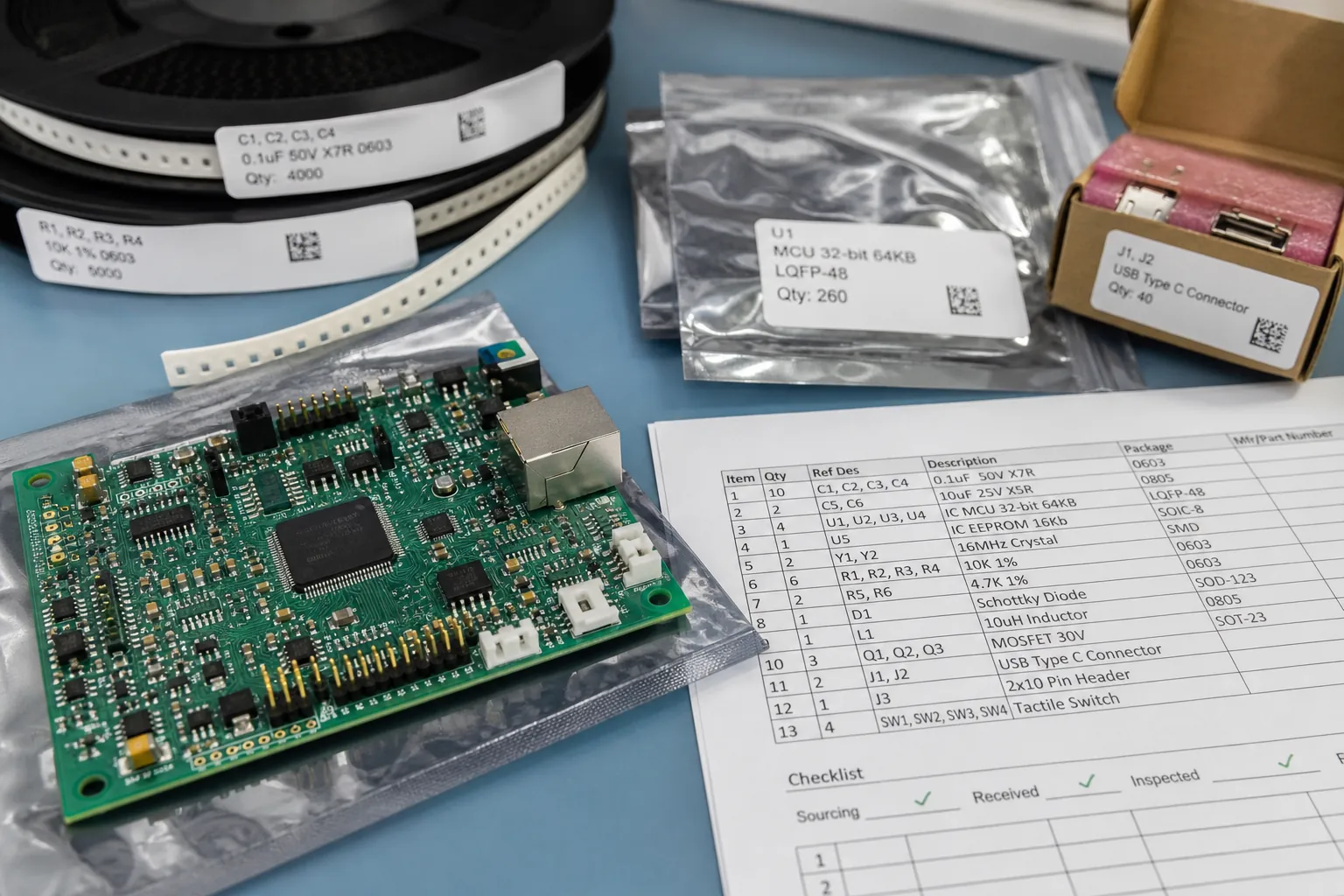
What turnkey PCB assembly usually includes?
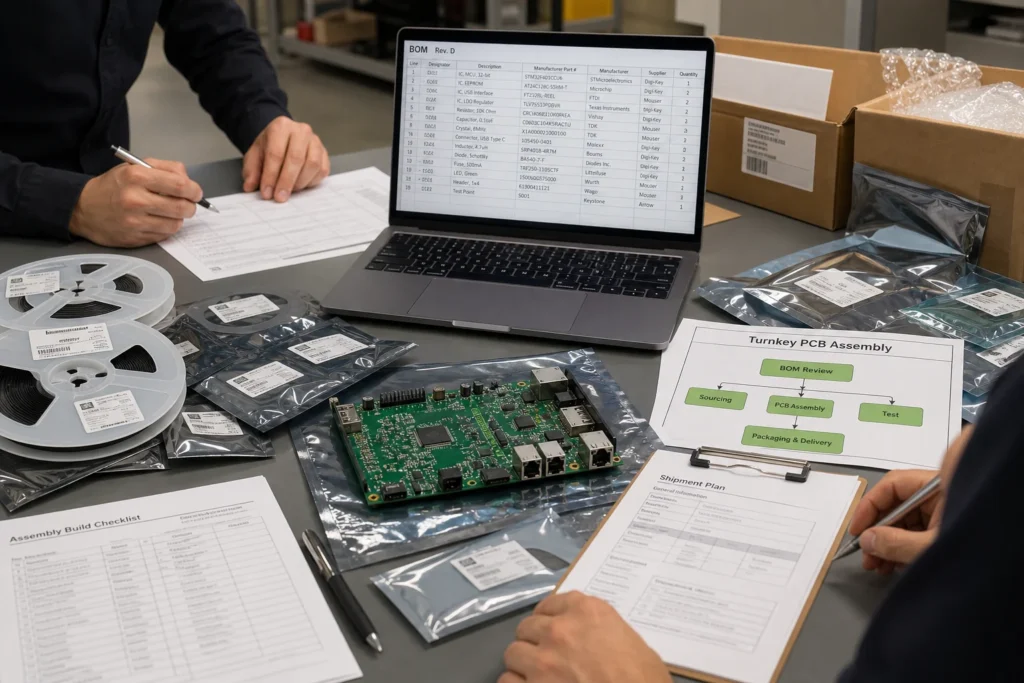
In a real manufacturing workflow, turnkey PCB assembly typically means the supplier manages component sourcing, incoming material coordination, assembly, and often basic inspection or test according to the agreed process. The customer provides design outputs such as Gerbers or ODB++, pick-and-place data, BOM, assembly notes, and any special build instructions.
Some suppliers also support partial-turnkey models, where long-lead or customer-controlled parts are consigned while the supplier sources the remaining items. That can be a useful compromise when one or two parts are strategically controlled but the rest of the BOM is standard.
Why BOM readiness matters more than the service label?
A weak BOM is the main reason turnkey builds become frustrating. Missing manufacturer part numbers, unclear package variants, obsolete components, or undocumented approved alternates all force procurement teams into guesswork or back-and-forth clarification. That delays quoting and increases the chance of an unintended substitution.
If you already maintain strong PCB BOM management, turnkey becomes much more efficient. The supplier can quote faster, flag lifecycle issues earlier, and align alternates before the line is waiting on material.
From a buyer’s point of view, turnkey should reduce coordination overhead. From an engineer’s point of view, it should reduce release ambiguity. It can only do both when the source package is disciplined.
When turnkey is the right choice?
Prototype or NPI builds with many standard parts
Turnkey is often efficient when the board uses common components and the internal team does not want to split sourcing, kitting, and logistics across several owners. One accountable supplier can shorten the path from release package to assembled prototypes.
Teams without purchasing bandwidth for every build
Some engineering groups are strong in design but do not want to manage MOQ issues, packaging formats, shortages, and supplier communication for each build. A capable turnkey partner can absorb that coordination work.
Programs that need clearer assembly ownership
When defects, shortages, or substitutions happen, accountability is easier to trace if one supplier owns most of the procurement-to-assembly flow. That does not eliminate risk, but it often makes issue resolution faster.
When turnkey can become a poor fit
Turnkey is not always the best answer. If your organization already controls critical parts through long-term agreements, if counterfeiting risk requires customer-owned channels, or if the BOM changes daily without revision discipline, a pure turnkey model may create friction. In those cases, partial-turnkey or consigned approaches may be safer.
The point is not to force every program into one commercial model. It is to match the sourcing model to the material-control reality of the product.
How to compare turnkey PCB assembly suppliers?
The useful comparison is not just price per board. Look at how the supplier manages BOM exceptions, lead-time risk, alternates, documentation, and communication speed. Ask what happens when a part goes non-stock, when a package mismatch appears, or when a substitution needs engineering approval.
Good supplier questions include:
- Do you quote from exact manufacturer part numbers or distributor mappings only?
- How do you handle alternates and customer approval?
- What lifecycle or shortage checks are performed before PO release?
- How do you separate source risk from assembly cost in the quote?
- Can you support partial-turnkey if one section of the BOM must remain customer-controlled?
Those answers tell you whether the supplier is running a real procurement process or simply reselling assembly capacity.
The hidden cost of unclear data
Many schedule slips that are blamed on turnkey are really documentation failures. A resistor value without tolerance, a regulator without package suffix, a connector without approved vendor list, or a missing do-not-substitute note can all force expensive clarification loops. When the build is urgent, people make assumptions. Assumptions are where procurement mistakes start.
This is why a clean release package matters as much as the assembly capability itself. Turnkey works best when the supplier receives enough structure to make good sourcing decisions without reinterpreting the engineering intent.
How ReversePCB readers should think about turnkey?
For many ReversePCB use cases, turnkey makes sense when the project team wants faster coordination and a simpler ownership model, but only after the BOM and manufacturing notes are genuinely ready. If the documentation is immature, consigned or partial-turnkey models may expose fewer surprises because the customer keeps tighter control over the uncertain parts.
That means the decision is less about buzzwords and more about operational readiness. A well-prepared BOM can make turnkey efficient. A weak BOM can make turnkey look more expensive or slower than it really is.
Conclusion
Turnkey PCB assembly is most valuable when it combines sourcing ownership with disciplined engineering data. The supplier should not be left guessing about part identity, alternates, packaging, or risk priorities. When the BOM is procurement-ready, turnkey can simplify execution and shorten coordination loops. When the BOM is vague, the service model cannot hide the uncertainty; it only moves that uncertainty downstream into quoting, shortages, and build delays.
FAQ
What is included in turnkey PCB assembly?
Turnkey PCB assembly usually includes component sourcing, material coordination, board assembly, and agreed inspection or testing, while the customer provides the design and manufacturing data package.
What is the difference between turnkey PCB assembly and consigned assembly?
In turnkey, the supplier sources most or all materials. In consigned assembly, the customer provides the components and the supplier mainly performs the manufacturing work.
Why does BOM quality matter so much in turnkey PCBA?
Because the supplier can only source correctly when part numbers, package variants, alternates, and risk notes are defined clearly. Weak BOM data leads directly to delays and substitution problems.