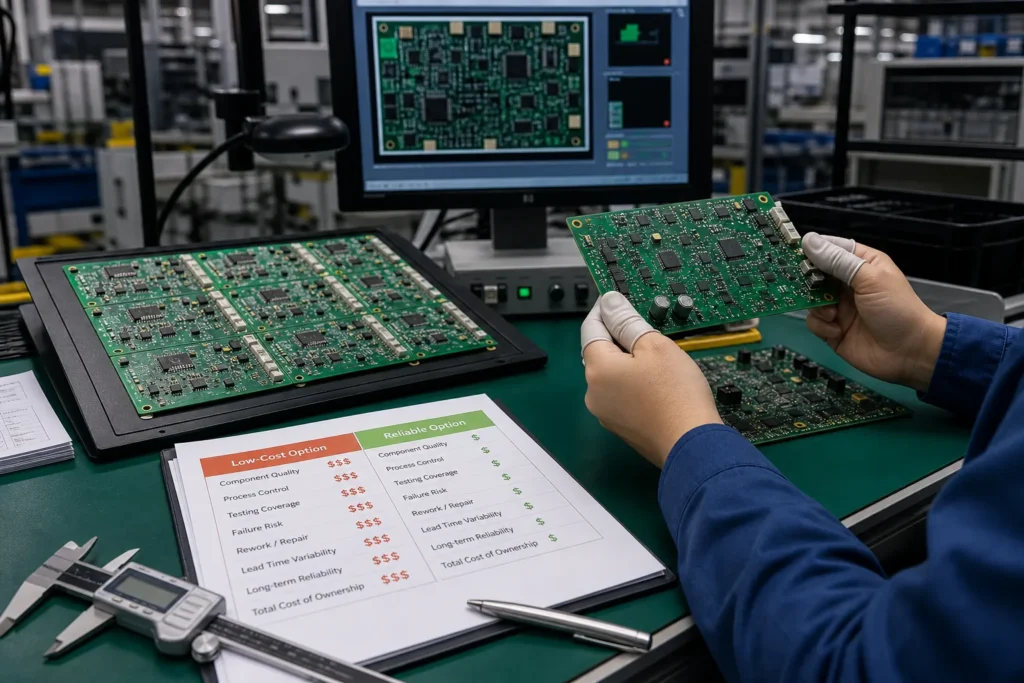
A low PCB assembly quote looks attractive until the first build exposes what was never priced properly. In practice, ?cheap PCB assembly? is rarely a question of labor alone. The real cost sits in how well the assembler handles sourcing discipline, stencil and fixture preparation, process setup, inspection escape risk, engineering changes, and logistics. If any of those are weak, the quote stays low only until scrap, rework, or schedule damage shows up.
That is why engineers and buyers should compare cheap PCB assembly offers as total-build risk packages, not as line items on a spreadsheet. A supplier can be cost-effective and still technically disciplined. The problem starts when price is achieved by deleting the controls that stop latent faults from reaching test or field use.
Where low PCB assembly quotes usually hide the real cost
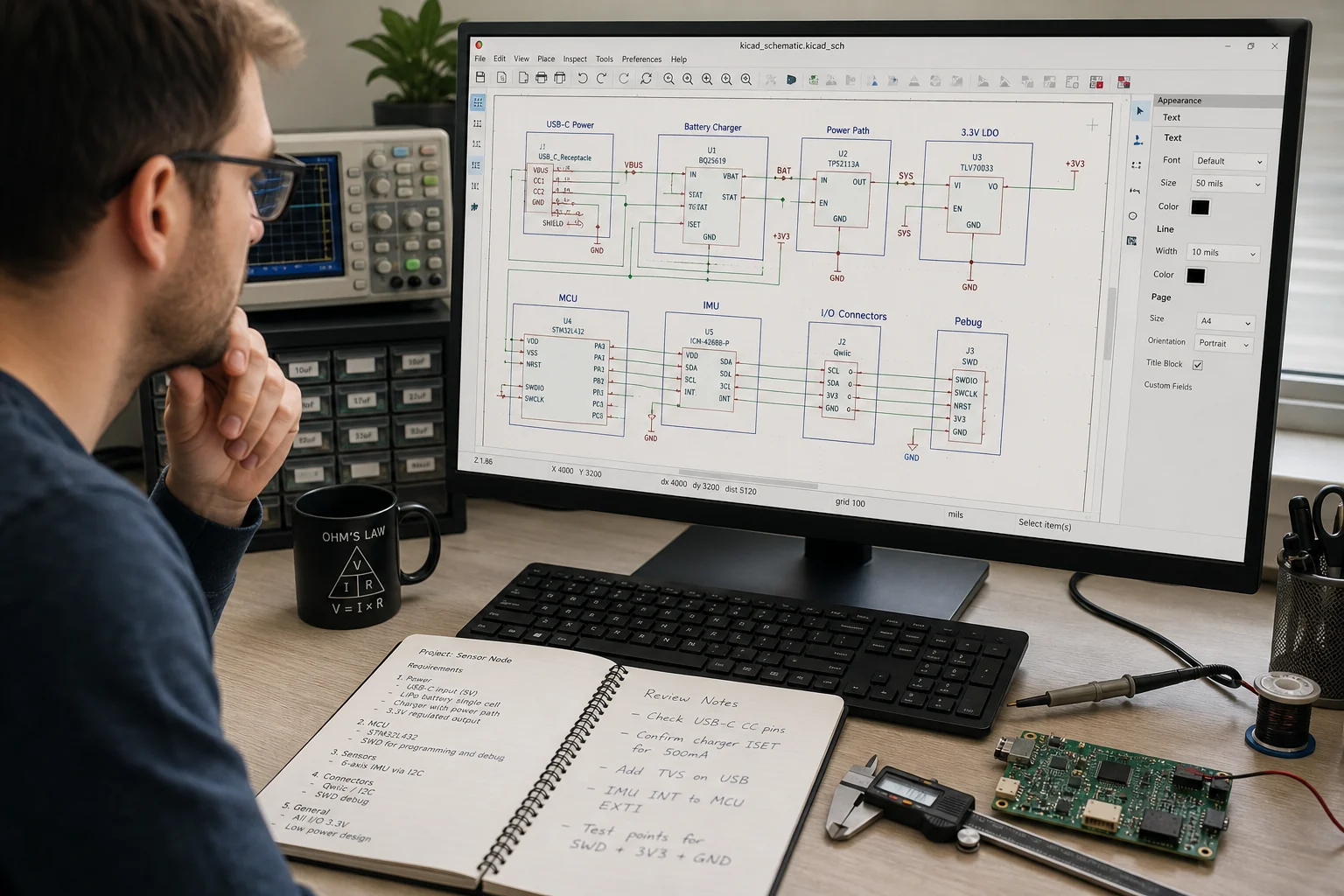
The first hidden cost is incomplete pre-production review. If the assembler does not challenge ambiguous polarity marks, missing reference designators, tight component spacing, uneven thermal mass, or weak fiducial strategy, those issues move straight into print, placement, and reflow. The unit price may still look good, but yield will not.
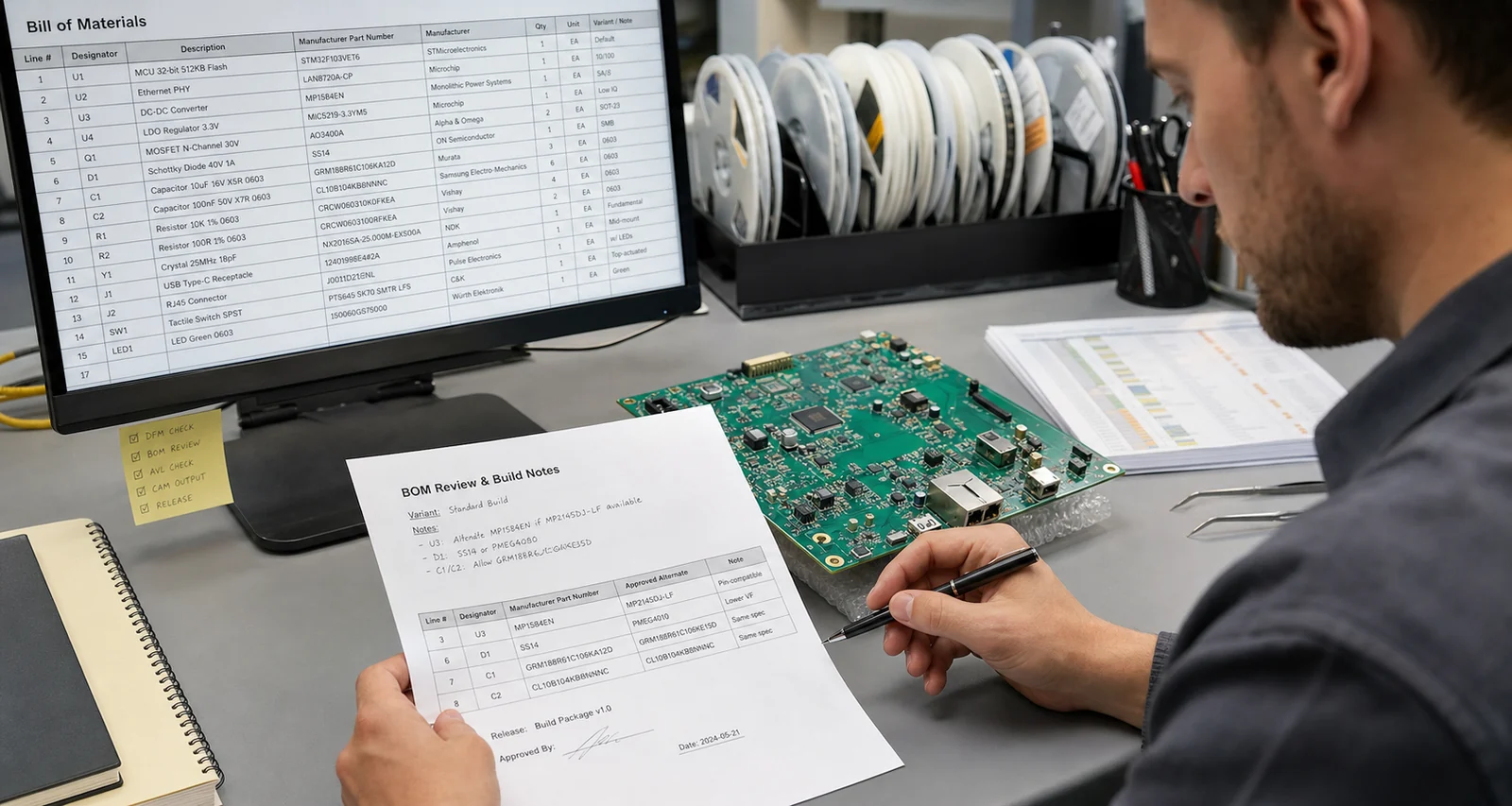
The second hidden cost is in the BOM. A quote built on non-locked distributor snapshots or vague alternates can collapse once parts go short. That leads to emergency substitutions, partial kitting, or build holds. ReversePCB readers who already know what a BOM means in PCB assembly will recognize that approved alternatives and lifecycle notes matter more in volatile markets than a few cents saved on paper.
The third hidden cost is weak test planning. If the supplier assumes visual inspection is enough, defects such as wrong-value passives, intermittent connector wetting, or assembly-induced programming issues survive longer. Once debugging shifts to your lab, the quote stopped being cheap.
How to evaluate a cheap quote without overpaying for safety theater
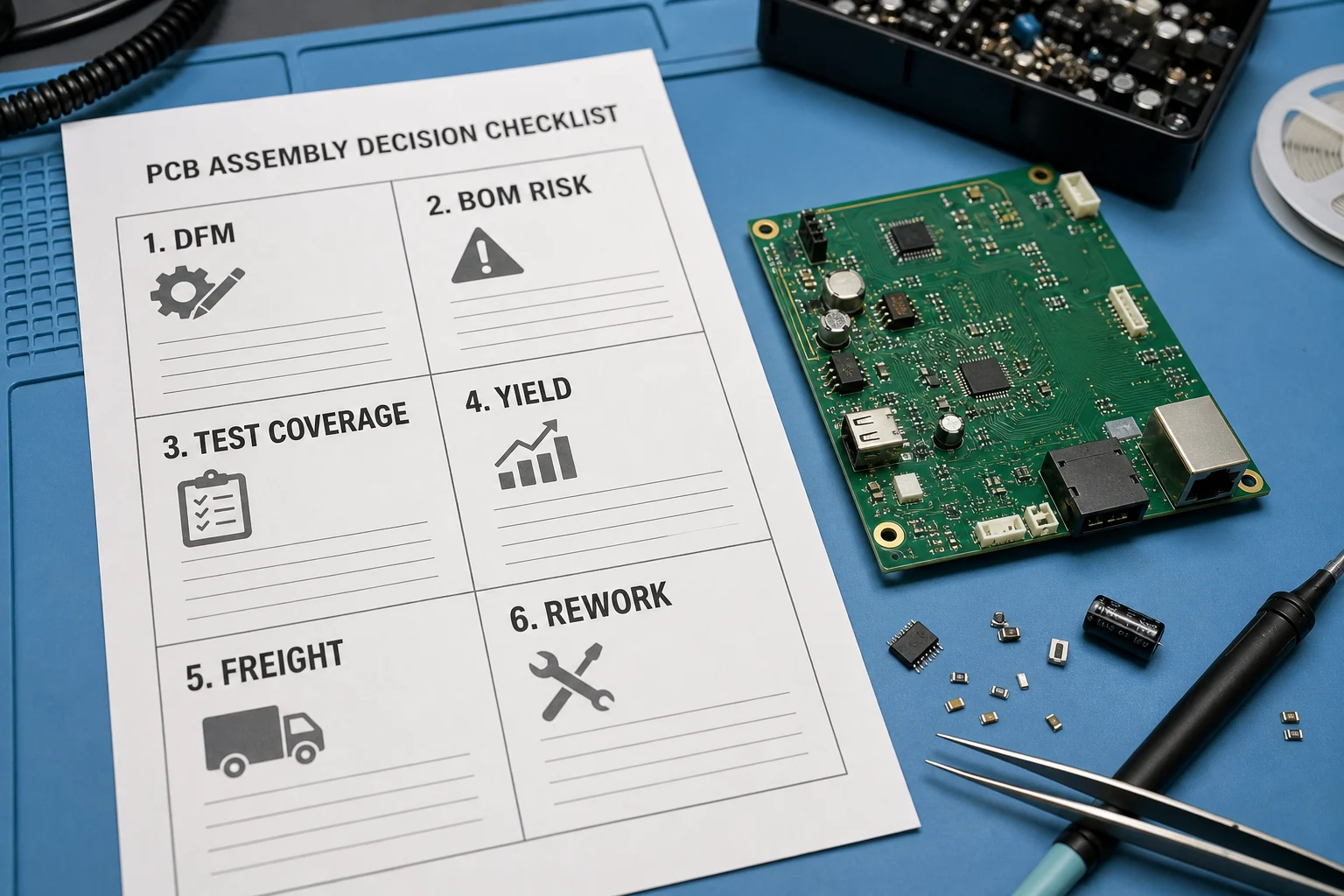
Do not respond to a low quote by demanding every possible process step. That creates its own waste. Instead, ask how the supplier protects the failure modes your board is most likely to suffer. Fine-pitch QFN parts, bottom-terminated packages, high-current connectors, and mixed-technology boards do not need the same controls.
For example, a simple two-layer controller board may not justify X-ray or elaborate fixtures, but it still needs paste-volume control, feeder verification, first-article checks, and a credible functional test or programming confirmation. A dense mixed-signal board with hidden pads and thermal asymmetry needs much tighter process evidence. Cost discipline is useful only when it is board-specific.
Questions that separate efficient suppliers from risky cheap suppliers
Ask how BOM alternates are approved. Ask whether the supplier flags footprint-to-part mismatches before procurement. Ask who owns stencil recommendations, reflow profile signoff, and moisture-sensitive device handling. Ask whether first-pass failures feed back into process correction or are simply pushed into rework. A cheap supplier with real manufacturing discipline will answer these directly.
Also ask what happens when your design package changes after release. Many low-cost offers assume frozen data. Once you send a revised Gerber set, updated pick-and-place file, or substitute programming image, the build may incur hidden reset costs. That is especially common around turnkey PCB assembly handoff, where procurement and manufacturing are tightly linked.
Why cheap PCB assembly in China can work well or fail badly
The phrase cheap PCB assembly China usually reflects buyer intent around price leverage, not a complete sourcing strategy. China can be extremely cost-effective when documentation is clean, communication is fast, and the supplier controls approved sourcing, in-process inspection, and export logistics. It becomes risky when the quote depends on undocumented assumptions about substitutes, panelization, packaging, or split shipments.
Freight and customs delays also distort the economics. A slightly higher assembly price can still be the cheaper option if the build ships complete, passes test cleanly, and avoids repeated international rework loops. Teams that have dealt with delayed NPI builds already know that one missed program window can erase the savings from a low labor quote.
Use total build cost, not quote price, as the buying metric
A practical comparison model includes unit price, tooling, setup, yield risk, engineering review quality, logistics, test effort, and the likely cost of one change cycle. That is the right frame for both prototype and production work. It also explains why PCB prototype orders often become expensive when the first build is treated like a purchasing exercise instead of an engineering release.
Cheap PCB assembly is not automatically bad. It becomes bad when price is achieved by shifting technical and supply-chain risk back to the customer. The best low-cost suppliers are the ones that can show where they saved money without deleting the controls your board actually needs.
When low-cost assembly is a sensible choice
There are plenty of cases where a lower-cost assembler is the right answer. Mature boards with stable BOMs, forgiving package mixes, well-documented programming flow, and simple functional checks can often be built economically without sacrificing reliability. The key is that the design package already removes ambiguity. In those cases, cost discipline comes from process stability, not from hoping the supplier will guess correctly.
The same logic applies to bridge builds between prototype and steady production. If the board has already exposed its weak points and the supplier has seen one controlled learning loop, a lower quote can be perfectly reasonable. Problems start when teams expect first-build engineering support while buying strictly on assembly price.