A reflow machine is often blamed for soldering defects that were already built into the job before the board reached the hot zone. If paste volume is unstable, thermal mass is unbalanced, component choices are awkward, or pad geometry is weak, the machine can only expose those problems more consistently. That is why a useful reflow discussion starts with process limits, not with a brochure list of oven features.
The machine still matters. Zone count, conveyor stability, airflow behavior, recipe repeatability, and profiling discipline all affect whether an SMT line stays predictable. But a reflow machine is one control layer inside a larger thermal system. If engineers expect it to rescue a bad stencil print or an unrealistic package mix, they are asking the wrong tool to solve the wrong problem.
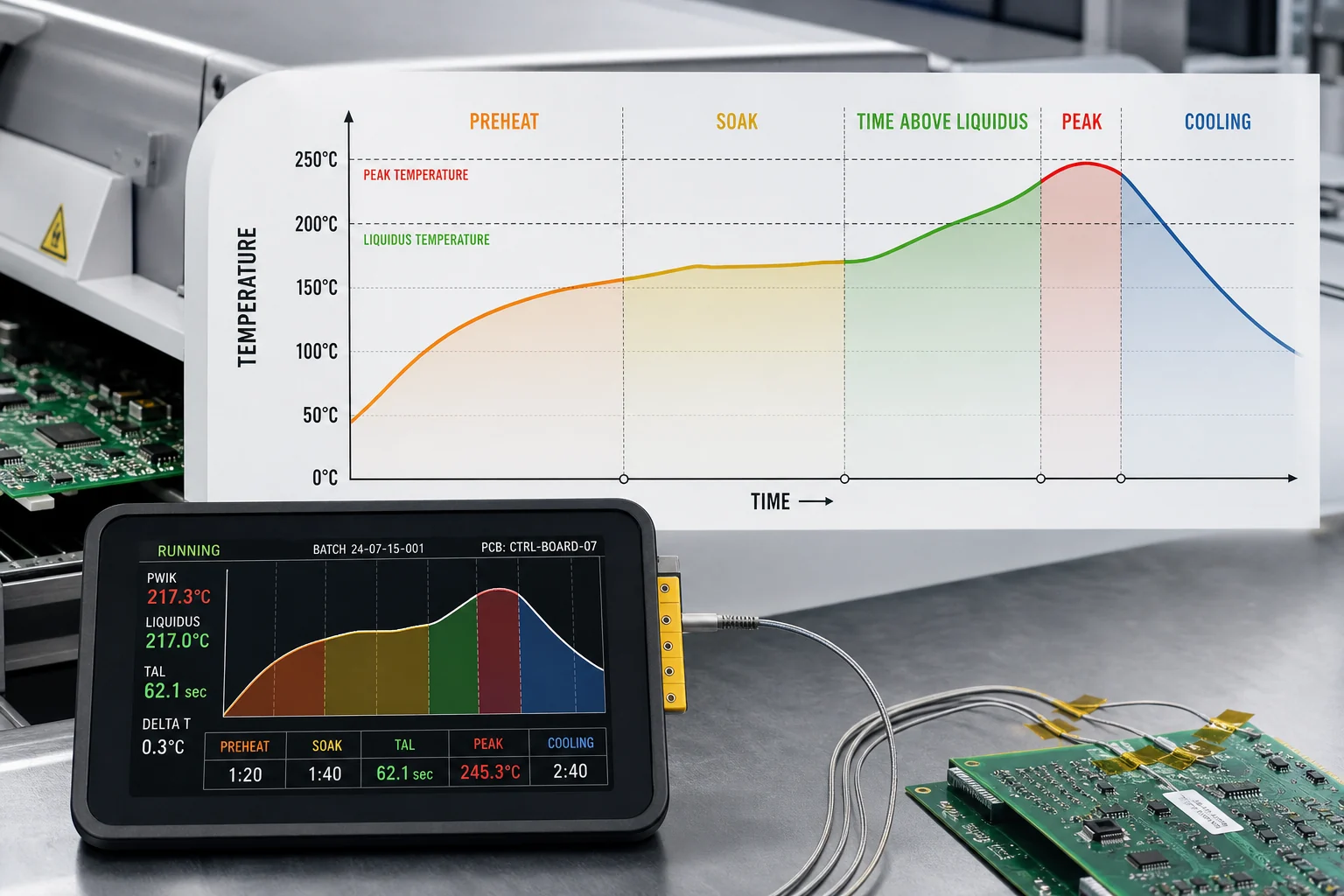
What a reflow machine actually controls
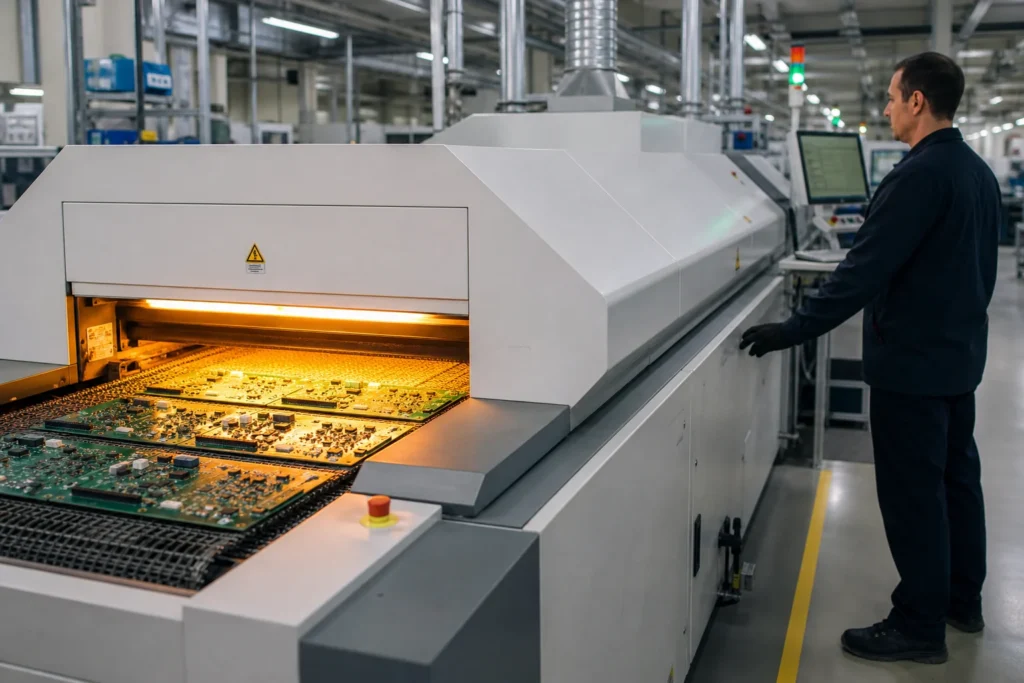
At a practical level, the machine controls how heat reaches the board over time. That means preheat ramp, soak behavior, time above liquidus, peak temperature, and cooling behavior. Those stages shape how flux activates, how evenly solder paste wets different joints, and how much thermal stress the board and components see before the assembly settles.
What the machine does not control by itself is just as important. It does not decide whether the stencil printed the correct solder volume. It does not change whether a large QFN thermal pad was windowed properly. It does not fix shadowing caused by poor component spacing. It does not make an overloaded panel suddenly heat uniformly. Those problems have to be handled upstream.
Why the board still defines the process window
Every board changes the thermal job. Heavy copper planes, large ground-connected power parts, tiny passives mixed beside tall shields, thick multilayer stackups, and moisture-sensitive packages all pull the profile in different directions. A profile that is safe for one product can underheat another or overstress a more delicate build. That is why engineers who understand convection reflow oven profile control still re-profile when the board mix changes.
This is also where stencil quality enters the picture. A machine can hold a repeatable profile, but repeatable bad prints still turn into repeatable defects. Poor aperture design, excess paste on thermal pads, or uneven transfer efficiency show up later as bridging, voiding, head-in-pillow behavior, or skew. Strong lines connect the oven discussion back to SMT stencil decisions instead of treating those steps as separate silos.
How to judge a reflow machine beyond the brochure
For production planning, the first question is whether the machine can hold the process window your boards actually need. Zone count matters, but only when it supports controlled transitions rather than a long theoretical spec sheet. Conveyor stability matters because a wandering dwell time destroys repeatability. Recipe control matters because a line that cannot lock, version, and verify profiles will drift as operators improvise. Maintenance access matters because clogged filters, weak fans, or damaged thermocouples quietly degrade results before anyone notices the trend.
It also helps to separate machine class from application fit. A benchtop unit may be fine for prototypes, short runs, or lab validation work. Inline systems make more sense when throughput, traceability, and recipe discipline must survive multiple jobs per day. Nitrogen capability may be justified for oxidation-sensitive builds, but it is not a universal requirement. In some cases, vapor phase reflow is the better answer because the board mix or thermal sensitivity changes the risk profile.
Profile variables that deserve attention every time
Ramp rate matters because sensitive packages and solder paste chemistries do not like thermal shock. Soak matters because it influences flux activation and temperature equalization across mixed-mass assemblies. Time above liquidus matters because joints need enough wetting time without cooking the board. Peak temperature matters because underheating causes weak joints while overheating stresses components, laminates, and finishes. Cooling matters because grain structure, warpage, and process stability are affected by how the board exits the profile.
Those variables should be verified against the actual board, not copied from a similar job title. Two boards that both say “industrial controller” can still need very different settings because one has large copper pours and press-fit connectors while the other is dominated by dense fine-pitch SMT. The machine is only predictable when the profile is tied to measurement, not habit.
Signs the machine is being blamed for another upstream problem
If defects cluster around one package family, one thermal pad style, or one board zone, the root cause may be land pattern design, paste deposition, or component warpage rather than the oven. If boards pass one day and fail the next after a paste lot, stencil cleaning interval, or loading pattern changes, the machine may only be the place where the instability becomes visible. Good troubleshooting starts by asking what changed in the full process, not by assuming the hottest machine in the line must be guilty.
This is why mature SMT teams treat the reflow machine as a verified process tool rather than a magic box. They profile routinely, correlate defects with upstream causes, and review whether the release package created a realistic thermal job in the first place.
Conclusion
A reflow machine is essential, but it is not independent. It works well when solder paste transfer is controlled, package mix is realistic, board thermal behavior is understood, and the profile is measured against the actual assembly. The machine earns its value by holding a stable process window, not by rescuing a board that never had one.
FAQ
What does a reflow machine do in PCB assembly?
A reflow machine heats the populated board through a controlled temperature profile so solder paste melts, wets, and solidifies into reliable joints. It controls the thermal path of the process, not the original solder volume or package layout quality.
Can a reflow machine fix bad solder paste printing?
No. It can only process what was printed. If the paste volume, aperture design, or transfer efficiency is wrong, the oven may make those defects show up consistently, but it cannot correct them.
How do you choose between a benchtop and inline reflow machine?
Choose based on throughput, recipe control, traceability needs, board mix, and how repeatable the process must stay across multiple jobs. Benchtop systems can fit prototypes and short runs, while inline systems are usually better for regular production discipline.
Which profile variables matter most in reflow?
Ramp rate, soak time, time above liquidus, peak temperature, and cooling behavior all matter because they influence wetting, thermal balance, component stress, and final joint quality.