Engineering checks for IPC-9252 electrical test planning for PCB production
Before using IPC-9252 electrical test planning for PCB production in a PCB, firmware, repair, or validation workflow, confirm the details that usually decide whether the design works reliably instead of only reading the headline specification.
IPC-9252 Test Planning and Result Interpretation
| Area | What to check | Why it matters |
|---|---|---|
| Test coverage | Define netlist source, opens/shorts coverage, isolation resistance, and continuity thresholds | IPC-9252 is useful only when coverage is tied to the real PCB netlist |
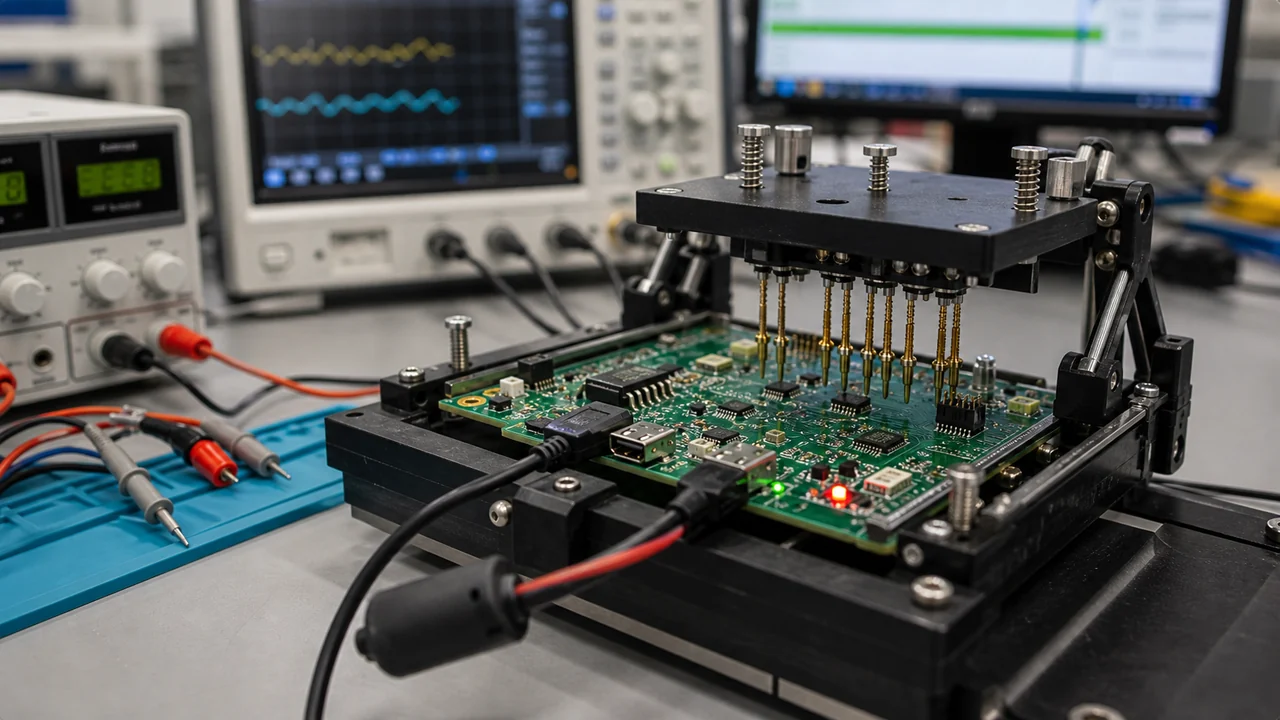
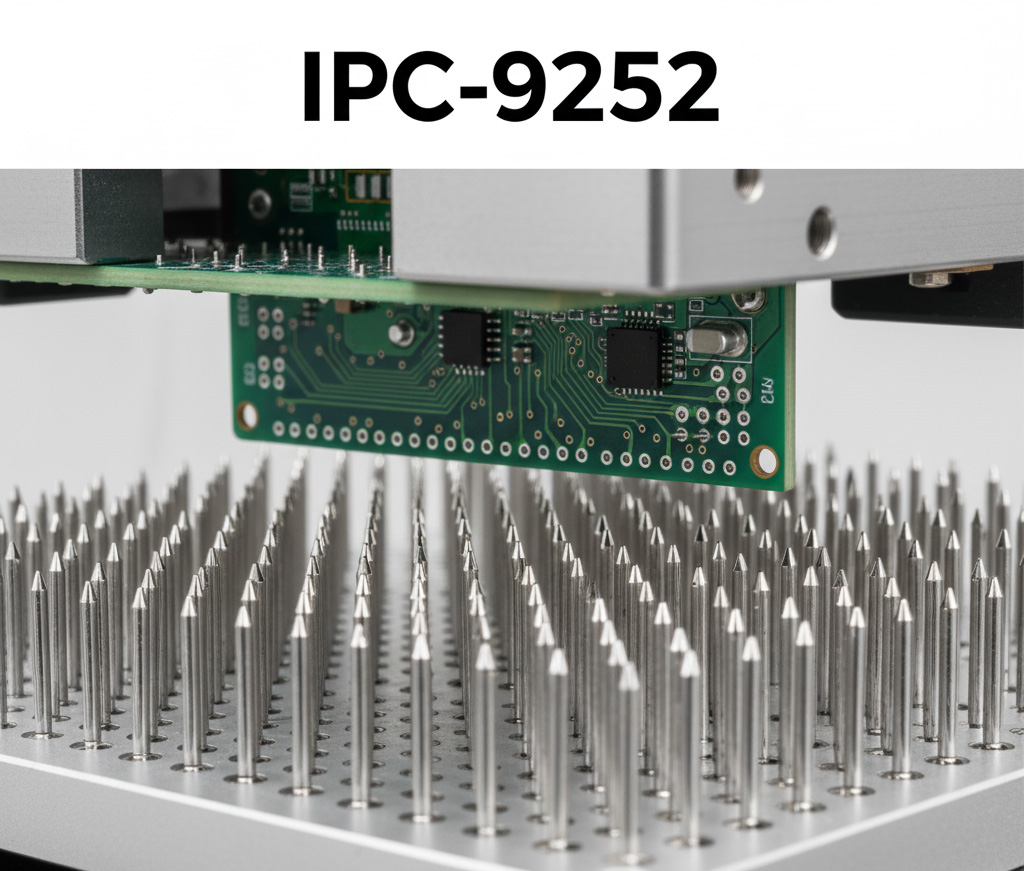
| Fixture method | Choose flying probe, bed-of-nails, or fixtureless test based on volume and access | Test method affects cost, speed, and fault detection |
| Records | Keep revision, panel ID, test limits, retest policy, and failure disposition | Traceable records support supplier quality and field failure analysis |
Understanding the industry standard for electrical testing of unpopulated printed circuit boards (PCBs) to ensure reliability and prevent costly failures.
What is IPC-9252?
A foundational standard for PCB quality assurance.
Purpose
To establish a baseline for detecting electrical defects in bare PCBs before component assembly. It verifies the integrity of the board's conductive patterns.
Scope
The standard covers requirements for continuity and isolation testing, defining test parameters, conditions, and pass/fail criteria for different levels of board complexity and reliability.
Importance
Testing to IPC-9252 is crucial. It catches fabrication defects like opens and shorts early, preventing expensive rework or field failures after components are mounted.
Core Testing Concepts
IPC-9252 revolves around two fundamental tests.
Continuity Test
Verifies that electrical paths (traces and planes) that are designed to be connected have a complete, unbroken circuit with resistance below a specified limit.
Isolation Test
Ensures that circuits and conductive features that are not meant to be connected are properly isolated from each other, with resistance above a specified limit.
IPC Performance Classes
The standard defines testing stringency based on the end-product's application.
Class 1: General Electronic Products
Includes most consumer electronics where the primary requirement is the function of the completed assembly. Cosmetic imperfections are not a major concern. Testing is the least stringent.
Examples: Toys, remote controls, some home appliances.
Class 2: Dedicated Service Electronic Products
Requires continued performance and extended life. Uninterrupted service is desired but not critical. Boards are built to a higher standard of reliability than Class 1.
Examples: Laptops, televisions, smartphones, industrial equipment.
Class 3: High Performance/Harsh Environment Products
For products where continued high performance or performance-on-demand is critical. Equipment downtime cannot be tolerated, and the end-use environment may be uncommonly harsh. Testing is the most rigorous.
Examples: Medical life-support systems, aerospace, automotive safety, military devices.
Comparison of Test Methods
Two primary methods are used for IPC-9252 testing.
| Feature | Flying Probe Tester | Fixture Tester (Bed of Nails) |
|---|---|---|
| Initial Cost | Low (no custom fixture) | High (requires custom fixture per design) |
| Per-Board Cost | Higher | Lower (at high volume) |
| Test Speed | Slower (probes move sequentially) | Very Fast (all points tested at once) |
| Best For | Prototypes, low volume, high-mix designs | High volume, mature production runs |
| Flexibility | High (easy to change test program) | Low (new fixture needed for design changes) |
Interactive Defect Explorer
Click the pulsing markers to learn about common PCB defects found by IPC-9252 tests.
Select a defect
Click a numbered marker on the PCB diagram to see details about a specific fabrication defect.
Frequently Asked Questions
While not legally mandatory, it is an industry-accepted standard. Most customers, especially for Class 2 and 3 products, require their PCB suppliers to test boards according to IPC-9252 to ensure quality and reliability.
Revisions like 'A' and 'B' update the standard. IPC-9252B is the current version, introducing more nuanced test methods and updated voltage requirements for testing high-density interconnect (HDI) boards and microvias, reflecting advances in PCB technology.
No. IPC-9252 is specifically for electrical defects (shorts, opens). It does not detect cosmetic issues, delamination, incorrect layer stackup, or dimensional errors. These require other inspection methods like Automated Optical Inspection (AOI) and X-ray.