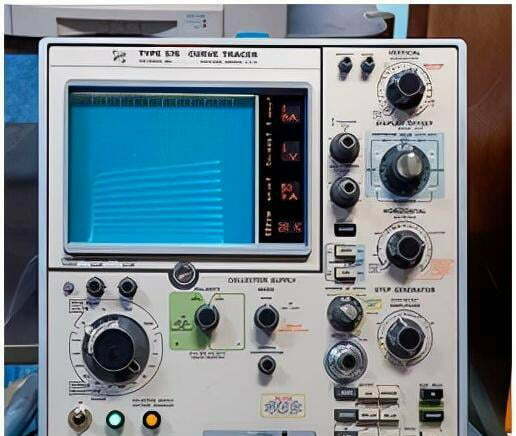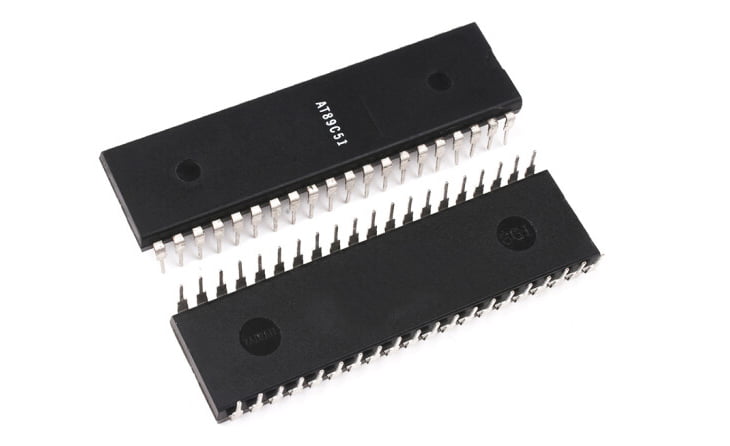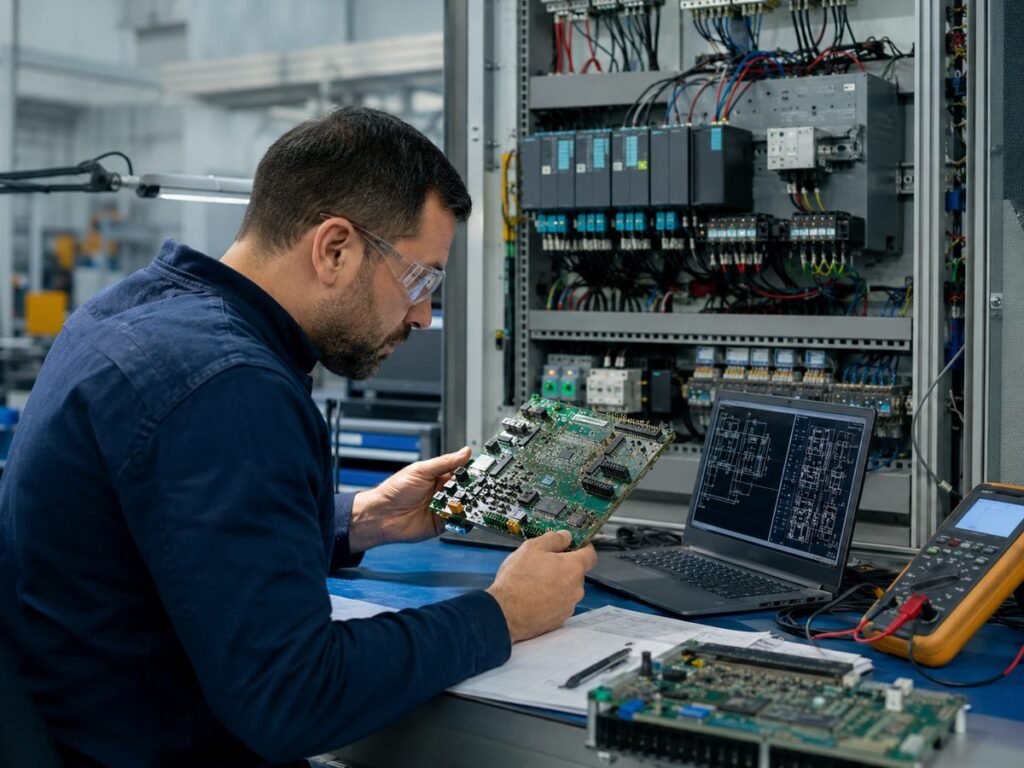
Reverse engineering means studying an existing product, circuit, or machine part to understand how it was designed, how it works, and how it can be repaired, reproduced, or improved. In industrial control systems, it often starts with one costly problem: a machine stops because one control board fails, and nobody has the original schematic.
Many factories still rely on older machines that are mechanically strong but difficult to support electronically. The motors, frame, tooling, and hydraulics may still work well, yet one obsolete PCB can stop the whole line.
This article explains how PCB reverse engineering helps recover lost documentation, reduce downtime, reproduce control boards, and extend the working life of industrial equipment.
What Does Reverse Engineering Mean for Industrial Control Systems?
Reverse engineering for industrial control systems analyzes an existing electronic board or control module to recover its design, circuit logic, component data, and working function. It is useful because many industrial machines outlive their original suppliers, manuals, and spare parts.
A control system manages how a machine moves, senses, starts, stops, heats, cools, or communicates. It may include PLC interface boards, relay boards, servo drive control boards, sensor modules, HMI connection boards, and custom PCBs inside a cabinet.
Engineers can recover PCB layouts, schematic diagrams, bills of materials, connector maps, power circuits, analog and digital signal paths, and Gerber files. This gives maintenance teams a clear technical map instead of forcing them to troubleshoot blindly.
Why Do Industrial Control Systems Become Hard to Maintain?
Industrial control systems become hard to maintain because electronic components, software, documentation, and supplier support often disappear before the machine itself becomes unusable. A CNC machine, conveyor, packaging system, or press brake may stay mechanically accurate for decades, but its control board may depend on discontinued chips or missing documentation.
The real problem is loss of visibility. Maintenance teams may know how to replace bearings, adjust belts, or check hydraulic pressure, but they may not know the logic inside a damaged PCB.
When there are no schematics, Gerber files, firmware notes, or approved replacement parts, even a small board failure can cause a long shutdown. Reverse engineering gives companies another option before replacing the entire control system.
How Does PCB Reverse Engineering Help Extend Machine Life?
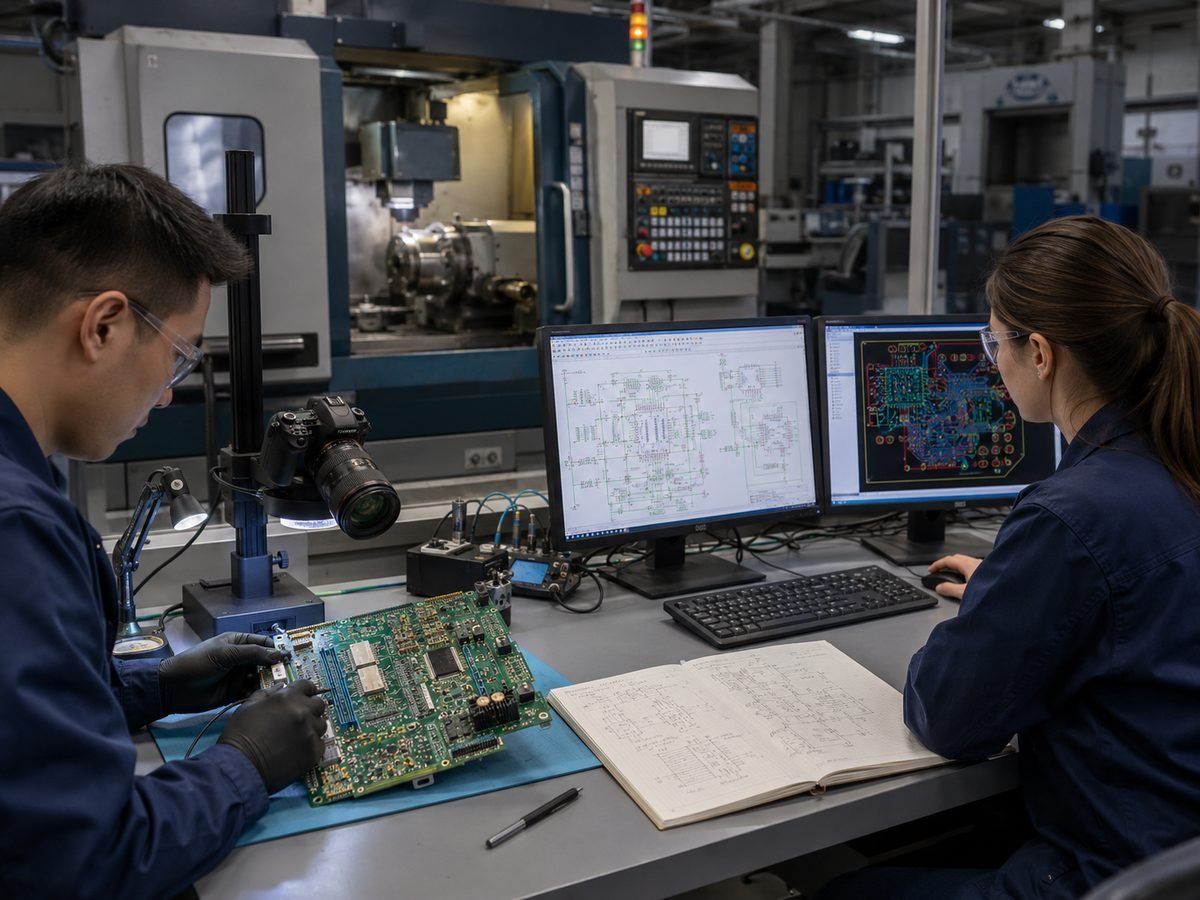
PCB reverse engineering converts an undocumented circuit board into usable engineering data. It helps companies repair, reproduce, or redesign critical control electronics without relying only on the original manufacturer.
The process usually begins with inspection and component identification. Engineers photograph the board, read markings, test connections, and trace how power and signals move through the circuit. Then they recreate schematics, build a BOM, and generate PCB layout files.
The most useful recovered documents include:
- Schematic diagram
- PCB layout file
- Bill of materials
- Gerber files
- Connector pinout map
- Test procedure notes
- Component substitution notes
Once this data is available, future repairs become faster and safer. The machine is no longer supported only by memory, guesswork, or rarely used spare parts.
What Are the Main Benefits of Reverse Engineering Industrial Control Systems?
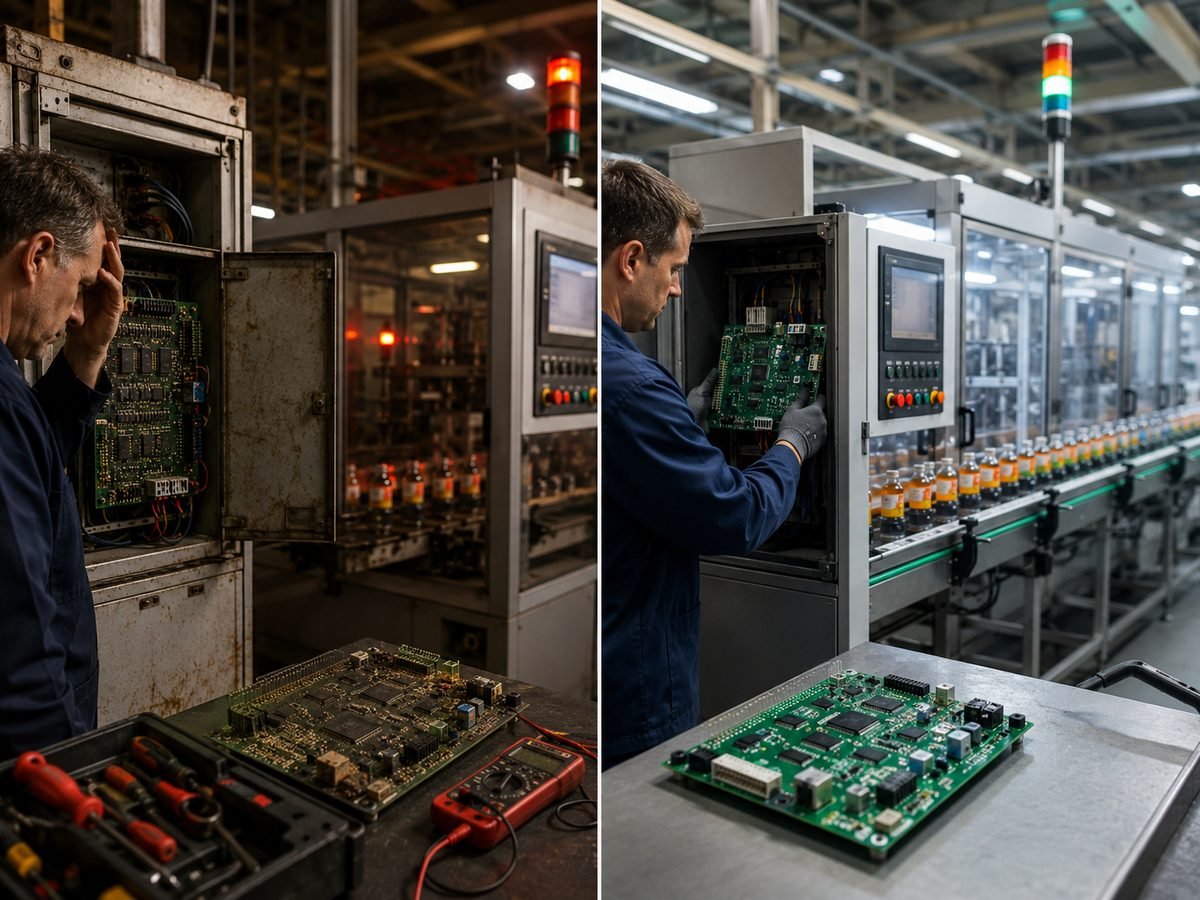
Reverse engineering reduces downtime, extends equipment life, improves documentation, and gives companies more control over legacy electronics. These benefits matter when a failed board can stop an entire production cell.
There are seven main benefits:
- Reduce downtime by enabling replacement boards.
- Extend equipment life without replacing the full machine.
- Recover lost documentation for future repairs.
- Improve spare-part independence after OEM support ends.
- Support safer troubleshooting with schematics and test points.
- Update obsolete components with modern equivalents.
- Preserve specialized machines that still perform well.
Supplier control also matters when replacement boards are produced externally. Companies may use third-party factory inspection services to verify that a supplier meets documentation, quality, and production requirements before parts enter the maintenance system.
Reverse Engineering vs Full Control System Replacement
Reverse engineering is usually better when one board or module is the main failure point. Full control system replacement is better when the whole system is unsafe, unsupported, or too limited for current production needs.
Replacing a control system can bring modern software and easier future support. It can also require rewiring, operator training, motion retuning, and production validation. Reverse engineering is more targeted because it keeps the existing machine architecture while solving a specific documentation or replacement problem.
| Factor | Reverse Engineering | Full Control Replacement |
|---|---|---|
| Cost | Lower for board-level issues | Usually higher |
| Downtime | Often shorter | Often longer |
| Training | Minimal | May be required |
| Best use | Obsolete board or module | Outdated full system |
| Risk | Board complexity | Integration complexity |
Which Industrial Machines Benefit Most From Reverse Engineering?
Industrial machines with custom, obsolete, or hard-to-source control electronics benefit most from reverse engineering. These machines are often too valuable to scrap but too old to support through normal spare channels.
Common examples include CNC machines, servo drive-controlled automation systems, packaging machines, injection molding machines, conveyor systems, HVAC control panels, custom test fixtures, and legacy production equipment.
In metal fabrication, older hydraulic press brake machines and CNC hydraulic press brake machines can remain mechanically useful for years. When electronics are difficult to replace, documentation and reverse engineering can support safer maintenance of press brake machines without forcing premature equipment replacement.
How to Reverse Engineer an Industrial Control Board
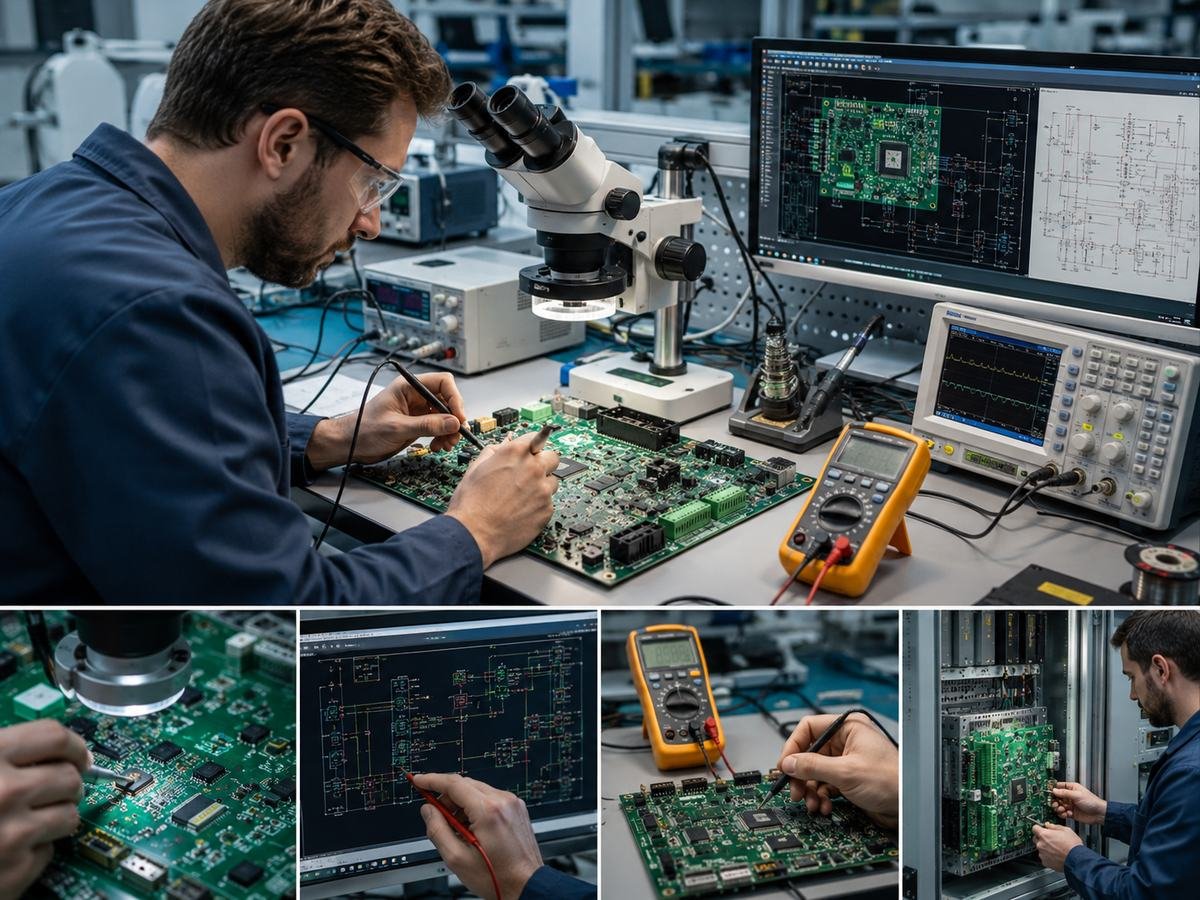
Reverse engineering an industrial control board involves inspection, component identification, circuit tracing, layout reconstruction, and testing. The process must be careful because industrial boards often connect to motors, sensors, safety circuits, power supplies, and machine controllers.
There are seven main steps:
- Inspect the board and photograph all visible details.
- Identify components and build the BOM.
- Trace circuits and recreate the schematic.
- Rebuild the PCB layout and Gerber files.
- Review obsolete parts and possible substitutes.
- Test the board electrically before installation.
- Validate the board inside the real machine environment.
A missed connector pin, a wrong component substitute, or an untested power circuit can damage equipment. Good reverse engineering treats the board as part of the complete machine, not as an isolated part.
What Are the Main Risks and Limitations?
Reverse engineering can recover critical knowledge, but it has limits when a board is damaged, complex, protected, or legally restricted. These risks should be reviewed before the project begins.
There are six main limitations:
- Risk increases when the board is burned, broken, corroded, or incomplete.
- Delays can occur when multilayer PCBs contain hidden traces or densely packed components.
- Accuracy may be limited when components are unmarked or custom-made.
- Firmware can complicate the work when it is locked or encrypted.
- Legal and IP issues should be reviewed before copying proprietary designs.
- Board-level reverse engineering may not solve faults caused by wiring, grounding, software, or mechanical wear.
Reverse engineering works best when the technical goal is clear. It should solve a defined board-level problem, not replace full machine diagnosis.
What Should Companies Check Before Starting?
Companies should check ownership, legality, board condition, machine criticality, available documentation, repair history, and future production needs before starting. This first review keeps the project focused.
The company should collect manuals, cabinet photos, wiring diagrams, spare boards, repair notes, part numbers, and failure symptoms. It should also decide whether the goal is repair, cloning, redesign, or documentation.
Supplier documentation also matters. Replacement boards should come with component specifications, assembly instructions, test procedures, inspection criteria, revision control, and packaging requirements. These records help ensure that the part can be produced, inspected, repaired, and repeated consistently.
Conclusion
Reverse engineering helps industrial control systems run longer by recovering the technical knowledge that disappears when boards become obsolete, suppliers change, or documentation is lost. It gives companies a practical way to understand old electronics, repair damaged boards, create replacement files, and plan maintenance with more confidence.
It is not always the answer. Sometimes a full control upgrade is safer or more economical. But when a machine remains accurate, productive, and valuable, reverse engineering can prevent a failed control board from forcing an early replacement.
For factories that depend on older equipment, better schematics, supplier checks, spare planning, and board documentation can keep production stable long after original electronics support fades.