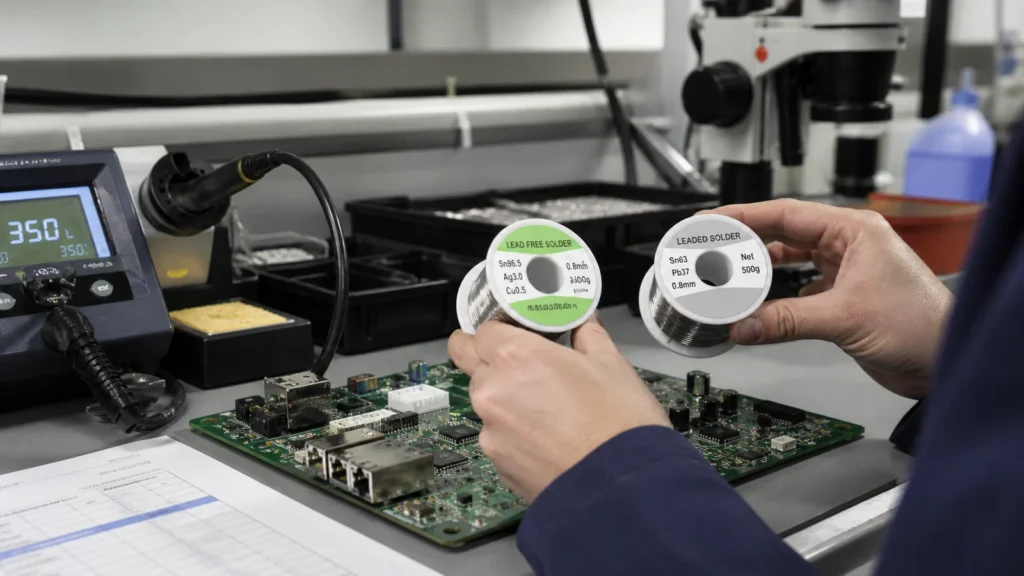
Choosing leaded or lead-free solder for a PCB build is not a morality play and it is not just a compliance checkbox. The practical choice depends on reflow temperature window, joint reliability target, repair reality, component sensitivity, and whether the board will live in a regulated product chain. That is why a reel of 60/40 solder can still make sense on some bench and legacy repair work, while lead-free alloys remain the only defensible option for most modern production lines. This guide explains where each choice works, what it changes in assembly, and how to avoid the expensive mistakes that happen when the alloy decision is treated too casually.
Lead versus lead-free solder is really a process decision
The alloy affects more than the melting point. It changes wetting behavior, reflow profile margin, dross formation, tip wear, joint appearance, rework feel, and the acceptable process window during production. A team that chooses solder based only on habit often finds the consequences later in bridging, insufficient hole fill, lifted pads during repair, or components that barely survive repeated thermal exposure.
That is why experienced assemblers rarely ask only whether a job is leaded or lead-free. They ask what the board material is, what package mix is on the BOM, whether through-hole connectors still need hand soldering after reflow, whether the assembly must meet RoHS or customer-specific restrictions, and how much rework the product is likely to see during NPI. The right alloy is tied to the whole build plan.
Where 60/40 and other leaded solders still make sense
Leaded solder is still useful in controlled situations where regulation allows it and where repair quality or thermal gentleness matters more than global compliance. Tin-lead alloys, including 60/40 and the eutectic 63/37 family, wet readily and rework predictably. On legacy industrial boards, lab prototypes, and authorized repair of older electronics, that behavior can reduce pad damage and shorten the time the operator spends heating a sensitive area.
It can also be practical for hand soldering work on dense service boards where the operator needs a forgiving flow and where the product is already part of a non-RoHS legacy system. The benefit is not that leaded solder is magically better. The benefit is that it often offers a broader hand-assembly comfort zone before pad adhesion, connector plastics, or nearby components start to suffer.
That said, leaded solder stops being the easy answer the moment the product enters a regulated supply chain, mixed-alloy assembly flow, or customer environment that prohibits lead entirely. At that point, its short-term process convenience can become a logistics and traceability problem.
Why lead-free solder dominates modern PCB production
Lead-free solder is the production default because most commercial electronics have to meet RoHS-style requirements and because the supply chain around components, finishes, and process documentation is already built around lead-free control. In mass production, consistency and compliance often matter more than bench convenience. Once the line, stencil design, thermal profile, and inspection criteria are tuned properly, lead-free assembly can be stable and highly repeatable.
The challenge is that lead-free process windows are usually less forgiving. Peak temperature rises, wetting feel changes, and some operators respond by adding more heat or more contact time than the board can tolerate. That is where laminate stress, barrel cracking risk on marginal holes, and pad damage during repair start to matter. The alloy itself is not the whole problem. The problem is assuming the old process settings can stay the same after the alloy changes.
What changes in assembly when you move from leaded to lead-free
The biggest shift is thermal. Lead-free alloys usually need higher processing temperatures, so the board, stencil release behavior, flux activity window, and component heat tolerance all become more sensitive. On a mixed-technology assembly, that can affect SMT yield first and then show up again when operators hand-solder large connectors or shield cans after the reflow cycle.
Reflow profile and laminate stress
If the profile is too cold, joints underperform and wetting degrades. If it is too hot or too long, the board and package set pay the price instead. Fine-pitch pads, thermal pads under QFN parts, and multilayer boards with heavy copper can all respond differently. That is why the alloy decision should be reviewed alongside profile development, not as a purchasing footnote. A line that runs lead-free well usually earns that stability through measured profile tuning and first article discipline.
Hand soldering and repair feel
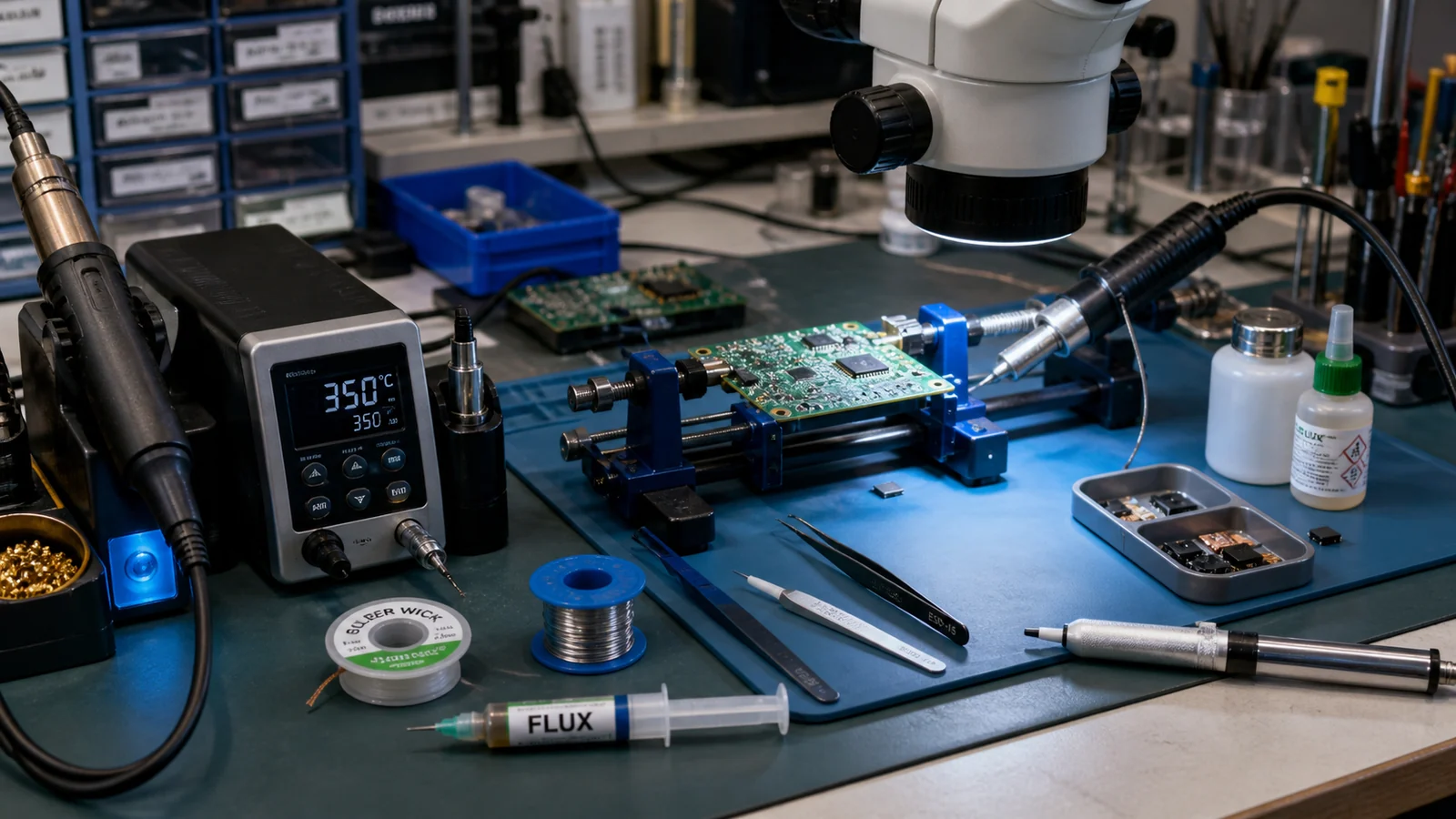
Technicians notice the difference immediately during rework. Lead-free joints often require more dwell control and more deliberate tip maintenance, especially on boards that sink heat aggressively. That increases the risk of scorching mask, lifting small pads, or disturbing nearby components if the repair setup is not disciplined. On the other hand, dropping leaded solder onto a lead-free board during uncontrolled field repair creates a mixed-alloy situation that may solve the immediate problem while complicating long-term traceability and joint behavior.
Through-hole fill and large thermal masses
Through-hole connectors, transformer pins, and shield tabs often reveal whether the process is mature. These joints need enough thermal energy to fill properly, but excess heat can damage surrounding laminate or loosen plated barrels in rework-heavy products. If a board contains both delicate SMT regions and high-mass through-hole features, the solder-alloy decision should be reviewed together with selective solder, hand-solder sequence, and any fixture support used during the post-reflow stages.
How compliance and serviceability pull in opposite directions
One reason this topic stays confusing is that the best production answer and the best repair answer are not always the same. Compliance-driven products usually have to stay fully lead-free, even if a technician would prefer the gentler working feel of a tin-lead alloy during rework. Service organizations, meanwhile, care about whether the board can be repaired without wrecking pads, connectors, or underfilled package edges.
That tension should be acknowledged early. If a product is expected to see field repair, depot refurbishment, or repeated engineering changes, process notes should state what alloy is authorized, what rework temperatures are acceptable, and whether any legacy boards in the installed base still use leaded joints. Without that discipline, one factory flow and three repair habits can coexist on the same product family.
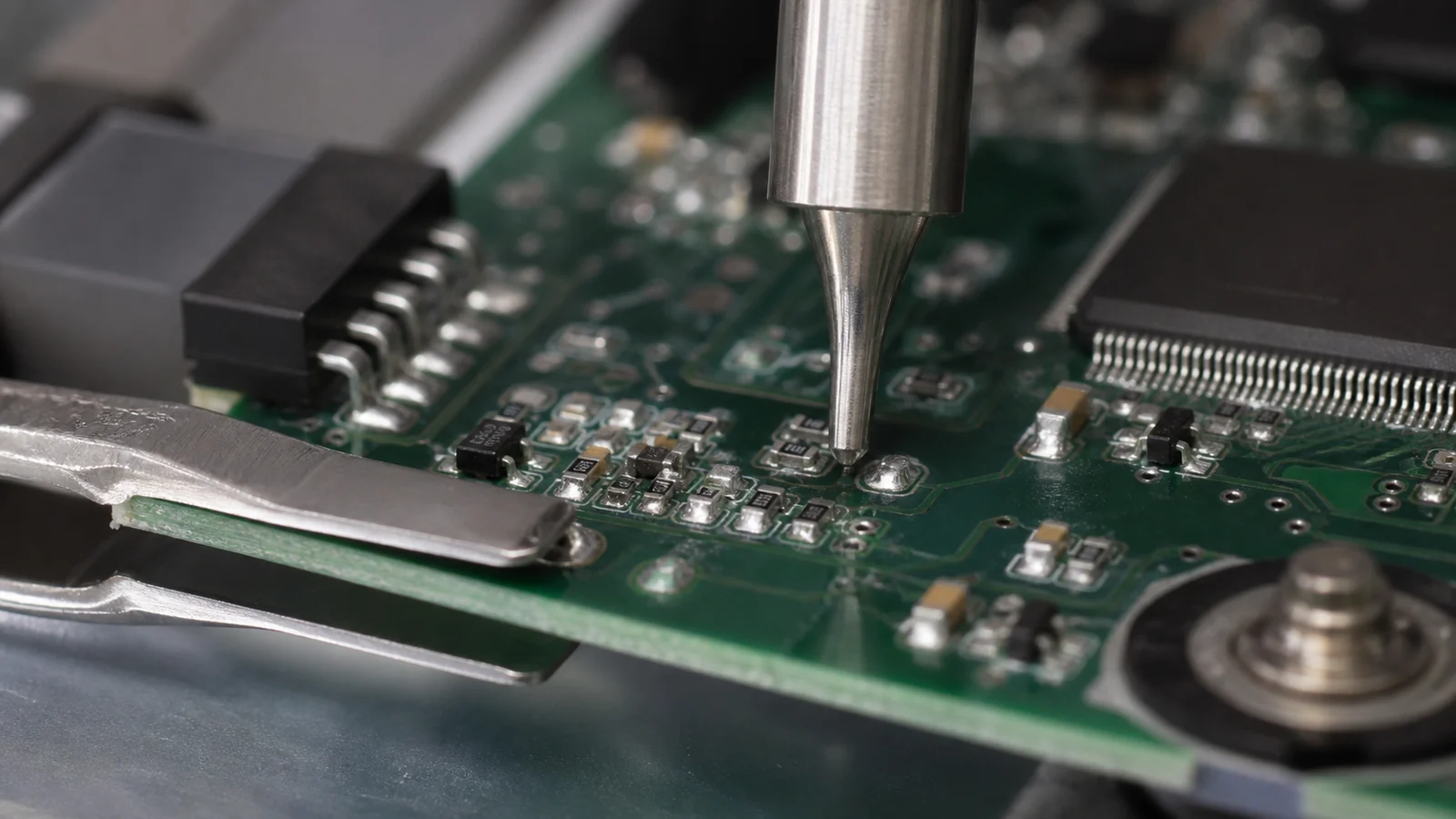
Questions to ask before you lock the solder alloy
- Does the product have to meet RoHS or customer-specific lead restrictions with no exceptions?
- Will the assembly see frequent rework, engineering changes, or depot-level repair after shipment?
- Are there high-mass through-hole joints, shields, or thermal pads that tighten the process window?
- Can the laminate, component package set, and solder mask system tolerate the lead-free thermal profile comfortably?
- Will the build mix lead-free production with legacy service boards that still use tin-lead joints?
- Has the team defined how selective solder, hand soldering, and touch-up work will be controlled after reflow?
These questions matter because solder selection is usually made long before the real failure mode appears. The board passes visual inspection, then later shows marginal hole fill, cracked joints after thermal cycling, or pad damage during a service event. Those outcomes are often rooted in an alloy decision that was separated from the rest of the manufacturing plan.
When a mixed-alloy shortcut creates more risk than it solves
One of the most common mistakes is using a leaded alloy as an unofficial repair shortcut on lead-free boards without documenting the exception. It can feel easier in the moment, especially on stubborn joints, but it introduces avoidable ambiguity. The next technician may not know what alloy is present. Inspection standards may no longer match the repaired region. Reliability investigations later become harder because the joint history is unclear.
If mixed-alloy rework is ever allowed, it should be treated as an engineered exception with controlled cleaning, traceability, and inspection rules. Otherwise, a small bench convenience can undermine the consistency the production team worked to establish.
Choose the alloy that matches the whole assembly lifecycle
Leaded solder, 60/40 solder, and lead-free alloys each have legitimate use cases. The right choice depends on whether the board lives in compliant volume production, controlled prototype work, legacy repair, or a service program that values rework gentleness. If the alloy matches the product’s compliance demands, thermal window, repair plan, and inspection method, the process gets easier. If it does not, the cost shows up later in scrap, touch-up, and unreliable field fixes.
FAQ
Is 60/40 solder the same as leaded solder?
60/40 solder is one common type of leaded solder, made from roughly 60 percent tin and 40 percent lead. Not every leaded alloy uses that exact ratio, but 60/40 is one of the most familiar choices for legacy hand soldering and repair work.
Why is lead-free solder harder to rework on some PCBs?
Lead-free rework often needs higher temperature and tighter dwell control, especially on boards with heavy copper or large thermal masses. That can increase the risk of mask damage, pad lifting, and heat stress if the repair setup is not tuned carefully.
Can you use leaded solder on a lead-free PCB for repair?
It is physically possible, but it should not be treated as a casual shortcut. Mixed-alloy repairs can create traceability, inspection, and long-term reliability questions, especially in regulated or high-volume product lines.
When should PCB assembly stay fully lead-free?
It should stay fully lead-free when the product must meet RoHS or customer compliance rules, when the supply chain is already qualified around lead-free processing, or when introducing tin-lead alloy would complicate documentation and service control more than it helps repair convenience.