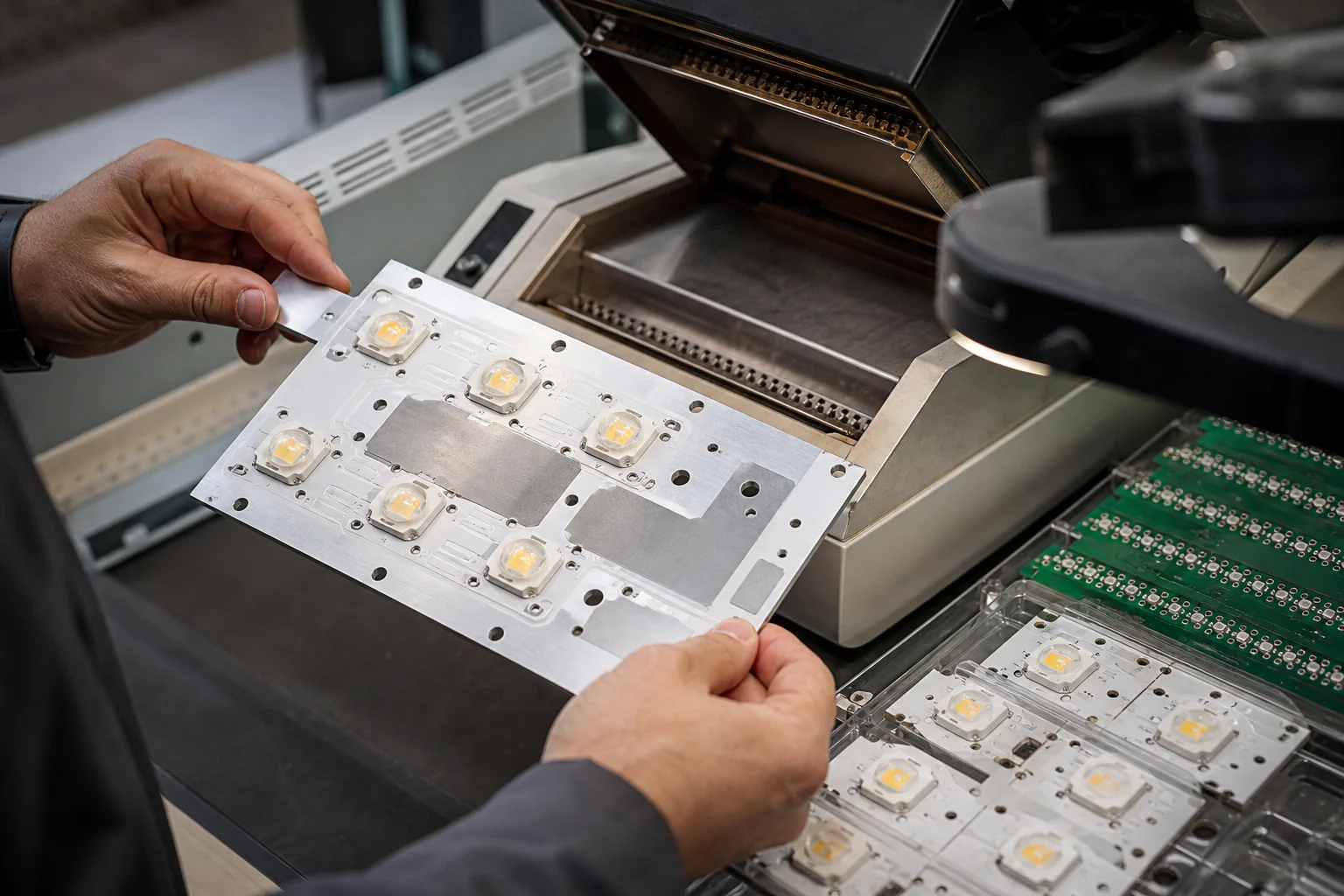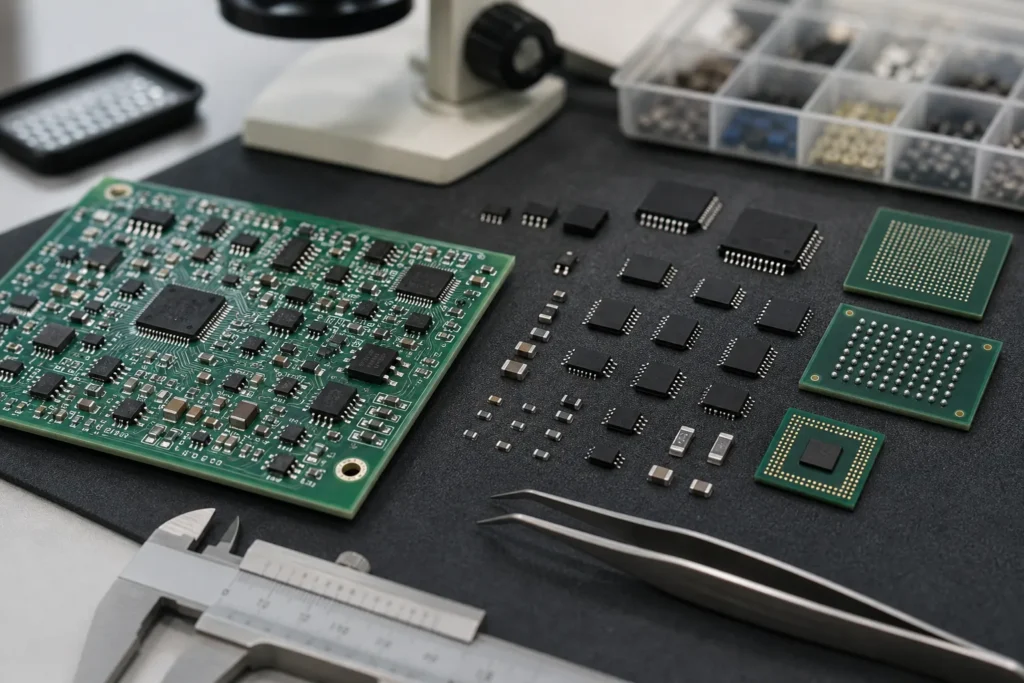
Ein Oberflächenmontagegerät Es ist nicht nur ein elektronisches Teil, das auf die Tafel passt. Es ist eine Fertigungsentscheidung. Der Paketstil wirkt sich auf die Schablonenfreigabe, die Platzierungstoleranz, den Inspektionszugriff, die Schwierigkeiten nacharbeiten, das thermische Verhalten und sogar die Frage, ob ein Pilot-Build Ihnen etwas Nützliches beibringt.
Aus diesem Grund reicht es selten aus, SMD-Pakete nach Footprint-Größe zu wählen. Ingenieure optimieren häufig die Kosten für das Board-Bereich oder die Einheiten und stellen später fest, dass die tatsächliche Strafe in der Feeder-Setup, den versteckten Verbindungen oder der Reparaturzeit angezeigt wird. Dieser Leitfaden konzentriert sich auf die Auswahl von Oberflächenmontagepaketen, die Ihr Montageprozess zuverlässig unterstützen kann.
Was sich ein Surface Mount-Gerät tatsächlich ändert
Die grundlegende Definition ist unkompliziert: Ein SMD ist ein Bauteil, das für die direkte Befestigung an Oberflächenpolstern anstelle von plattierten Durchgangslöchern ausgelegt ist. Die wichtige technische Frage ist jedoch, was diese Wahl für den Build ändert.
- Board density increases. Smaller parts and dual-side population make compact designs practical.
- Automation becomes the default. Once package pitch gets fine enough, placement and reflow assumptions start driving the design.
- Inspection changes. Gull-wing leads are easy to inspect visually. Leadless thermal pads and BGAs are not.
- Rework becomes package-dependent. A 0603 resistor and a fine-pitch QFN are both SMDs, but they do not demand the same repair tools or operator skill.
ReversePCBs SMT-Übersicht erklärt den Prozess selbst. Das Problem der Paketauswahl ist enger: Welcher Gerätestil liefert Ihnen das gewünschte elektrische Ergebnis, ohne die Montage zu erschweren, als es sein muss?
Bleiform ist wichtiger als viele Stücke zulassen
Die Paketauswahl beginnt häufig mit dem LEAD-System, da das Leitsystem die Sichtbarkeit, das Selbstausrichtungsverhalten während des Reflows und den Zugriff auf Überarbeitung steuert.
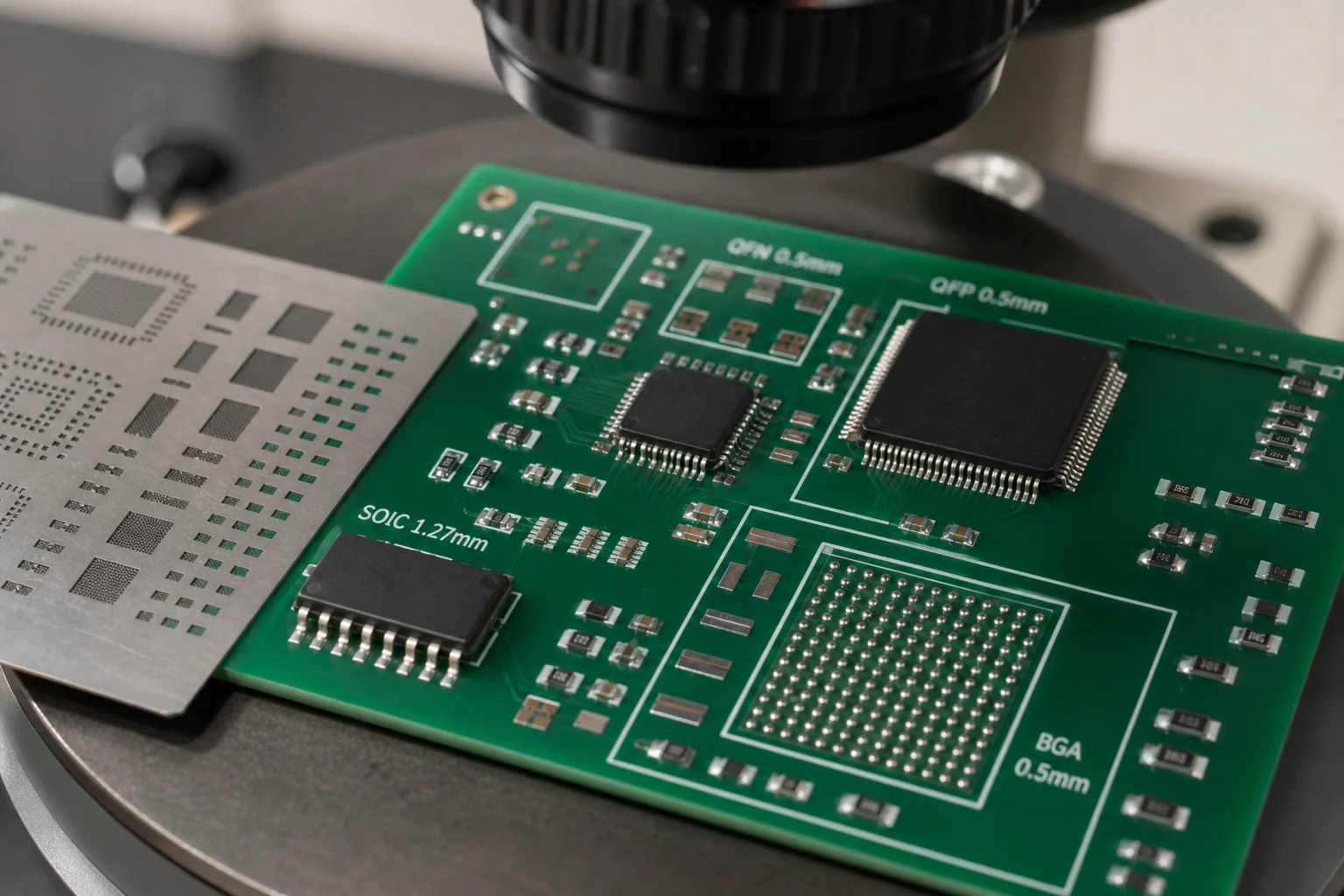
- SOIC, TSSOP, and QFP packages have visible leads. They are forgiving in inspection and easier to probe or touch up than leadless packages.
- QFN and DFN packages save space and often improve thermal performance, but their pads hide under the body. That raises the stakes for land-pattern discipline, paste strategy, and thermal-pad voiding control.
- BGA packages maximize pin count and routing density, but they trade away direct visual inspection. If the product cannot justify X-ray access or careful rework planning, BGA may be the wrong convenience.
- Chip passives seem simple until their size gets too aggressive. A move from 0603 to 0201 can change placement stability, stencil release, and field-service practicality more than it changes the electrical design.
Verwenden Sie diese Auswahlreihenfolge, anstatt zuerst nach Größe zu wählen
Eine praktische Paketentscheidung funktioniert in dieser Reihenfolge normalerweise besser:
- Start with function and thermal load. Power devices and heat-sensitive ICs may need exposed pads or larger copper interfaces.
- Check placement and inspection capability. If the build environment does not support very fine pitch, ultra-small passives, or X-ray validation, do not choose those packages casually.
- Consider rework and service. A slightly larger package can save major time in prototype debug, field repair, and engineering change control.
- Only then optimize area and cost. Board area matters, but not enough to justify a package that narrows the process window without product-level benefit.
Häufige SMD-Paketfehler, die den Ertrag verletzen
- Specifying leadless parts without giving the thermal pad enough attention. The exposed pad is part of the assembly challenge, not an afterthought.
- Using the smallest passive available for cosmetic reasons. Tiny packages impress a layout screenshot more than they improve many real products.
- Ignoring inspection access. If the critical joint cannot be seen or tested, the process must compensate somewhere else.
- Mixing wildly different package demands on one board without process planning. A board that combines large thermal slugs, ultra-fine pitch leads, and 0201 passives needs a deliberate stencil and profile strategy.
Für Teams, die noch entscheiden müssen, ob ein Durchgangsteil die bessere mechanische Antwort ist, Durchgangsloch- und Oberflächenmontage-Kompetenzen Bleiben Sie es wert, überprüft zu werden, bevor Sie die Stückliste begehen.
Wählen Sie Pakete, die die Fabrik bauen, überprüfen und reparieren kann
Das beste Oberflächenmontagegerät Wahl ist selten das kleinste, neueste oder kompakteste Paket. Es ist das Paket, das dem elektrischen Bedarf entspricht, während er in einem vernünftigen Fertigungsfenster bleibt. Wenn Ingenieure Paketentscheidungen unter Berücksichtigung von Montage, Inspektion und Reparatur treffen, wird das Board leichter zu starten und in der Produktion leichter zu vertrauen.
What is a surface mount device?
A surface mount device, or SMD, is a component designed to be soldered directly onto PCB pads without leads passing through drilled holes.
What is the difference between SMT and SMD?
SMT is the assembly method, while SMD is the component built for that method. You choose an SMD package, then manufacture it with an SMT process.
Why does package choice affect manufacturability?
Package style affects stencil design, placement accuracy, inspection access, thermal performance, and rework difficulty. Two electrically equivalent parts can create very different assembly risk.
Are leadless packages always better than leaded packages?
No. Leadless packages can save space and improve thermal behavior, but they also reduce visual inspection access and often make rework harder. The best choice depends on the product and build environment.
When should an engineer avoid the smallest passive size available?
Avoid ultra-small passives when the board does not need them or when placement capability, rework access, or field-service reliability would improve with a slightly larger package such as 0603 instead of 0201.