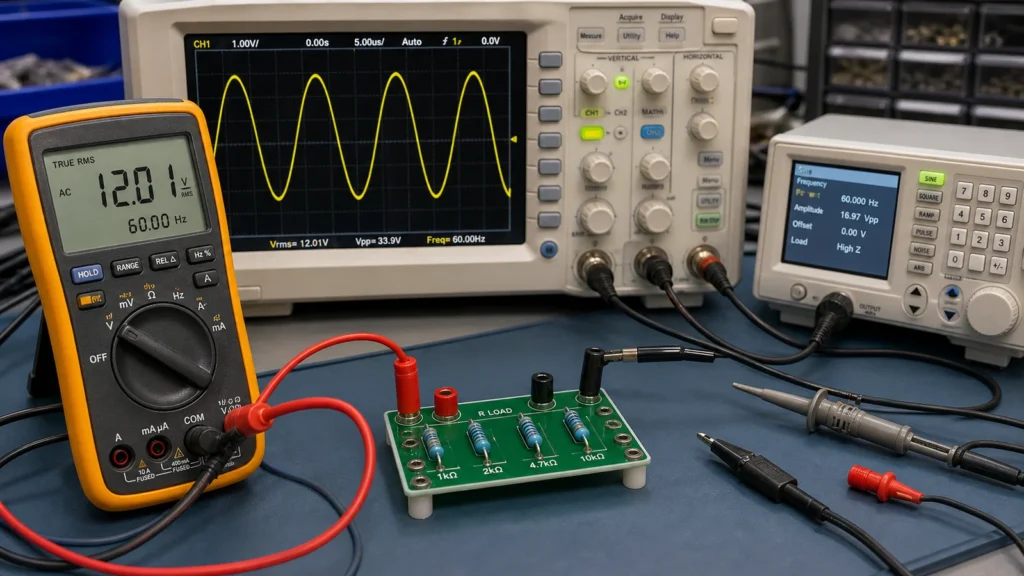
Tanyakan kepada siswa elektronik Apa itu RMS Dan Anda biasanya akan mendapatkan “root mean square.” yang secara teknis benar. Tetapi jika Anda berhenti di matematika, Anda ketinggalan Apa sebenarnya arti RMS Untuk pekerjaan sirkuit dunia nyata: Ini adalah nilai DC-ekuivalen yang memberi tahu Anda berapa banyak pemanasan yang dihasilkan oleh bentuk gelombang AC. Artikel ini menjelaskan tentang Arti dari RMS Dalam hal yang membantu Anda melakukan pengukuran yang lebih baik dan membuat keputusan desain yang lebih aman.
Arti RMS langsung
rms berdiri untuk akar rata-rata kuadrat. Untuk setiap bentuk gelombang periodik, RMS dihitung dengan mengkuadratkan nilai sesaat, rata-rata kuadrat selama satu periode, dan mengambil akar kuadrat. Hasilnya adalah angka tunggal yang mewakili nilai DC efektif dari sinyal AC tersebut.
Wawasan kritis: Jika Anda melewatkan tegangan AC 10 V rms melalui resistor, itu menghasilkan panas yang sama dengan 10 V DC. Karena itu lah Apa itu RMS Penting — Ini adalah angka yang dilaporkan multimeter Anda pada rentang AC, dan angkalah yang menentukan apakah suatu komponen melebihi peringkat dayanya.
Mengapa Insinyur Menggunakan RMS Alih-alih Puncak atau Rata-Rata
Bentuk gelombang AC terus berubah. Anda tidak dapat menggambarkannya dengan satu nilai sesaat. Ada tiga kandidat:
- Tegangan puncak (V): nilai sesaat tertinggi. Untuk stopkontak dinding 120 V rms, V = 170 V. Berguna untuk peringkat insulasi tetapi menyesatkan untuk perhitungan daya.
- Tegangan rata-rata: rata-rata aritmatika dari nilai absolut selama satu siklus. Untuk gelombang sinus, ini sama dengan 0,637 × V. Hampir tidak ada yang menggunakan ini dalam praktik.
- Tegangan RMS: Nilai pemanasan setara DC. Untuk gelombang sinus, V = V 2 0,707 × V. Ini adalah angka yang penting untuk daya nyata dan perhitungan termal.
Jika Anda salah menggunakan tegangan puncak dalam perhitungan daya, Anda melebih-lebihkan disipasi dengan faktor 2. Sebuah resistor yang harus menangani 1 W berdasarkan tegangan puncak sebenarnya melihat 2 W — dan gagal.
Nilai RMS untuk bentuk gelombang umum
Hubungan antara puncak dan RMS tergantung pada bentuk gelombang. Gelombang sinus murni mengikuti rasio yang bersih, tetapi sirkuit nyata jarang menghasilkan gelombang sinus buku teks:
| bentuk gelombang | Vᵣₘₛ / Vₚ Rasio | Contoh |
|---|---|---|
| Gelombang sinus | 1 / √2 ≈ 0,707 | Dinding AC, output inverter murni |
| Gelombang persegi (50% tugas) | 1.0 | Sinyal jam digital yang ideal |
| Gelombang segitiga | 1 / √3 ≈ 0,577 | Keluaran generator fungsi |
| PWM (Variabel Tugas D) | d | Penggerak motor, led dimmer, smps |
| Sine yang diperbaiki (gelombang penuh, tanpa filter) | 0,707 | Penyearah jembatan sebelum kapasitor |
multimeter murah yang mengasumsikan gelombang sinus akan memberikan kesalahan Tegangan RMS Pembacaan pada sinyal PWM. Jika pengukuran Anda harus akurat di seluruh bentuk gelombang sewenang-wenang, Anda memerlukan meteran RMS yang benar.
True-RMS vs. Meter yang merespons rata-rata
Banyak multimeter yang terjangkau adalah respons rata-rata: mereka mengukur nilai absolut rata-rata, kalikan dengan 1,11 (faktor bentuk gelombang sinus), dan tampilkan hasilnya sebagai “RMS.” Ini benar hanya untuk gelombang sinus murni. Umpankan gelombang segitiga ke meteran yang merespons rata-rata dan nilai yang ditampilkan akan salah sekitar 4%. Memberi makan sinyal PWM dan kesalahannya bisa melebihi 40%.
Sebuah benar-rms Meter menghitung nilai RMS aktual dengan mengambil sampel bentuk gelombang dengan kecepatan tinggi, mengkuadratkan setiap sampel, rata-rata, dan mengambil akar kuadrat. Meter ini menangani bentuk gelombang arbitrer dengan benar. Jika pekerjaan Anda melibatkan output inverter, drive motor, amplifier audio, atau persediaan non-sinusoidal, True-RMS tidak opsional.
Skenario praktis di mana RMS penting
- Sekering dan ukuran pemutus: Sekering merespons arus RMS, bukan puncak. Sekering 5 A pada sirkuit yang membawa 5 A RMS akan beroperasi dengan benar. Jika Anda mengukur berdasarkan arus puncak, peringkat sekering salah.
- Peringkat VA Transformator: Sebuah transformator yang diberi peringkat 100 VA pada 120 V RMS dapat menghasilkan sekitar 0,83 A RMS. Melebihi ini terlalu panas pada belitan bahkan jika arus puncak terlihat sedang.
- Penanganan daya speaker: Spesifikasi penguat audio menggunakan RMS Watts. Seorang speaker dengan peringkat 50 W rms dapat menghilangkan daya berkelanjutan sebanyak itu. Peringkat daya puncak (seringkali 2x atau lebih) adalah angka pemasaran, bukan nomor desain.
- Arus Riak Kapasitor: Kapasitor elektrolitik memiliki peringkat arus riak RMS maksimum. Melebihi itu menyebabkan pemanasan internal dan memperpendek masa pakai kapasitor, bahkan jika tegangan DC tetap dalam spesifikasi.
- Lebar Jejak PCB: Kalkulator Lebar Jejak Gunakan arus RMS untuk menentukan kenaikan suhu. Lonjakan arus puncak lebih pendek dari konstanta waktu termal dapat diterima, tetapi arus RMS kontinu menentukan suhu keadaan tunak.
Cara Menghitung RMS Tanpa Menghafal Rumus
Anda tidak perlu mendapatkan integral setiap saat. Berikut adalah alur kerja praktis:
- Menangkap bentuk gelombang dengan osiloskop. Ekspor CSV pasangan tegangan waktu.
- kuadratkan setiap nilai tegangan. Dalam spreadsheet, buat kolom untuk V².
- Rata-rata nilai kuadrat selama satu siklus lengkap (atau jumlah siklus bilangan bulat).
- Ambil akar kuadrat dari rata-rata itu. Hasilnya adalah tegangan RMS.
Untuk gelombang sinus, jalan pintas V = V × 0,707 bekerja. Untuk yang lainnya, hitung atau gunakan meteran rms sejati. Menebak dengan formula gelombang sinus pada bentuk gelombang non-sinusoidal adalah bagaimana masalah termal menyelinap ke dalam produksi.
Pertanyaan yang sering diajukan
Apa itu RMS secara sederhana?
RMS, atau root mean square, adalah nilai efektif dari tegangan atau arus AC. Ini memberi tahu Anda nilai DC yang setara yang akan menghasilkan efek pemanasan yang sama dalam resistor. Outlet dinding 120 V rms memberikan daya pemanasan yang sama dengan 120 V DC.
Apa arti RMS dalam Teknik Elektro?
Dalam teknik elektro, arti RMS adalah besarnya ekuivalen DC dari bentuk gelombang yang berubah-ubah waktu. Ini adalah cara standar untuk mengekspresikan tegangan dan arus AC karena secara langsung berhubungan dengan daya nyata: P = V × I untuk beban resistif.
Mengapa RMS digunakan bukan rata-rata?
Rata-rata gelombang sinus AC murni selama siklus penuh adalah nol. Bahkan rata-rata nilai absolut tidak memprediksi pemanasan dengan benar. RMS mengkuadratkan nilai-nilai sebelum rata-rata, yang dengan benar menimbang ekskursi yang lebih besar dan menghasilkan nilai pemanasan yang setara DC.
apakah saya perlu multimeter true-rms?
Jika Anda hanya mengukur gelombang sinus murni (AC dinding, catu daya linier), meteran yang merespons rata-rata sudah memadai. Jika Anda bekerja dengan inverter, penggerak motor, sinyal PWM, audio, atau bentuk gelombang non-sinusoidal, meteran RMS sejati sangat penting.
Berapa nilai rms dari stopkontak 120 V?
120 V adalah nilai rms. Tegangan puncak kira-kira 170 V (120 × 2), dan tegangan puncak-ke-puncak adalah 340 V. Inilah sebabnya mengapa outlet RMS 120 V dapat memberikan puncak 170 V ke kapasitor filter penyearah.
Apa rms dari gelombang persegi?
Untuk gelombang persegi ideal yang berayun antara +V dan -V dengan siklus kerja 50%, nilai RMS sama dengan V. Tidak ada faktor 0,707 karena bentuk gelombang menghabiskan waktu yang sama pada puncak nilai positif dan puncak negatif.