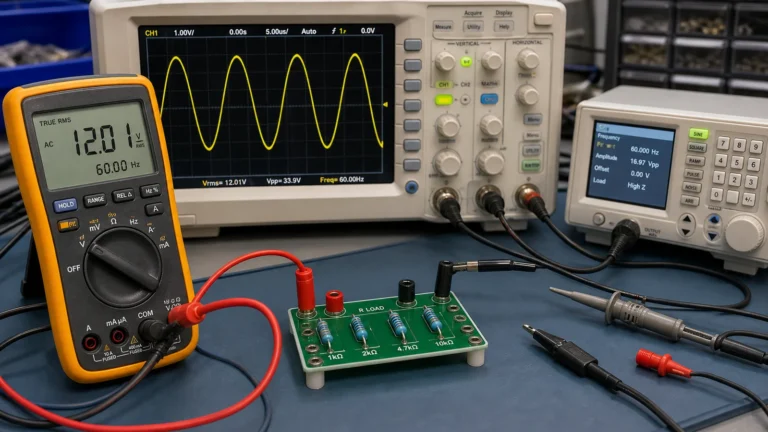
elektronik öğrencisine sor rms nedir Ve genellikle “kök ortalama kare” alırsınız. Bu teknik olarak doğrudur. Ama matematikte durursan, özlersin RMS aslında ne anlama geliyor Gerçek dünya devresi çalışması için: Bir AC dalga formunun ne kadar ısıtma sağladığını size söyleyen DC eşdeğeri değerdir. Bu makale, şunu açıklıyor: RMS’nin anlamı Daha iyi ölçümler almanıza ve daha güvenli tasarım kararları vermenize yardımcı olacak şekilde.
basit rms anlamı
RMS anlamına gelir Kök kare ortalama. Herhangi bir periyodik dalga formu için RMS, anlık değerlerin karesi alınarak, bir periyot boyunca karelerin ortalamasını alarak ve karekökü alınarak hesaplanır. Sonuç, bu AC sinyalinin etkin DC değerini temsil eden tek bir sayıdır.
Kritik içgörü: Bir dirençten 10 V rms’lik bir AC voltajını geçirirseniz, 10 V DC ile aynı ısıyı üretir. Bu yüzden rms nedir Önemlidir — Bu, multimetrenizin AC aralığında bildirdiği sayıdır ve bir bileşenin güç derecesini aşıp aşmadığını belirleyen sayıdır.
Mühendisler neden tepe veya ortalama yerine RMS kullanıyor?
AC dalga biçimleri sürekli değişir. Onları tek bir anlık değerle tanımlayamazsınız. Üç aday var:
- Tepe voltajı (V): en yüksek anlık değer. 120 V RMS priz için V = 170 V. Yalıtım derecelendirmeleri için kullanışlıdır, ancak güç hesaplamaları için yanıltıcıdır.
- Ortalama Voltaj: Bir döngü boyunca mutlak değerin aritmetik ortalaması. Bir sinüs dalgası için bu, 0.637 × V’ye eşittir. Neredeyse hiç kimse bunu pratikte kullanmıyor.
- RMS Voltajı: DC eşdeğeri ısıtma değeri. Bir sinüs dalgası için, V = V ÷ √2 0.707 × V. Bu, gerçek güç ve termal hesaplamalar için önemli olan sayıdır.
Bir güç hesaplamasında yanlışlıkla tepe voltajı kullanırsanız, dağılımı 2 kat fazla tahmin edersiniz. Tepe voltajına dayalı olarak 1 W’yi işlemesi gereken bir direnç aslında 2 W görür ve başarısız olur.
Ortak dalga formları için RMS değerleri
Pik ve RMS arasındaki ilişki dalga biçimi şekline bağlıdır. Saf sinüs dalgaları temiz bir oran izler, ancak gerçek devreler nadiren ders kitabı sinüs dalgaları üretir:
| dalga biçiminde | V / V Oranı | Örnek |
|---|---|---|
| sinüs dalgası | 1 / √2 0.707 | Duvar AC, saf invertör çıkışı |
| Kare Dalga (%50 Görev) | 1.0 | İdeal dijital saat sinyali |
| üçgen dalga | 1 / √3 0.577 | Fonksiyon jeneratörü çıkışı |
| PWM (Değişken Değişken D) | √D | motor tahriki, led dimmer, SMPS |
| Düzeltilmiş sinüs (tam dalga, filtrelenmemiş) | 0.707 | Kondansatörden önce köprü doğrultucu |
sinüs dalgasının yanlış vereceğini varsayan ucuz bir multimetre rms voltajı Bir PWM sinyalinde okumalar. Ölçümünüzün keyfi dalga formları arasında doğru olması gerekiyorsa, bir true-RMS ölçere ihtiyacınız vardır.
True-RMS ve ortalama yanıt veren sayaçlar
Birçok uygun fiyatlı multimetre ortalama yanıt verir: ortalama mutlak değeri ölçer, 1.11 ile çarpar (sinüs dalgası form faktörü) ve sonucu “rms” olarak gösterir. Bu sadece saf sinüs dalgaları için doğrudur. Bir üçgen dalgasını ortalama yanıt veren bir metreye besleyin ve görüntülenen değer yaklaşık %4 oranında yanlış olacaktır. Bir PWM sinyali besleyin ve hata %40’ı aşabilir.
pek iyi True-RMS Metre, dalga formunu yüksek hızda örnekleyerek, her numuneyi kareleyerek, ortalama alarak ve karekökü alarak gerçek RMS değerini hesaplar. Bu sayaçlar keyfi dalga formlarını doğru bir şekilde işler. Çalışmanız inverter çıkışları, motor sürücüleri, ses yükselticileri veya sinüzoidal olmayan sarf malzemeleri içeriyorsa, True-RMS isteğe bağlı değildir.
RMS’nin önemli olduğu pratik senaryolar
- Sigorta ve Kırıcı Boyutlandırma: Sigortalar, RMS akımına tepki verir, tepe noktasına değil. 5 A RMS taşıyan bir devrede 5 A sigorta doğru çalışacaktır. Tepe akımına göre boyutlandırırsanız, sigorta derecesi yanlıştır.
- Transformatör VA Derecelendirmeleri: 120 V rms’de 100 VA olarak derecelendirilmiş bir transformatör, A yaklaşık 0.83 RMS sağlayabilir. Bunu aşmak, tepe akımı orta düzeyde görünse bile sargıları aşırı ısıtır.
- Hoparlör güç kullanımı: Ses yükseltici özellikleri RMS watt kullanır. 50 W RMS dereceli bir hoparlör bu kadar sürekli gücü dağıtabilir. En yüksek güç derecelendirmeleri (genellikle 2 kat veya daha fazla), tasarım numaraları değil, pazarlama numaralarıdır.
- Kapasitör dalgalanma akımı: Elektrolitik kapasitörler maksimum RMS dalgalanma akımı derecesine sahiptir. Bunu aşmak, dahili ısıtmaya neden olur ve DC voltajı spesifikasyon içinde kalsa bile kapasitör ömrünü kısaltır.
- PCB izleme genişliği: İz genişliği hesaplayıcıları, sıcaklık artışını belirlemek için RMS akımını kullanır. Termal zaman sabitinden daha kısa olan tepe akımı ani yükselmeleri kabul edilebilir olabilir, ancak sürekli RMS akımı kararlı durum sıcaklığını belirler.
Formülleri ezberlemeden RMS nasıl hesaplanır
Her seferinde integralleri türetmenize gerek yoktur. İşte pratik bir iş akışı:
- Dalga formunu bir osiloskopla yakalayın. Zaman voltajı çiftlerinin bir CSV’sini dışa aktarın.
- her voltaj değerini kareleyin. Bir elektronik tabloda, v² için bir sütun oluşturun.
- Bir tam döngü (veya bir tamsayı döngü sayısı) üzerinden karesi alınmış değerlerin ortalamasını alın.
- Bu ortalamanın karekökünü alın. Sonuç, RMS voltajıdır.
Bir sinüs dalgası için, V = V × 0.707 kısayolu çalışır. Diğer her şey için, hesaplayın veya bir true-RMS metre kullanın. Sinüs dalgası formülü ile sinüs dalgası olmayan bir dalga formunda tahmin etmek, termal problemlerin üretime nasıl girdiğidir.
Sıkça Sorulan Sorular
Basit terimlerle RMS nedir?
RMS veya kök ortalama kare, bir AC voltajının veya akımının etkin değeridir. Size bir dirençte aynı ısıtma etkisini üretecek eşdeğer DC değerini söyler. 120 V RMS priz, 120 V DC ile aynı ısıtma gücünü sağlar.
Elektrik mühendisliğinde RMS anlamı nedir?
Elektrik mühendisliğinde, RMS’nin anlamı, zamanla değişen bir dalga biçiminin DC eşdeğeri büyüklüğüdür. AC voltajlarını ve akımlarını ifade etmenin standart yoludur çünkü doğrudan gerçek güçle ilgilidir: P = V Dirençli yükler için P = V × I.
RMS neden ortalama yerine kullanılır?
Tam bir döngü boyunca saf bir ac sinüs dalgasının ortalaması sıfırdır. Mutlak değerin ortalaması bile ısınmayı doğru bir şekilde tahmin etmez. RMS, daha büyük gezileri doğru bir şekilde ağırlıklandıran ve DC eşdeğeri ısıtma değerini üreten ortalamadan önce değerleri kareler.
True-RMS multimetresine ihtiyacım var mı?
Yalnızca saf sinüs dalgalarını (duvar AC, doğrusal güç kaynakları) ölçerseniz, ortalama yanıt veren bir sayaç yeterlidir. İnvertörler, motor sürücüleri, PWM sinyalleri, ses veya sinüzoidal olmayan herhangi bir dalga formu ile çalışıyorsanız, gerçek bir RMS ölçer gereklidir.
120 V’luk bir duvar prizinin RMS değeri nedir?
120 V, RMS değeridir. Tepe voltajı yaklaşık 170 V (120 × √2) ve tepeden tepeye voltaj 340 V’dir. Kondansatör.
Kare dalganın RMS’si nedir?
%50 görev döngüsü ile +v ve -v arasında sallanan ideal bir kare dalga için, rms değeri v’ye eşittir. 0.707 faktörü yoktur çünkü dalga biçimi en yüksek pozitif ve tepe negatif değerlerde eşit zaman harcar.